
Wearable ECGs for QT Safety: Real-Time Risk Detection
 Jun, 9 2026
QT Interval Risk Assessment Tool
Input Your Data
Results
Understanding Your Results
| QTc Range | Risk Category | Description |
|---|---|---|
| < 440 ms | Normal | Typically considered within normal limits for most adults. |
| 440 - 460 ms | Borderline | May warrant monitoring, especially if on QT-prolonging medications. |
| 460 - 500 ms | Prolonged | Elevated risk. Consult your doctor about medication adjustments. |
| > 500 ms | High Risk | Significantly increased risk of Torsades de Pointes. Seek medical attention. |
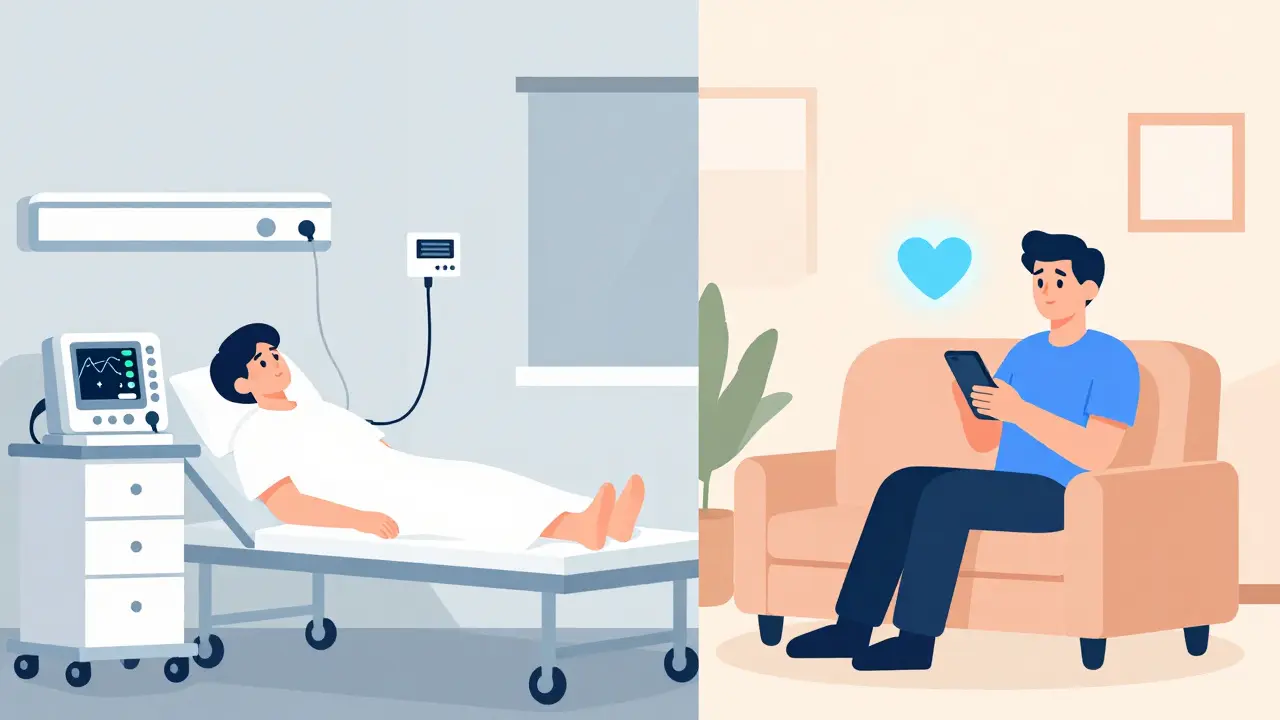
Your heart beats roughly 100,000 times a day. Most of those beats are invisible to you, but one specific electrical measurement-the QT interval-can mean the difference between life and sudden cardiac death if it gets too long. For years, doctors relied on a single snapshot from a clinic visit to check this metric. But what happens when the risk develops at home, after you’ve taken a new medication? This is where wearable ECG technology steps in, transforming how we monitor cardiac safety in real-time.
The landscape of heart monitoring changed dramatically during the 2020 pandemic. Hospitals were overwhelmed, and patients needed remote ways to track side effects from drugs like hydroxychloroquine and azithromycin, which are known to prolong the QT interval. The U.S. Food and Drug Administration (FDA) responded by issuing guidance in April 2020 that permitted the use of consumer devices like the KardiaMobile 6L for QT measurement. This wasn't just a temporary fix; it marked a permanent shift toward decentralized cardiac safety monitoring.
Understanding the QT Interval and Why It Matters
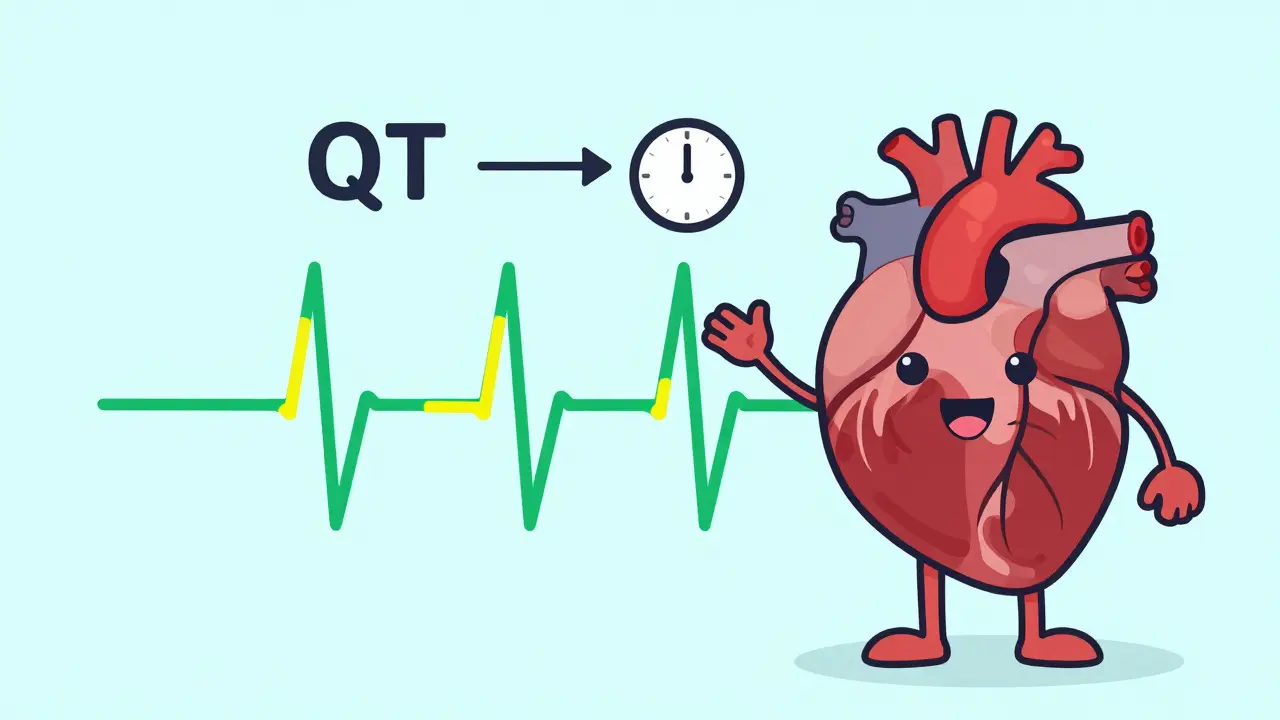
To understand why wearables matter, you first need to grasp what the QT interval actually is. On an electrocardiogram (ECG), the QT interval measures the time from the start of the Q wave to the end of the T wave. In plain English, this represents the total time your heart’s ventricles take to depolarize (contract) and repolarize (reset) electrically.
When this interval becomes prolonged-typically defined as a corrected QT (QTc) greater than 500 milliseconds-it creates a dangerous window for arrhythmias. Specifically, it increases the risk of Torsades de Pointes, a rapid, irregular heartbeat that can degenerate into ventricular fibrillation and cause sudden cardiac arrest. This is why medications such as certain antibiotics, antipsychotics, and antiarrhythmics carry black box warnings regarding QT prolongation. Traditionally, detecting this required a standard 12-lead ECG performed in a clinical setting, limiting data to brief, infrequent snapshots.
Key Devices Leading the Wearable ECG Market
Not all wearable heart monitors are created equal. While many fitness trackers claim to monitor heart health, only specific devices have the regulatory clearance and technical capability to measure the QT interval accurately. Two devices stand out in current research and clinical practice.
| Feature | Apple Watch (Series 4+) | KardiaMobile 6L |
|---|---|---|
| Lead Configuration | Single-lead (Lead I primarily) | 6-Lead (I, II, III, aVL, aVF, aVR) |
| Recording Duration | 30 seconds | 30 seconds |
| FDA Clearance for QT | Yes (via ECG app validation) | Yes (Specific guidance & indications) |
| User Interaction | Place finger on digital crown | Thumbs on top, left knee/ankle on bottom |
| Primary Strength | Convenience & continuous passive sensing potential | Clinical-grade multi-lead accuracy |
The Apple Watch, launched with its ECG app in September 2018, offers unmatched convenience. Users simply place a finger on the digital crown to complete the circuit. Studies, including one by Spaccarotella et al. (2021), showed strong correlation coefficients (up to 0.914 for QT mean) when comparing Apple Watch readings to standard 12-lead ECGs. However, it primarily captures Lead I, which limits the view of the heart’s electrical activity compared to a full clinical ECG.
In contrast, the KardiaMobile 6L by AliveCor is designed more like a medical device. Measuring exactly 9.0 cm × 3.0 cm × 0.72 cm, it requires users to place their thumbs on the top electrodes and their left knee or ankle on the bottom electrodes. This setup allows it to record six different leads, providing a much richer dataset that closely mimics a hospital-grade ECG. Research indicates its interval measurements are comparable to standard 12-lead ECGs, making it a favorite for rigorous clinical trials.
Accuracy and Validation: Can You Trust the Data?
The biggest question patients and doctors ask is whether these small gadgets can truly replace the big machines in hospitals. The short answer is yes, but with caveats. A pivotal study published in Scientific Reports (Spaccarotella et al., 2021) validated the Apple Watch against standard ECGs. They found that while the watch was highly reliable for measuring the QT interval across various correction formulas (like Bazett and Fridericia), signal quality could be affected by skin-to-electrode impedance.
Similarly, a pilot study cited in the Cleveland Clinic Journal of Medicine (2024) found that handheld single-lead ECGs were noninferior to standard 12-lead ECGs for corrected QT measurement, with accuracy within ±20 milliseconds. That margin of error is clinically acceptable for screening purposes. However, experts note that consumer wearables were originally optimized for detecting atrial fibrillation-a relatively easy task involving irregular rhythms-rather than the subtle voltage changes seen in pathologic Q waves or supraventricular tachycardia. Sensitivity for pathologic Q waves, for instance, was found to be only 20.6% in some studies.
This means that while a wearable ECG is excellent for spotting QT prolongation, it should not be used to diagnose complex structural heart issues without confirmation from a traditional 12-lead ECG. Think of wearables as a powerful early warning system, not a definitive diagnostic tool for every cardiac condition.
Clinical Applications Beyond the Pandemic
The urgent need for remote monitoring during COVID-19 accelerated adoption, but the applications extend far beyond viral treatments. Today, wearable ECGs are integral to managing patients on long-term therapies known to affect cardiac rhythm. Psychiatric patients taking antipsychotics, cancer patients receiving certain chemotherapies, and individuals with congenital long QT syndrome all benefit from continuous monitoring.
Dr. Jason Chinitz, who published a notable case report in 2020, highlighted how smart devices allowed for reasonable correlation with standard ECG intervals, enabling safer outpatient management. This shift reduces the burden on healthcare systems. Instead of requiring frequent clinic visits for routine ECG checks, patients can upload data from their phones. If the QTc remains stable, they stay home. If it spikes, they seek immediate care. This model improves patient compliance and provides a more comprehensive picture of heart health over time, capturing transient events that a single clinic visit might miss.
The Role of AI in Future QT Detection
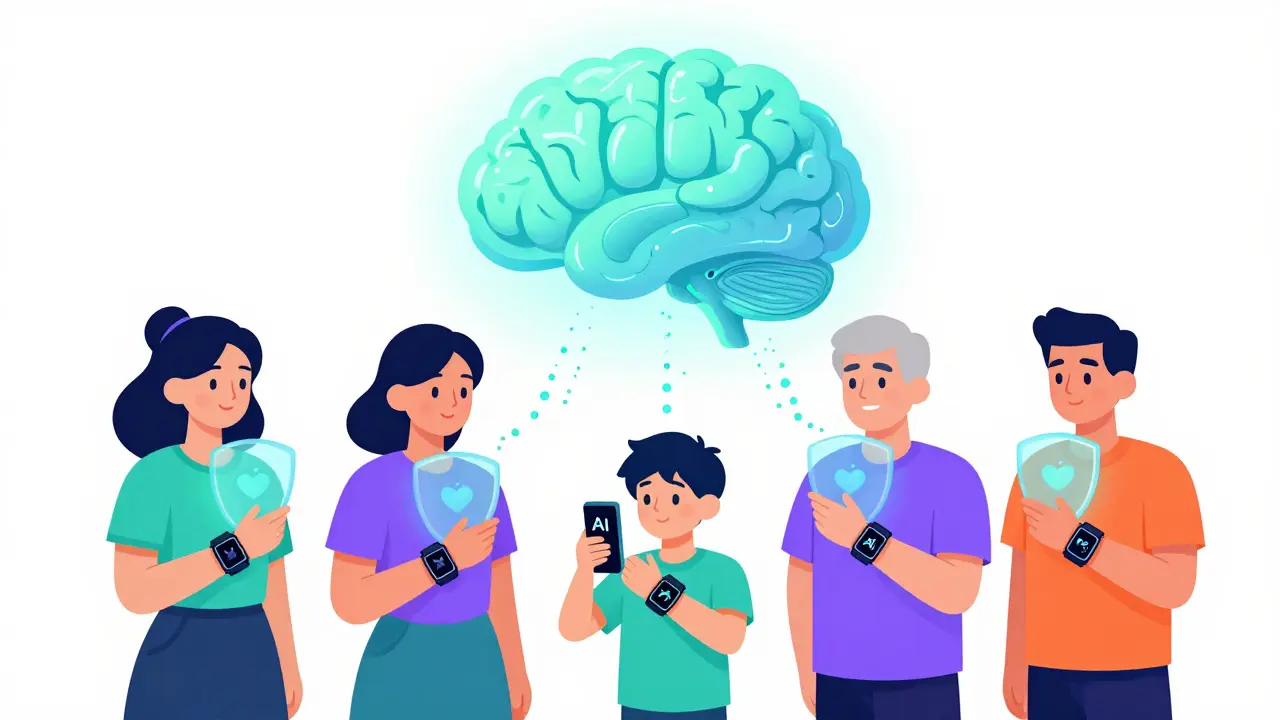
Current wearable ECGs require either manual review by a clinician or basic algorithmic flags. The future lies in artificial intelligence. A 2024 study by Alam et al. in PLOS Digital Health introduced a deep learning model using a Residual Neural Network (ResNet) architecture. This AI analyzed single-lead ECG streams to predict QTc prolongation with high precision.
The study evaluated 686 patients, half of whom had genetic heart disease. The AI could infer QT intervals from limited data, addressing the bottleneck of skilled clinician availability. Imagine wearing a device that doesn’t just record your heart rate but actively analyzes the shape of your waves in real-time, alerting you via smartphone if your QTc approaches a dangerous threshold. This level of automation is critical for scaling remote monitoring to millions of patients worldwide.
Challenges and Implementation Hurdles
Despite the promise, barriers remain. User error is significant. Getting a clean signal from a KardiaMobile 6L requires precise body positioning-thumbs on top, foot on bottom. If a user places their hand incorrectly, the resulting ECG may be unreadable. Skin moisture, movement artifacts, and poor electrode contact can degrade signal quality.
Furthermore, there is currently no universally standardized, commercially available QT interval measurement algorithm embedded directly into all consumer devices. Most apps provide a PDF export of the ECG trace, leaving the interpretation to the user or their doctor. This gap between data collection and actionable insight needs to close for true widespread adoption. Regulatory frameworks are also evolving; while the FDA has cleared specific uses, broader liability questions around missed diagnoses by AI-driven consumer tools remain under discussion.
Conclusion: A New Era of Cardiac Safety
Wearable ECGs have moved from novelty gadgets to essential medical tools. For patients at risk of drug-induced QT prolongation, devices like the Apple Watch and KardiaMobile 6L offer a lifeline of real-time data. They empower patients to take control of their cardiac health and allow clinicians to monitor safety remotely with unprecedented granularity. As AI integration improves and regulatory pathways mature, we can expect these devices to become even more accurate, automated, and indispensable in preventing sudden cardiac events.
Can an Apple Watch detect QT prolongation?
Yes, the Apple Watch (Series 4 and later) can measure the QT interval. Studies have shown it correlates well with standard 12-lead ECGs for this purpose. However, it primarily records a single lead (Lead I), so while it is effective for screening QT prolongation, it may not capture all cardiac abnormalities. Always consult your doctor for interpretation.
What is the difference between KardiaMobile 6L and standard ECG?
The KardiaMobile 6L records six leads of ECG data, similar to a hospital ECG, whereas most smartwatches record only one lead. This makes the KardiaMobile 6L more comprehensive for detailed cardiac analysis. It requires specific placement (thumbs and left leg) to function correctly, unlike the simpler finger-on-crown method of the Apple Watch.
Is wearable ECG data accepted by the FDA?
Yes. In April 2020, the FDA issued guidance allowing the use of specific wearable devices, including the KardiaMobile 6L, for QT interval measurement in clinical settings, particularly during the COVID-19 pandemic. Since then, regulatory acceptance has grown for these devices in remote monitoring scenarios.
How accurate are wearable ECGs for QT measurement?
Research indicates high accuracy. Studies show correlations above 0.88 for Apple Watch readings compared to standard ECGs. Handheld devices like KardiaMobile have been found noninferior to standard 12-lead ECGs for QTc measurement, with errors typically within ±20 milliseconds, which is clinically acceptable for monitoring trends.
Who should use wearable ECGs for QT monitoring?
Patients taking medications known to prolong the QT interval (such as certain antibiotics, antipsychotics, or antiarrhythmics) are ideal candidates. Individuals with a history of long QT syndrome or those participating in clinical trials also benefit significantly from the continuous, remote monitoring capabilities of these devices.