
Vitiligo Camouflage: Cosmetic Options and Techniques for Skin Coverage
 Jul, 21 2026
Living with vitiligo, a condition where the skin loses its pigment cells, often means dealing with more than just physical changes. For many, the real challenge is social anxiety and the desire for uniform skin tone while medical treatments take time to work. This is where vitiligo camouflage techniques come in. These methods are not about hiding your identity; they are practical tools to restore confidence and improve quality of life immediately.
You have two main paths: temporary cosmetic coverage you apply daily or permanent solutions like medical tattooing. Both require specific products and skills that differ significantly from standard makeup routines. Understanding these options helps you choose what fits your lifestyle, budget, and skin stability.
How Temporary Camouflage Works
Temporary camouflage involves using specialized makeup products designed to cover depigmented patches. Unlike regular foundation, these products contain up to 25% more pigment. They are formulated to stay put longer and resist water and sweat better than typical cosmetics.
There are three primary formulations you need to know about:
- Water-based formulas: These use oil-in-water pigments suspended in large amounts of water. They are ideal for normal or dry skin types because they don’t clog pores and feel lightweight on the face.
- Oil-free formulas: Containing ingredients like dimethicone or cyclomethicone, these are best for oily skin. They provide a matte finish and reduce shine without sliding off throughout the day.
- Anhydrous (water-free) formulas: These are waterproof options made with vegetable oils, mineral oils, lanolin, and waxes. They offer the highest durability, lasting 6-14 hours, but can be difficult to remove without proper cleansers.
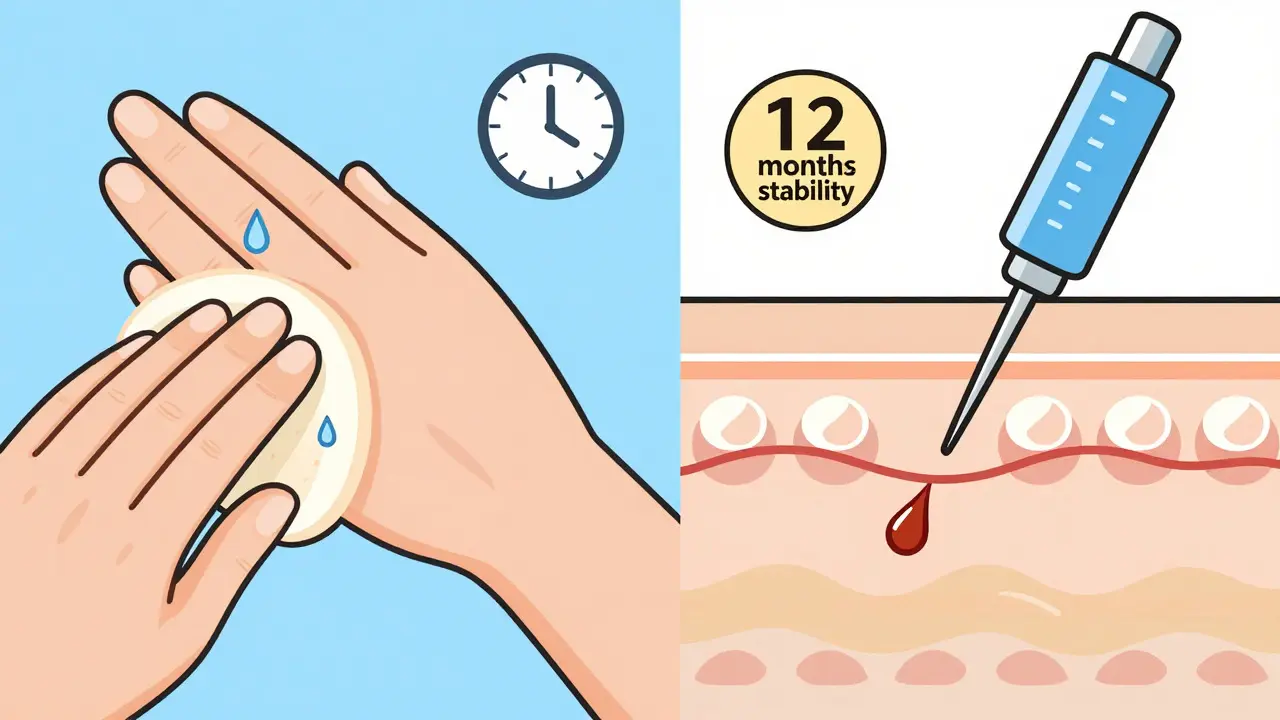
Brands like Dermablend and Dermacolour dominate this space. According to clinical assessments by dermatologist Dr. Davin Lim, these professional-grade foundations provide superior coverage compared to drugstore alternatives. However, they require patience. You cannot just slap them on and go. Proper application takes 12-15 minutes daily once you master the technique.
Mastering the Application Technique
Applying vitiligo camouflage is different from applying regular makeup. The goal is seamless blending, not heavy layering. Here is the step-by-step process recommended by certified specialists:
- Prep the skin: Start with a pH-balanced cleanser. Your skin must be clean and free of oils so the product adheres properly. Avoid moisturizers right before application unless specified by the product instructions.
- Color match under natural light: This is the most critical step. Artificial lighting distorts colors. Test shades near a window. If the patch looks too pink, you might need a green-tinted corrector first to neutralize redness. If it looks too yellow, use a lavender corrector.
- Apply thin layers: Use a damp sponge or brush to stipple the product onto the patch. Do not rub. Stippling presses the pigment into the skin texture. Let each layer set for 90 seconds if using water-based formulas, or 3-5 minutes for anhydrous ones.
- Set the product: Finish with a translucent powder to lock it in place. This prevents transfer onto clothes and increases longevity.
It usually takes 2-4 weeks of daily practice to get comfortable. Many users report initial frustration with color matching, but 89% achieve satisfactory results after personalized training sessions with consultants. Don’t rush this learning curve.
Permanent Camouflage: Micropigmentation Explained
If daily application feels like a chore, micropigmentation (also known as medical tattooing) offers a long-term solution. This procedure implants inert iron oxide pigments into the superficial and middle layers of the dermis. The particles are standardized at 6 microns to ensure safety and tissue stability.
This isn’t a regular tattoo. It requires precision. Technicians implant pigment at a density of 15-20 punctures per square centimeter. The process typically involves 2-3 sessions spaced 6-8 weeks apart. Each session lasts 45-90 minutes depending on the area size.
However, permanent camouflage has strict requirements. Your vitiligo must be stable for at least 12 months before treatment. "Stable" means no new patches and no expansion of existing ones. If your condition is active, the tattooed areas may fade unevenly or develop halo effects around the edges. A 2022 case series showed 18% of patients with unstable vitiligo experienced these issues.
Pros and Cons of Permanent Solutions
Micropigmentation excels in specific areas but struggles in others. It works exceptionally well for recalcitrant vitiligo on digits, lips, wrists, axillae, and elbows. These are high-visibility zones where daily makeup removal is inconvenient.
But there are limitations:
- High-friction areas fail faster: Hands and feet see pigment fade 40% faster than less mobile areas due to constant movement and washing. Hand treatments require 2.3 times more touch-ups.
- Cost: Expect to pay $300-$800 per session depending on the treatment area. This is significantly higher than monthly makeup costs.
- Surface area limits: It is generally not recommended for extensive body surface areas exceeding 15% due to cost and healing complexity.
User feedback reflects this divide. Satisfaction rates hit 74% for facial treatments but drop to 48% for hand treatments. One user reported "life-changing results" around the lips after years of visible vitiligo, while another documented uneven fading on knuckles after eight months.
Comparing Your Options
| Feature | Temporary Makeup | Micropigmentation |
|---|---|---|
| Duration | 6-14 hours (daily reapplication) | Months to years |
| Cost | $25-$45 per product | $300-$800 per session |
| Best For | All skin types, changing conditions | Stable vitiligo, small areas (lips, hands) |
| Flexibility | High (wash off anytime) | Low (hard to reverse) |
| Skin Stability Required | None | Must be stable for 12+ months |

Psychological Benefits and Quality of Life
The value of camouflage goes beyond aesthetics. Studies show that proper application can improve Dermatology Life Quality Index (DLQI) scores by 22-35%. Sixty-eight percent of patients using camouflage report reduced anxiety about social interactions. When your skin looks uniform, you spend less mental energy worrying about stares or explanations.
Dr. Madhulika Upadhyay, a dermatologist specializing in pigmentary disorders, notes that camouflage provides immediate psychological relief while medical therapies like phototherapy work slowly over months. It bridges the gap between diagnosis and potential repigmentation.
Frequently Asked Questions
Is vitiligo camouflage safe for sensitive skin?
Most professional camouflage products are hypoallergenic and non-comedogenic. However, anhydrous formulas containing lanolin or certain waxes may irritate very sensitive skin. Always patch-test a small area first. Water-based options are generally the safest starting point for reactive skin types.
Can I swim or exercise with temporary camouflage?
Yes, if you use anhydrous (waterproof) formulas. These are designed to withstand sweat and water exposure for up to 14 hours. Standard water-based foundations will wash off quickly during swimming or intense workouts. Set your makeup with a setting spray for extra security.
How do I remove waterproof camouflage makeup?
Use an oil-based cleanser or micellar water specifically designed for heavy-duty makeup removal. Gentle circular motions help break down the waxes and oils without scrubbing the skin raw. Avoid harsh soaps that strip natural moisture, as this can worsen skin sensitivity.
When is my vitiligo considered stable enough for micropigmentation?
Your vitiligo is stable if you have had no new patches and no expansion of existing ones for at least 12 consecutive months. A dermatologist should confirm this status before you book any permanent procedures. Treating active vitiligo leads to poor results and potential halo effects.
Does insurance cover vitiligo camouflage treatments?
Rarely. Most insurers classify camouflage makeup and micropigmentation as cosmetic rather than medically necessary. Some plans may cover partial costs if deemed reconstructive after trauma, but for autoimmune vitiligo, out-of-pocket payment is the norm. Check with your provider for specific policy details.