
Single-Sided Deafness: CROS and Bone-Anchored Hearing Options Explained
 Dec, 31 2025
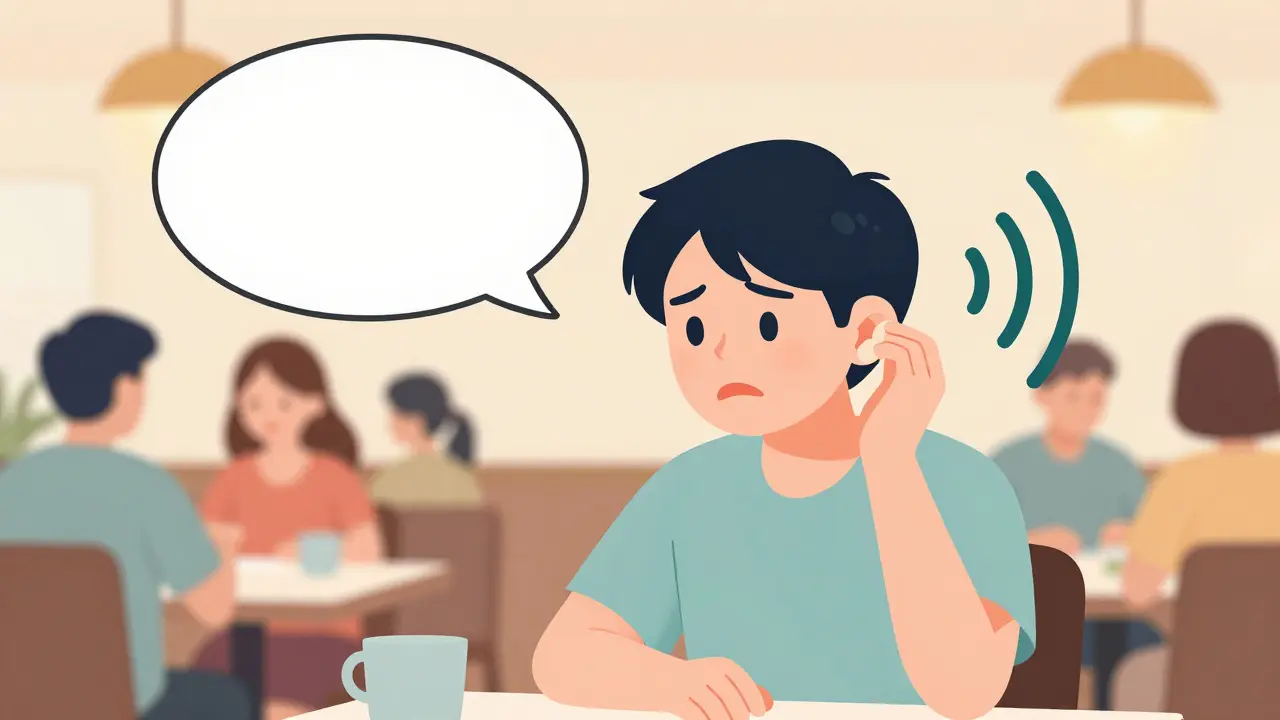
Imagine sitting in a crowded restaurant. Someone speaks to you from your left side, but you can’t hear them clearly. You turn your head, lean in, and still miss half the conversation. This isn’t just bad acoustics-it’s single-sided deafness. One ear hears normally; the other is completely or nearly deaf. The problem isn’t volume-it’s direction. Sounds from the deaf side get blocked by your head before they reach the good ear. This is called the head shadow effect. And it makes understanding speech in noise, knowing where sounds come from, and even feeling like you’re part of a group conversation incredibly hard.
About 4 to 5 out of every 100,000 people develop single-sided deafness each year. It can come from sudden hearing loss, acoustic neuroma, head trauma, or infections. Many people assume nothing can be done. But that’s not true. Two main technologies exist to help: CROS hearing aids and bone-anchored hearing devices. They work in completely different ways. And choosing between them isn’t just about price or convenience-it’s about what kind of life you want to live.
How CROS Hearing Aids Work (And Why Some People Quit Them)
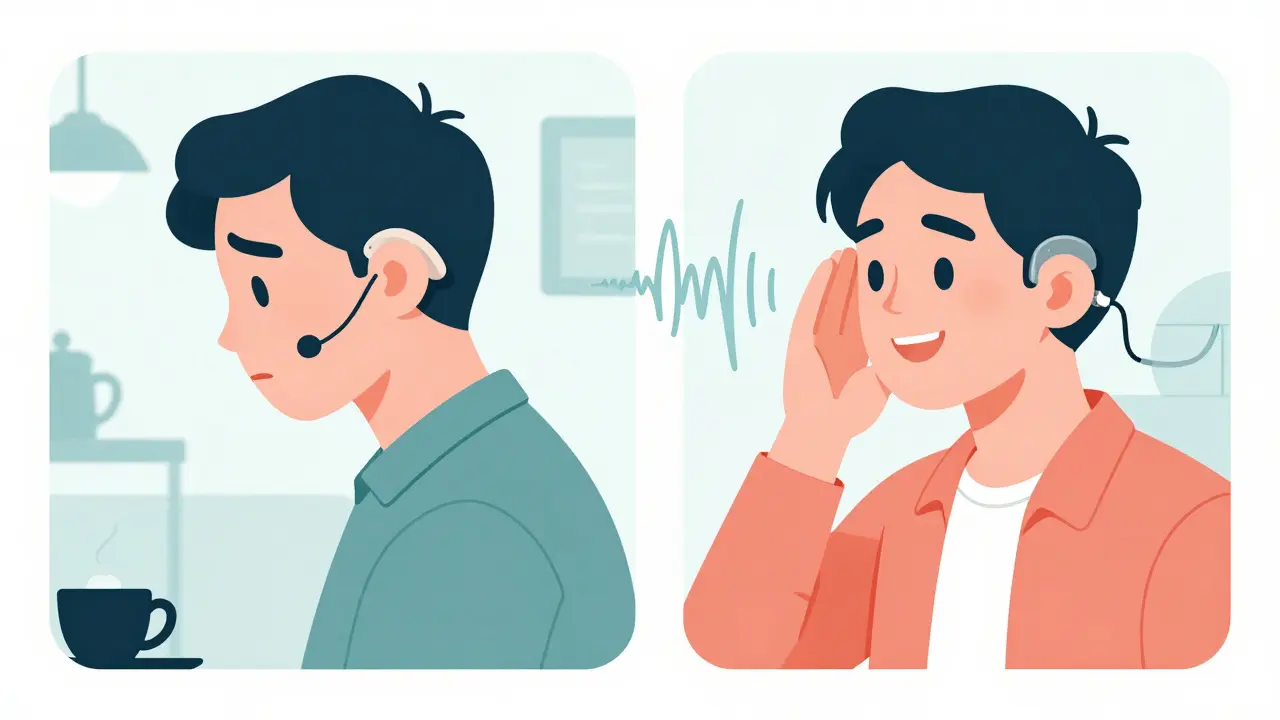
CROS stands for Contralateral Routing of Signals. It’s a non-surgical solution. A tiny microphone sits on your deaf ear. It picks up sound-voices, traffic, a door closing-and wirelessly sends it to a hearing aid on your good ear. Modern CROS systems like the Phonak CROS Marvel or Oticon CROS Free use Bluetooth-like signals, not wires. No surgery. No implants. Just pop them in and go.
They’re great for people who want to avoid any kind of procedure. Fitting takes two to three visits over a few weeks. Most people adapt in under two weeks. Battery life? Two to three days. You’ll get used to changing them regularly. The sound quality? Many users say voices sound natural. No earplug feeling, because your good ear stays open.
But here’s the catch: CROS doesn’t restore hearing. It just moves sound from one side to the other. And that causes a weird effect. When someone speaks to your deaf side, the sound comes through your good ear-but it sounds like it’s coming from inside your head. Not from behind you. Not from the side. From inside. That’s disorienting. And in noisy places? It gets worse. Studies show that when background noise comes from your deaf side, CROS users actually understand speech worse than if they weren’t wearing anything at all. One Reddit user summed it up: “I love not having surgery, but the extra noise from the bad side makes restaurants unbearable.”
And then there’s battery life. Seventy-three percent of CROS users in a 2022 survey called it a major issue. You can’t forget to change them. Miss a day, and you’re back to silence on one side. And if the device breaks? Repairs take about two business days-fast, but still a hassle.
Still, CROS is the most common first step. About 65% of new SSD patients start with it. It’s cheaper-$2,500 to $4,000-and no risk of infection or skin problems. But if you’re in a job where you need to hear people coming from all sides-like a teacher, mechanic, or emergency responder-CROS might not cut it long-term.
Bone-Anchored Hearing Devices: Surgery, Sound, and Skin Issues
Bone-anchored hearing devices (BAHD) work differently. Instead of sending sound through the air, they send vibrations directly through your skull bone to your inner ear. It’s like tapping on your skull and hearing the sound resonate inside. The most common systems are Cochlear Baha 6 Max, Oticon Medical Ponto 5, and MED-EL Bonebridge.
But here’s the trade-off: you need surgery. A titanium implant is screwed into the skull behind your deaf ear. It takes 3 to 6 months to fuse with the bone. Only then can the sound processor be attached. The procedure costs $3,000 to $7,000 out-of-pocket in the U.S., plus $300 to $500 for a CT scan. Recovery isn’t easy. You’ll have a small abutment sticking out of your skin. And that’s where problems start.
Between 15% and 63% of users develop skin reactions around the abutment. Redness, itching, pus, even infection. One user on HearingTracker said: “I get skin irritation about twice a month. I need antibiotic cream every time.” That’s not rare. It’s expected. Cleaning the area daily becomes part of your routine-like brushing your teeth. Miss a day, and you risk inflammation.
But the sound? That’s where BAHD shines. Because the sound comes through bone, not air, there’s no occlusion effect. Your good ear isn’t blocked. Wind noise? Minimal. Background noise? Better handled. In studies, BAHD users showed a 3.5 dB improvement in speech understanding when speech came from the deaf side and noise from the good side. CROS users? They lost 1.2 dB in the same situation. That’s the difference between understanding a friend in a café and missing half their words.
And localization? Not perfect, but better. In a major 2015 trial, BAHD users could pinpoint where a sound came from with about 33 degrees of error. CROS users? 35 degrees. Not a huge gap-but enough to matter when you’re crossing a street or turning toward someone calling your name.
Adaptation takes longer. Four to eight weeks to get used to the bone-conducted sound. It feels weird at first-like your voice is booming inside your head. But most users say it becomes natural. And battery life? Five to seven days. Less hassle. Less anxiety.
Who Benefits Most From Each Option?
There’s no one-size-fits-all. Your choice depends on your lifestyle, health, and priorities.
Choose CROS if:
- You want zero surgery
- Your good ear has normal hearing (pure-tone average ≤ 25 dB HL)
- You work in quiet or controlled environments
- You’re unsure about long-term commitment
- You can handle changing batteries every few days
Choose Bone-Anchored if:
- You’re willing to undergo surgery and accept skin maintenance
- Your good ear has mild to moderate hearing loss (up to 45-55 dB HL)
- You’re active-exercise, sports, outdoor work
- You need better speech understanding in noise
- You hate the idea of losing sound when batteries die
There’s also a third option: cochlear implants. But they’re usually reserved for people who’ve tried CROS and BAHD and still struggle with spatial hearing. The FDA expanded CI eligibility for SSD in January 2024, after studies showed CI users outperformed both CROS and BAHD in sound localization. Still, it’s a bigger surgery. More expensive. Only considered after other options fail.
Real-World Trade-Offs: Comfort vs. Clarity
One study asked eight SSD patients to pick between CROS and BAHD. Four preferred CROS for sound quality. Three preferred BAHD for comfort. One said: “CROS makes voices sound natural, but BAHD stays in place during exercise.” That’s the core tension.
Think about your day. Do you wear a helmet? Sweat a lot? Shower often? BAHD’s abutment can get irritated. CROS can slip out of your ear during movement. BAHD users report 92% satisfaction with device retention during physical activity. CROS users? Only 68%. If you run, swim, or work in construction, BAHD wins.
But if you’re a teacher who sits at a desk, or a writer who works from home, CROS might be enough. You won’t need perfect localization. You just need to hear your students or your partner when they speak from your left.
And then there’s the long game. A 2022 study found that nearly half of CROS users stopped using their device after a year. Only 7% of BAHD users did. Why? Expectations. Many thought CROS would “fix” their hearing. It doesn’t. It compensates. And that’s not enough for everyone.

What’s Next? The Future of SSD Treatment
Technology keeps evolving. Signia’s 2023 CROS Pure 312 now includes tinnitus therapy-helpful since 78% of SSD patients also have ringing in the ears. Cochlear’s 2024 Baha 7 Smart uses AI to reduce background noise automatically. That’s a big deal.
But the biggest shift? The move away from “CROS or BAHD” to a stepped approach. Experts now recommend: try CROS first. Give it four weeks. If you’re still struggling with noise, localization, or comfort, move to BAHD. If that’s not enough after six months, consider a cochlear implant.
The market is changing, too. CROS still leads in new users-42% of the SSD device market in 2023. But BAHD is growing at 8.7% per year. Why? Because transcutaneous systems (like Ponto 5) are getting better. Less skin irritation. Stronger signals. More reliable.
And here’s something few people talk about: your brain adapts. Over time, the brain reorganizes when one ear is silent. That’s why early intervention matters. Waiting too long-even with a good device-can make it harder to benefit. The sooner you act, the better your brain can adjust.
Final Thoughts: It’s Not About the Device. It’s About Your Life.
Single-sided deafness doesn’t just affect hearing. It affects confidence. Social isolation. Even job performance. You might feel like you’re always missing out. But you’re not alone. And you’re not stuck.
CROS is the easy start. No surgery. Low cost. Quick fit. But it’s a workaround. It doesn’t fix the problem-it hides it. And for many, that’s not enough.
Bone-anchored devices are a commitment. Surgery. Maintenance. Patience. But they give you something CROS can’t: a more natural connection to sound. You hear from both sides-not just one. You feel present. Not just compensated.
There’s no perfect answer. But there is a right one-for you. Talk to an audiologist who specializes in SSD. Try both. Test them in real environments. Ask for a trial. Don’t rush. This isn’t a phone upgrade. It’s your hearing. And your quality of life.