
Renal Dosing for Metformin and SGLT2 Inhibitors: When to Adjust
 Mar, 29 2026
Metformin Renal Dosing Calculator
Dosage Guidelines
Enter the patient's current eGFR to determine the maximum recommended daily dose of Metformin.
Recommended Maximum Daily Dose
Reference Table
- eGFR ≥60 2550 mg
- eGFR 45 - 59 2000 mg
- eGFR 30 - 44 1000 mg
Managing diabetes alongside chronic kidney disease creates a high-stakes environment where medication choices directly impact survival rates. For years, clinicians struggled with conflicting advice: regulatory labels said stop a drug when kidney function dropped, while major clinical guidelines argued for continuing it to protect the kidneys. By March 2026, we have moved significantly past that confusion, yet friction remains between what insurance covers and what evidence supports. This guide cuts through the noise to give you exact numbers and actionable protocols.
Understanding Metformin and Kidney Function
Metformin is the first-line medication for type 2 diabetes. However, its relationship with kidney function has undergone a major shift over the last decade. The risk everyone worries about is lactic acidosis, a rare complication where lactate builds up in the blood. Because metformin clears through the kidneys, impaired function raises this risk, leading to historically strict restrictions.
Data shows that the incidence rate of lactic acidosis is extremely low-about 3.3 cases per 100,000 patient-years. Despite this, caution remains necessary. The current standard relies heavily on your estimated glomerular filtration rate (eGFR). Here is the specific breakdown you need to apply daily:
- eGFR ≥60 mL/min/1.73 m²: Maximum daily dose remains 2550 mg.
- eGFR 45-59 mL/min/1.73 m²: Reduce maximum daily dose to 2000 mg.
- eGFR 30-44 mL/min/1.73 m²: Further reduce maximum daily dose to 1000 mg.
- eGFR <30 mL/min/1.73 m²: Discontinue use; avoid metformin completely.
Some specialists note exceptions for patients on dialysis. Peritoneal dialysis may allow 250 mg daily, while hemodialysis patients can sometimes take 500 mg immediately after a session. These are niche scenarios requiring close monitoring, but the general rule holds firm for standard outpatient care. You must monitor renal function every three months when eGFR drops below 45, shifting to monthly checks as it approaches the 30 threshold.
Navigating SGLT2 Inhibitor Thresholds
SGLT2 Inhibitors are a class of oral medications including canagliflozin, dapagliflozin, and empagliflozin that lower blood sugar by filtering glucose through urine. More importantly for this discussion, they offer proven kidney protection. The landmark change occurred when guidelines recognized these drugs could slow kidney failure even when kidney function was already poor.
The KDIGO Guidelines, updated significantly around 2022, lowered the bar for using these medications. Previously, many stopped when eGFR hit 30 or 45. Now, the recommendation extends down to eGFR ≥20 mL/min/1.73 m² for patients with albuminuria. This decision relied on massive randomized controlled trials like CREDENCE, DAPA-CKD, and EMPA-KIDNEY.
Even within this class, agents differ slightly regarding approved labeling limits versus clinical practice. For instance, canagliflozin often carries a contraindication label at eGFR <45 mL/min/1.73 m², despite evidence suggesting benefit lower. Dapagliflozin allows use down to 25 mL/min/1.73 m², while empagliflozin stops at 30 mL/min/1.73 m² in terms of formal labeling. A key nuance: once started, it is reasonable to continue therapy even if eGFR dips below the initial threshold, provided the patient tolerates it.
| Medication | Max Daily Dose | Efficacy Threshold | Contraindication Limit |
|---|---|---|---|
| Canagliflozin | 100 mg | eGFR 45-59 | <45 mL/min |
| Dapagliflozin | 10 mg | eGFR 25-45 | <25 mL/min |
| Empagliflozin | 10 mg | eGFR 30-45 | <30 mL/min |
This table highlights the discrepancy many of you face. You might see a patient with an eGFR of 22 who would benefit from kidney protection, yet their specific prescription might technically fall off the FDA label. This leads to the next major challenge: insurance approval.
Bridging the Gap Between Guidelines and Labels
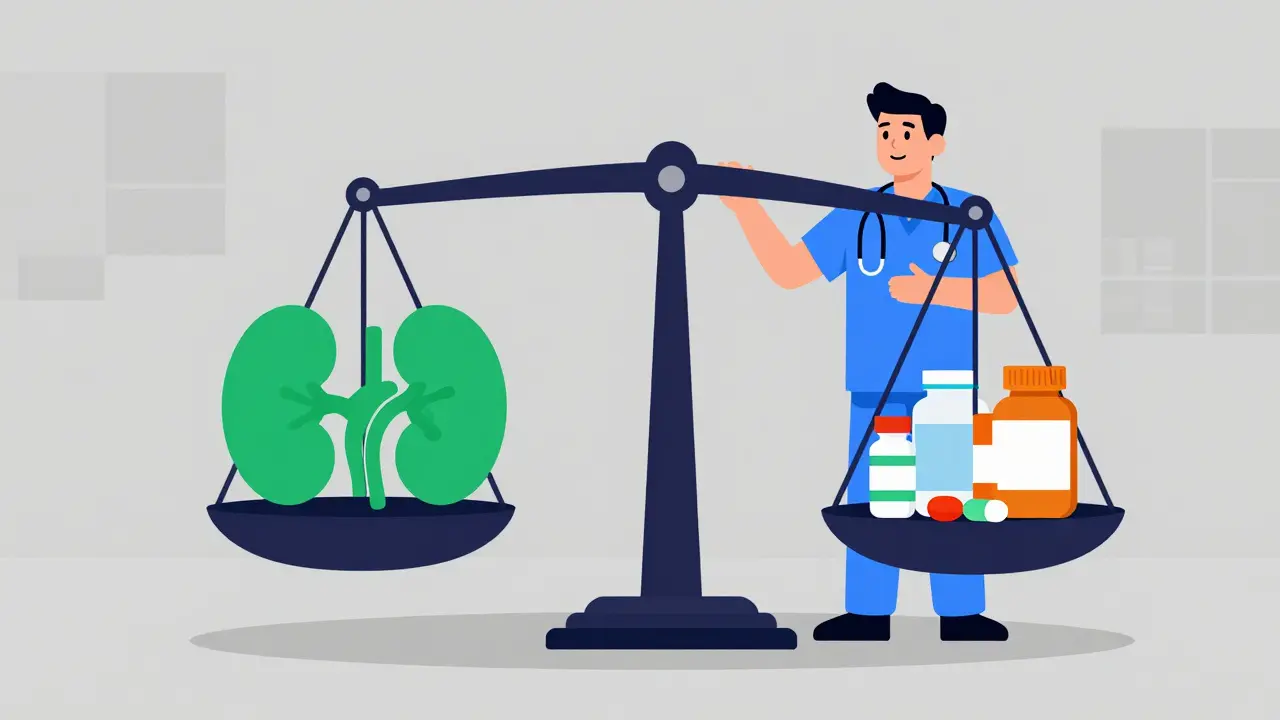
There is a known tension between regulatory agencies like the FDA and clinical organizations like the American Diabetes Association (ADA). While ADA Standards of Care align with KDIGO recommendations for using SGLT2 inhibitors down to eGFR 20, the FDA often maintains conservative labeling. In 2024, for example, certain approvals expanded indications for CKD regardless of diabetes status, yet the eGFR cut-off remained higher than what experts suggest.
Why does this gap exist? Regulatory labels require definitive safety data from the exact population being treated. Sometimes guidelines move faster, interpreting broader clinical outcomes from diverse trials. For the clinician, this means checking both the label and the latest consensus statement. In 2026, if you choose to prescribe outside the FDA label but within KDIGO recommendations (an "off-label" use), you must document your reasoning clearly.
Insurance denial is a frequent complaint. Surveys from late 2022 showed nearly half of endocrinologists faced rejections for prescriptions in the eGFR 20-29 range. By 2026, this has improved but not vanished. When denied, your best leverage is citing the specific guideline, such as the KDIGO 2022 Recommendation 1.3.1. Appeal letters focusing on reducing cardiovascular death risks often succeed where generic requests fail.

Monitoring Protocols and Safety Signals
Once you initiate therapy, passive waiting isn't enough. You need active surveillance. A common phenomenon is the initial drop in eGFR upon starting an SGLT2 inhibitor. Patients and doctors alike panic seeing a number drop from 45 to 40 within weeks. This is expected hemodynamic adaptation and shouldn't trigger a stop. The UK Kidney Association guidelines clarify that you must interpret this decline cautiously.
Here is the rhythm for follow-up that minimizes risk:
- First Month: Recheck serum creatinine and electrolytes to catch volume depletion.
- eGFR ≥60: Assess kidney function every 6 to 12 months.
- eGFR 45-59: Increase frequency to every 3 to 6 months.
- eGFR 30-44: Quarterly checks (every 3 months) are mandatory.
You must also implement "sick-day rules." If a patient gets severely ill, dehydrated, or has acute illness requiring fasting, hold the SGLT2 inhibitor immediately. Volume depletion combined with these drugs increases the risk of acute kidney injury. Once the patient recovers and eats/drinks normally, restart the medication. For metformin, temporary suspension is required during periods of acute kidney injury to prevent lactic acidosis buildup.
Real-World Barriers and Solutions
Clinical practice isn't always theoretical. Consider the case of a primary care doctor managing a patient with eGFR 27. They want to keep the SGLT2 inhibitor on board for heart protection but worry about liability. The solution lies in shared decision-making documentation. Discuss the benefits (roughly 30-40% reduction in worsening kidney function) versus the risks (potential hospitalization for low BP or dehydration).
Insurance hurdles are often solved by pre-authorization support services. Many pharmaceutical manufacturers now offer navigation teams to help submit medical necessity forms. If you encounter resistance from pharmacy systems, switching to an agent with lower eGFR labeling limits, like dapagliflozin compared to others, can bypass administrative flags.
Finally, consider the metabolic window. There is a narrow zone (eGFR 20-29 mL/min/1.73 m²) where you can continue an SGLT2 inhibitor but must stop metformin. This overlap period requires a clear transition plan so patients don't lose glycemic control abruptly. Switching to insulin or other non-renal-cleared glucose-lowering agents becomes necessary here.
At what eGFR should I stop metformin?
Standard guidelines recommend discontinuing metformin when eGFR falls below 30 mL/min/1.73 m². Some cautious approaches reduce the dose to 1000 mg/day when eGFR is between 30 and 45. Never start metformin if the patient is already below the 30 threshold.
Can I use SGLT2 inhibitors if eGFR is under 30?
Yes, according to KDIGO 2022 guidelines, SGLT2 inhibitors can be used for kidney protection down to an eGFR of 20 mL/min/1.73 m². However, FDA labeling varies by drug, with some restricting use below 30 or 45 depending on the specific molecule.
Is an eGFR drop normal after starting these drugs?
A small initial drop of 2-5 mL/min/1.73 m² is a typical physiological response to SGLT2 inhibitors. Do not stop the medication solely because of this transient dip, provided the patient remains stable without signs of hypovolemia.
How do sick days affect medication management?
You should withhold both metformin and SGLT2 inhibitors during acute illnesses that cause vomiting, diarrhea, or severe dehydration. Restart them only after hydration and kidney function return to baseline to prevent acute kidney injury.
What monitoring schedule is recommended?
Monitor renal function every 6-12 months if eGFR is above 60. Increase to every 3-6 months for eGFR 45-59, and check every 3 months if eGFR is between 30 and 44. Frequency increases as kidney function declines.
Kendell Callaway Mooney
March 31, 2026 AT 11:48Just watch the creatinine closely every three months.
If you see a dip below thirty then you need to adjust the dosage immediately.
Patient education is also really important here for long term safety.
emma ruth rodriguez
March 31, 2026 AT 13:50It is imperative to understand the nuances regarding the pharmacokinetics of metformin within the renally impaired population. Many practitioners fail to recognize the subtle shifts in clearance rates that occur below forty-five milliliters. The data presented here aligns with our current institutional protocols for patient safety management. Insurance coverage remains a significant barrier despite the clear evidence supporting continued therapy. We must advocate for policy changes that prioritize patient outcomes over administrative restrictions. Lactic acidosis risks are statistically negligible when monitored correctly according to established parameters. The guideline updates from March twenty twenty-six provide much needed clarity for frontline providers. Clinicians should focus on individualized care plans rather than blanket stopping rules for medication. Renal function tests require consistent scheduling to maintain therapeutic efficacy without toxicity. Patient education plays a crucial role in ensuring adherence to dosage modifications during renal decline. Regular follow-up appointments help mitigate potential adverse events associated with accumulating drug levels. Collaboration between nephrology and endocrinology is essential for complex cases involving comorbidities. Pharmacists often identify discrepancies in prescription orders before they reach the dispensing stage. Continued research into metabolic pathways could further refine these safety thresholds in the near future. Ultimately we must remain vigilant while supporting aggressive treatment strategies for diabetic populations!
dPhanen DhrubRaaj
April 2, 2026 AT 03:45eGFR limits are clear enough here
Michael Kinkoph
April 3, 2026 AT 12:22This guidance is obviously superior to what the masses consume daily!!! It demonstrates an intellectual rigor that is simply absent from common discourse!!!! One must appreciate the distinction drawn between regulatory labels and clinical reality!!! Such clarity is rarely found in modern medicine!!!
Jonathan Sanders
April 4, 2026 AT 00:22The irony of ignoring labels until legal trouble hits is palpable in these new guidelines.
Doctors know the risks but the paperwork always wins in the end.
It is funny how fast we change rules once the lawsuits stop.
Cameron Redic
April 4, 2026 AT 21:44The post fails to address the financial incentives behind continuing these drugs past safety limits.
We see zero discussion on pharmaceutical profit motives driving these guideline changes.
Clinical truth is often buried under marketing funded research papers.
This looks like another industry sponsored push for off label usage disguised as safety data.
Patient advocates should be demanding independent verification before trusting these numbers completely.
I am tired of seeing guidelines shift whenever a big pharma study publishes favorable results.
Brian Yap
April 6, 2026 AT 17:25I agree with the points about insulin resistance being managed better with this combo :)
Katie Riston
April 8, 2026 AT 13:48The philosophical underpinnings of medical decision making become particularly evident when examining the tension between regulatory caution and clinical utility. One must consider whether the fear of rare complications outweighs the proven benefits of glycemic control in preserving organ function over decades. Society places immense pressure on healthcare systems to prevent liability even when doing so compromises the quality of life for patients suffering from chronic conditions. There exists a profound dissonance between what the law dictates regarding labeling and what ethical practice demands regarding patient autonomy in treatment choices. We see echoes of historical medical dogmas that were eventually overturned by better science yet still linger in bureaucratic inertia today. The human element often gets lost amidst spreadsheets of filtration rates and milligram limits defined by arbitrary committee decisions. True healing requires looking beyond the numbers to understand the lived experience of managing disease alongside declining physiological reserves. It forces us to confront our own risk tolerance and how it differs from the average patient facing mortality statistics daily. Perhaps we should view kidney preservation not merely as a metric to optimize but as a fundamental aspect of holistic health maintenance. The burden placed on physicians to navigate conflicting information sources creates unnecessary stress that impacts the physician patient relationship negatively. Long term thinking is required to shift the narrative away from avoidance toward active protection of renal tissue integrity. Medical wisdom accumulates slowly through observation rather than rapid reaction to isolated case reports of adverse reactions. This perspective encourages a more compassionate approach to prescribing practices that honor the resilience of the human body. We ought to celebrate the progress made in understanding metabolism instead of focusing solely on the dangers that remain theoretical. Hope persists even when guidelines appear contradictory because the intent behind both sides remains the same goal of wellness.
sanatan kaushik
April 9, 2026 AT 07:51Why do people worry so much about lactic acidosis when the numbers are so low
Stop fearing the stats and trust the clinical picture instead
Marwood Construction
April 9, 2026 AT 18:48The inquiry into filtration rate thresholds warrants further investigation in controlled environments.
Standardized testing protocols would benefit the general understanding of these parameters significantly.
Current literature supports the adjustment models proposed in the text above.
Jonathan Alexander
April 9, 2026 AT 21:04My dad went through this last year and the doctor just kept the meds on even when his kidneys tanked slightly.
It felt like a gamble we all had to take for his survival.
Nothing is certain in this field except the struggle to stay alive longer.
Charles Rogers
April 11, 2026 AT 13:26People who ignore the eGFR cutoffs are playing Russian roulette with their lives.
This judgment call falls squarely on the shoulders of the prescribing physician alone.
Adryan Brown
April 13, 2026 AT 01:43We should try to find common ground between safety and efficacy in these treatment protocols.
Both sides of the argument have valid concerns that need addressing simultaneously.
Understanding is the first step toward better patient outcomes overall.
Biraju Shah
April 14, 2026 AT 07:16You need to assert your rights as a patient if your insurance denies these meds.
Appeals work better when you bring concrete lab data to support the continuation of therapy.
Do not accept the default denial letter without fighting back.