
Post-Heart Attack Life: Medications, Diet, and Activity
 Jan, 15 2026
What Happens After a Heart Attack?
You survive a heart attack. That’s the first win. But the real work starts now. Recovery isn’t about going back to how things were before. It’s about building a new normal-one that keeps your heart strong and reduces the chance of another event. The NHS says it clearly: don’t rush your rehabilitation. Most people need between two weeks and three months to heal, depending on how badly the heart was damaged and how healthy you were before.
This isn’t something you do alone. A team of doctors, nurses, dietitians, physiotherapists, and pharmacists will guide you. Their goal? Get you moving safely, help you take the right medicines, teach you what to eat, and support your mental health. It’s all connected. Skip one piece, and the whole plan weakens.
Your Medications: Non-Negotiable
Right after a heart attack, your medical team starts you on a set of medicines. These aren’t optional. They’re your safety net. You’ll likely be on at least four types: aspirin to stop clots, statins to lower cholesterol, beta-blockers to reduce heart strain, and ACE inhibitors or ARBs to lower blood pressure and help your heart heal.
Some people also get diuretics to reduce fluid buildup, or newer drugs like SGLT2 inhibitors or ARNI if their heart function is weak. The exact mix depends on your heart’s condition, your age, and other health issues like diabetes or kidney problems.
Here’s what matters: take them every day, exactly as prescribed. Skipping doses-even just once-raises your risk of another heart attack. Many people forget because they feel fine. But your heart isn’t healed just because you’re not in pain. The damage is still there, and the meds are working behind the scenes.
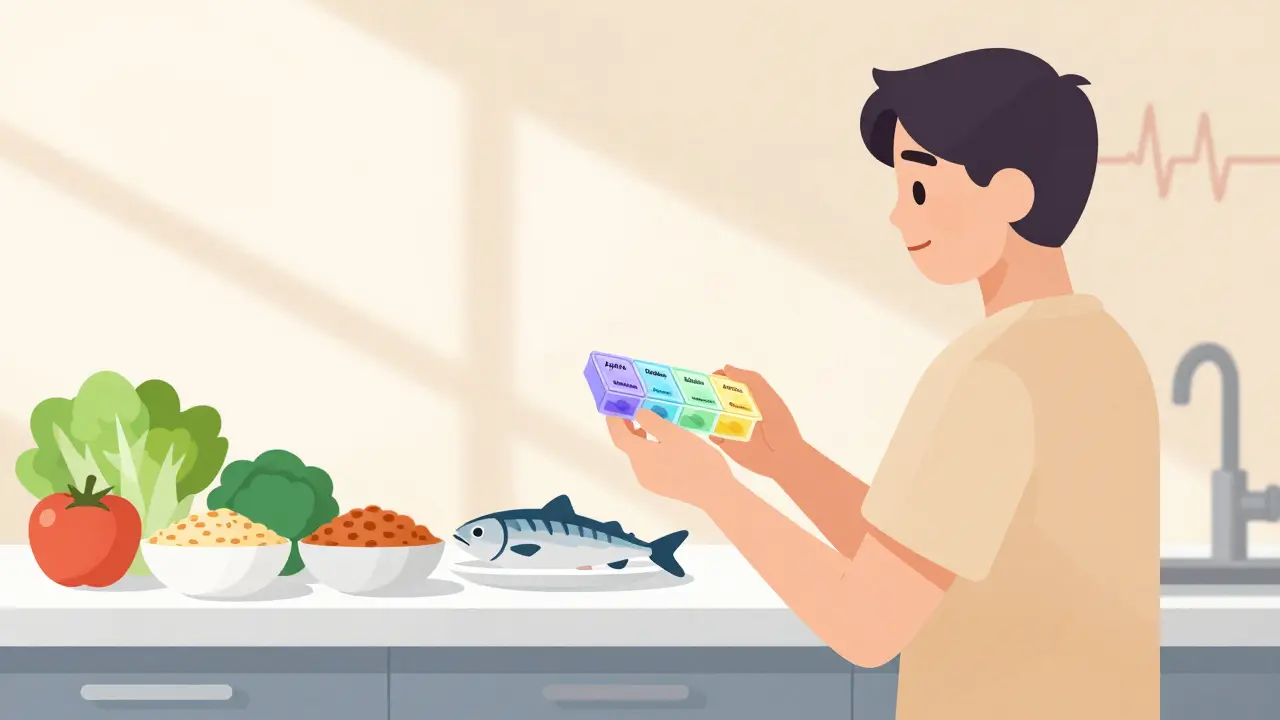
Keep a written list of all your medicines: name, dose, time to take it, and why you’re taking it. Carry it with you. Talk to your pharmacist. They can explain side effects, check for dangerous interactions, and help you set up pill organizers. In the UK, the NHS recommends using a medicines list you can show any doctor or paramedic in an emergency. Don’t guess. Don’t stop. Don’t share.
Eating for Your Heart: No Fads, Just Facts
Forget detoxes, keto, or juice cleanses. After a heart attack, you need a simple, sustainable way of eating that lowers inflammation, controls blood pressure, and keeps cholesterol in check.
Start with what you cut out: processed meats, fried foods, sugary drinks, white bread, and anything with trans fats. These raise bad cholesterol and trigger inflammation. Swap them for:
- Fresh vegetables and fruits (aim for 5 portions a day)
- Whole grains like oats, brown rice, quinoa, and wholewheat pasta
- Fatty fish like salmon, mackerel, or sardines (twice a week)
- Legumes: beans, lentils, chickpeas
- Nuts and seeds (unsalted, small handfuls daily)
- Plant oils like olive or rapeseed oil instead of butter
Watch your salt. The NHS recommends no more than 6g a day-about a teaspoon. Most of it comes from bread, soups, sauces, and ready meals. Cook from scratch when you can. Use herbs, garlic, lemon, and spices for flavor instead.
Portion control matters too. Even healthy foods can lead to weight gain if you eat too much. Your dietitian will help you plan meals that fit your lifestyle, cultural preferences, and any other conditions like diabetes. This isn’t a diet you do for a month. It’s the way you eat for the rest of your life.
Getting Moving: Slow and Steady Wins
It’s normal to feel tired, weak, or even scared to move after a heart attack. Your heart muscle was injured. It needs rest. But staying still too long weakens your muscles, lowers your stamina, and makes recovery harder.
The NHS says: start with light activity. Walk up and down stairs a few times a day. Take a 5-minute walk around your home. Build up by 1-2 minutes every few days. If you feel dizzy, short of breath, or get chest pain, stop and rest. Don’t push through pain.
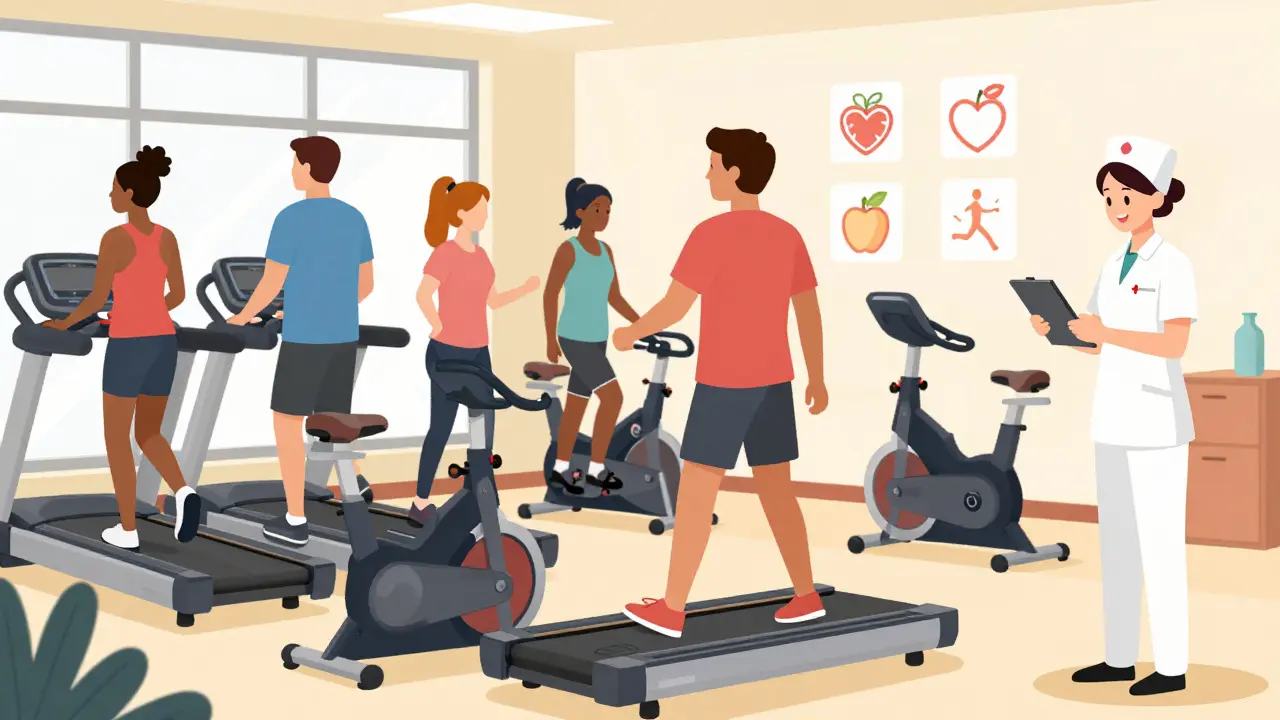
After a week or two, you’ll likely be referred to cardiac rehabilitation. This is the most important step in your recovery. It’s not a gym class. It’s a medically supervised program designed for people like you. You’ll do gentle aerobic exercises-walking on a treadmill, cycling on a stationary bike, light arm movements-while your heart rate and blood pressure are monitored.
Why it works: aerobic activity strengthens your heart, improves circulation, lowers blood pressure, and helps your body use oxygen better. It also reduces stress and anxiety. Most programs run 6-12 weeks, 2-3 times a week. By the end, you’ll know how much you can safely do on your own.
Once you finish rehab, keep moving. Aim for 30 minutes of moderate activity most days. That could be brisk walking, gardening, swimming, or dancing. Don’t wait for a perfect day. Do what you can, when you can. Even 10 minutes at a time adds up.
Cardiac Rehab: Your Recovery Engine
Cardiac rehabilitation isn’t optional. It’s the core of your recovery. The NHS calls it one of the two most important parts of healing after a heart attack. The other is reducing your risk of another one. Rehab ties everything together.
In rehab, you get:
- Safe, supervised exercise tailored to your fitness level
- Education on your medicines and how they work
- Guidance on eating well, quitting smoking, and managing stress
- Support for anxiety, depression, or fear of another attack
It’s not just about physical recovery. Many people feel guilty, scared, or isolated after a heart attack. Rehab gives you a space to talk about it-with professionals and others who’ve been through it. You’re not alone.
Programs are personalized. If you’re 75 and have arthritis, your exercises will be different from someone who’s 50 and active. Your age, other conditions, and even your home setup are all considered. If you’re not offered rehab, ask your GP or cardiologist. It’s covered by the NHS.
Follow-Ups and Long-Term Monitoring
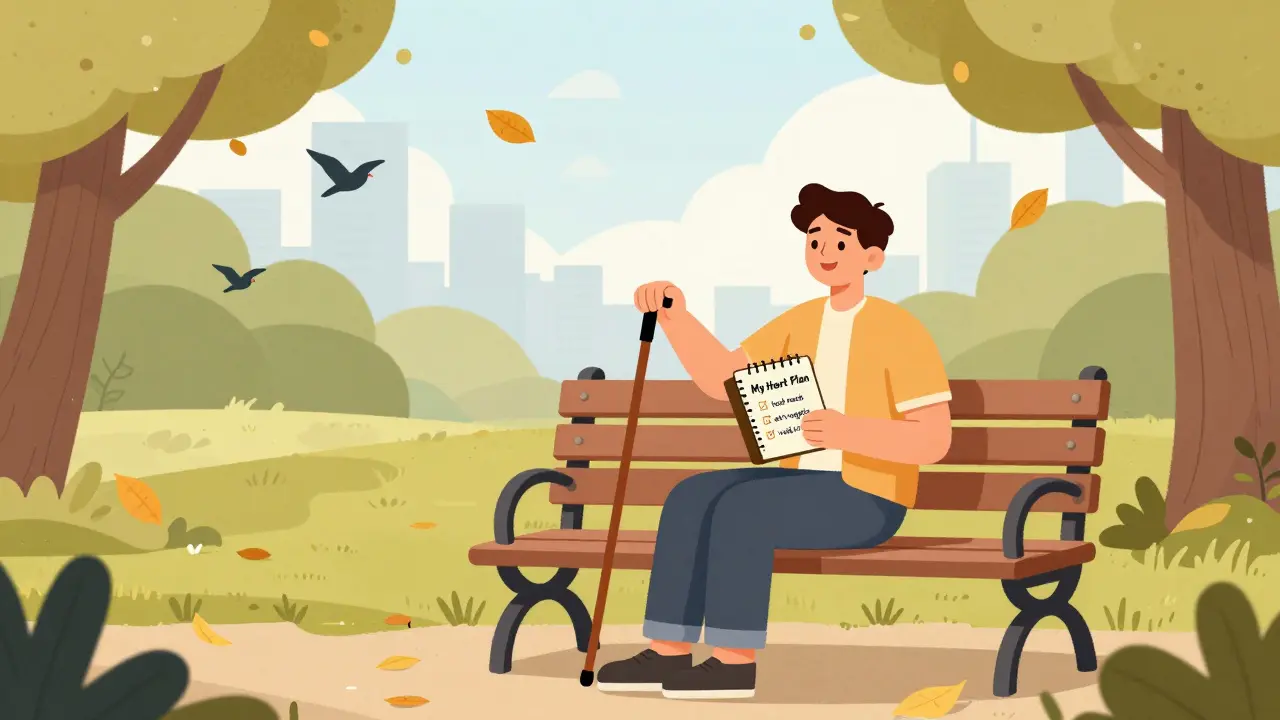
You’ll have your first follow-up appointment 4-6 weeks after leaving the hospital. Your doctor will check your heart function, review your medicines, and see how you’re doing with diet and activity.
After that, you’ll likely have check-ups every 3-6 months. Blood tests for cholesterol and kidney function, ECGs, and sometimes echocardiograms will track your progress. The American Heart Association says long-term recovery needs ongoing support-not just a single check-up. That means keeping in touch with your GP, your cardiac rehab team, and your pharmacist.
Watch for warning signs: new or worsening chest pain, unusual shortness of breath, swelling in your legs, sudden dizziness, or irregular heartbeat. Don’t wait. Call 111 or go to A&E if you’re unsure. Early action saves lives.
It’s Not Just Your Body-It’s Your Mind Too
It’s common to feel anxious after a heart attack. You might worry about sex, driving, returning to work, or even walking to the shops. That’s normal. But if it lasts more than a few weeks, it becomes a problem.
Depression affects up to one in three people after a heart attack. It slows recovery. It makes you less likely to take your meds or exercise. Cardiac rehab includes psychological support for this exact reason. Talking to a counsellor, joining a support group, or even practicing mindfulness can make a real difference.
Don’t brush off low mood as ‘just being tired.’ If you’re losing interest in things you used to enjoy, sleeping too much or too little, or feeling hopeless-tell someone. Your GP can refer you to free talking therapies through the NHS. Your heart needs emotional care just as much as physical care.
What You Can Control
You can’t change your age, your family history, or your gender. But you can change your diet, your activity level, whether you smoke, how you manage stress, and whether you take your medicines.
That’s the power here. After a heart attack, you’re not a victim. You’re someone who’s been given a second chance. The choices you make in the next 6 months will shape the next 20 years.
It’s not about being perfect. It’s about being consistent. One healthy meal. One short walk. One day you remembered your pills. Those add up. And they matter more than you think.
Bobbi-Marie Nova
January 17, 2026 AT 03:34kanchan tiwari
January 17, 2026 AT 06:08Corey Chrisinger
January 18, 2026 AT 10:20brooke wright
January 18, 2026 AT 13:47Riya Katyal
January 18, 2026 AT 17:43waneta rozwan
January 18, 2026 AT 18:40Nicholas Gabriel
January 19, 2026 AT 05:45Cheryl Griffith
January 19, 2026 AT 22:03swarnima singh
January 20, 2026 AT 08:49Isabella Reid
January 21, 2026 AT 20:06Jody Fahrenkrug
January 22, 2026 AT 06:44Kasey Summerer
January 24, 2026 AT 04:31Stephen Tulloch
January 25, 2026 AT 21:30Melodie Lesesne
January 27, 2026 AT 16:10