
Orphan Drug Exclusivity: How Rare-Disease Medicines Get Market Protection
 Dec, 25 2025
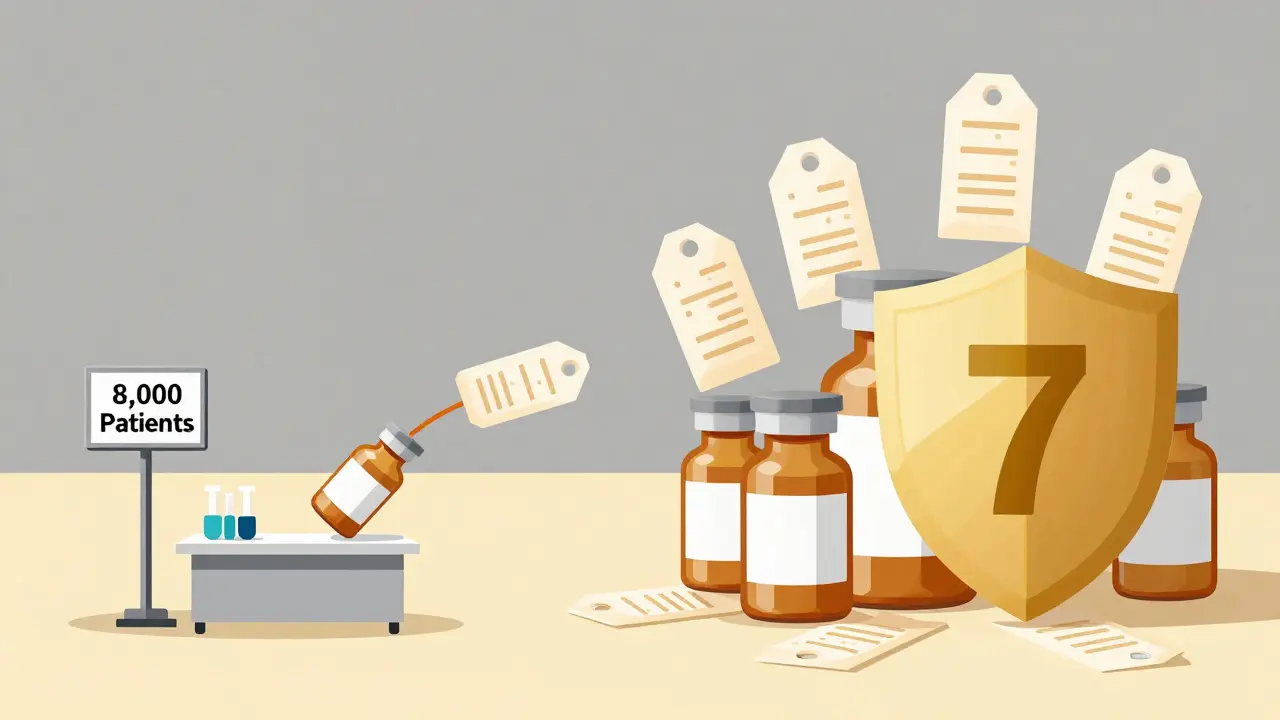
Before 1983, fewer than 10 treatments existed for rare diseases in the U.S. Today, more than 1,000 are approved. What changed? Not better science. Not more funding. It was a simple law: the Orphan Drug Act. And at its core is something called orphan drug exclusivity - a seven-year shield that stops competitors from selling the same drug for the same rare condition, even if they’ve developed it independently.
What Exactly Is Orphan Drug Exclusivity?
Orphan drug exclusivity isn’t a patent. It doesn’t protect a chemical structure or a manufacturing method. It protects a specific drug for a specific rare disease. If a company gets FDA approval for a drug to treat a condition that affects fewer than 200,000 people in the U.S., they get seven years of market protection. During that time, the FDA can’t approve another company’s version of that same drug for that same disease - unless that second drug proves it’s clinically superior.That’s the key: same drug, same disease. If you develop a drug for Duchenne muscular dystrophy and get approved first, no one else can get approval for the exact same molecule to treat Duchenne - even if they spent $200 million on their own trials. But if they make a slightly different version - say, a longer-acting formulation - and prove it works better, they can enter the market. Only three such cases have happened since 1983.
Why Does This System Exist?
Think about it: developing a drug costs $1.5 billion on average. For a common disease like high blood pressure, you might treat millions of people. For a rare disease like Niemann-Pick type C, you might treat 500. There’s no way to recoup costs without help. Before 1983, pharmaceutical companies simply didn’t invest in these diseases. No profit = no development.The Orphan Drug Act flipped that. It gave companies a guaranteed window to sell without competition. It wasn’t about charity - it was about economics. The math finally worked. In the decade before the law, only 38 orphan drugs were developed. In the 35 years after, over 500 got approved. That’s a 1,300% increase.
How It Works: The Horse Race
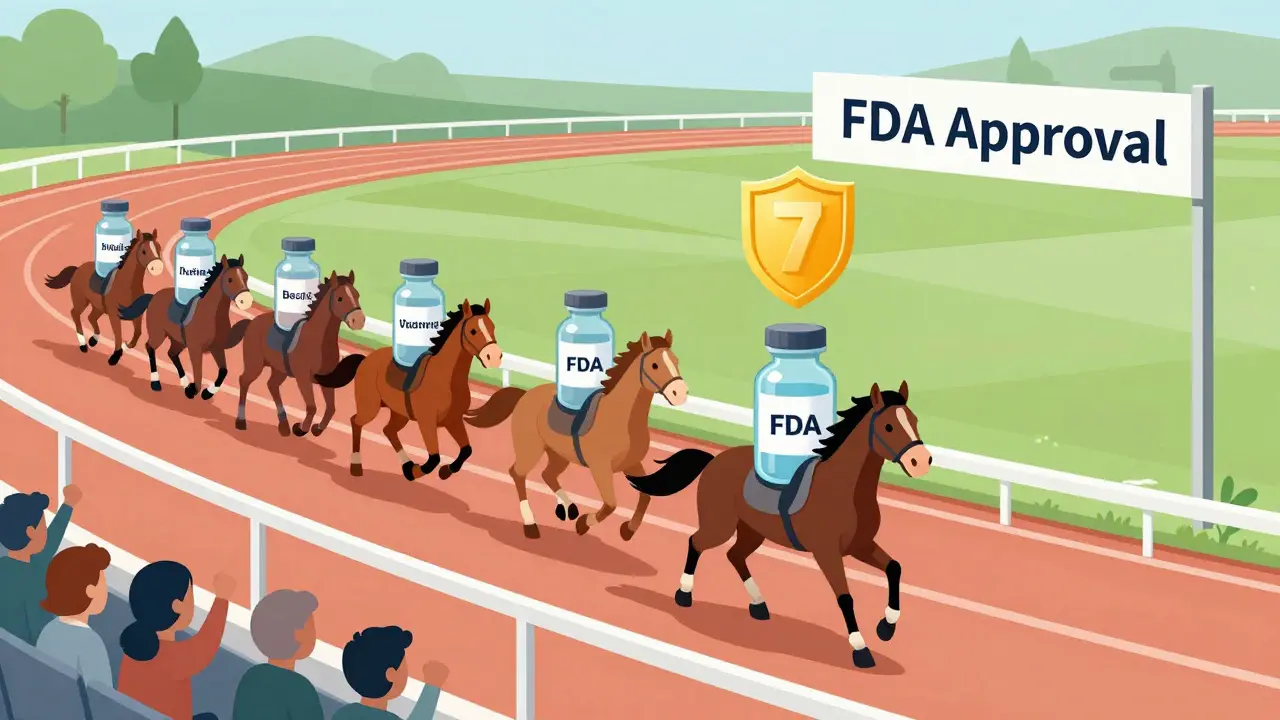
Here’s the twist: multiple companies can apply for orphan designation on the same drug and disease. The FDA doesn’t pick a winner. It just says, “Yes, this condition is rare. You qualify.” Then the race begins. Whoever gets FDA approval first wins the seven-year exclusivity. Everyone else gets shut out - unless they can prove superiority.This creates what former FDA official Dr. Tim Cote called a “horse race.” Companies rush to finish clinical trials, file applications, and get approved. It’s not about who has the best science - it’s about who gets to the finish line first. That’s why timing matters. The best time to apply for orphan designation? Early. During Phase 1 or early Phase 2 trials. That way, you lock in the protection as soon as possible.
Orphan Exclusivity vs. Patents
Most people assume patents are the main protection for drugs. They’re not - at least not for orphan drugs. According to IQVIA’s analysis of 503 approved orphan drugs, patents were the primary barrier to competition in 88% of cases. Orphan exclusivity only kicked in as the main blocker in about 12%.Why? Because patents often last longer. A drug patent can run 20 years from filing. Orphan exclusivity is fixed at seven years, starting only after approval. So if a company files a patent in 2015 and gets approval in 2022, they still have 13 years of patent protection left after exclusivity ends. The real power of orphan exclusivity? It works even when patents don’t.
For example, if a drug’s patent expires but it still has orphan exclusivity, no generic can enter for that rare disease. That’s huge. It means a company can keep pricing power even after the patent cliff.
How It’s Different in Europe
The U.S. gives seven years. The European Union gives ten. And they add a bonus: if a company studies the drug in children, they get an extra two years - so up to 12 total. The EU also lets them cut the exclusivity to six years if the drug becomes wildly profitable - something the U.S. doesn’t do.That’s led to some companies filing for orphan status in both regions, but focusing their commercial efforts in the U.S. where the rules are simpler and the market is bigger. It’s a strategic choice, not a legal one.
What Happens When a Drug Has Multiple Uses?
This is where things get messy. A drug can be approved for both rare and common conditions. Orphan exclusivity only protects the rare one. For example, Humira was originally approved for rheumatoid arthritis - a common disease. Later, it got orphan designation for a rare form of uveitis. That gave it seven years of protection for that rare use. But generics could still come out for rheumatoid arthritis.That’s led to criticism. Some say companies are gaming the system - grabbing orphan status for drugs that already make billions. In 2021, a generic manufacturer complained to the FDA that Humira’s orphan designation was “artificial,” because the drug was already profitable. The FDA didn’t revoke it. Why? Because the law doesn’t care if a drug is profitable. It only cares if the disease affects fewer than 200,000 people.
The Real Cost: Pricing and Access
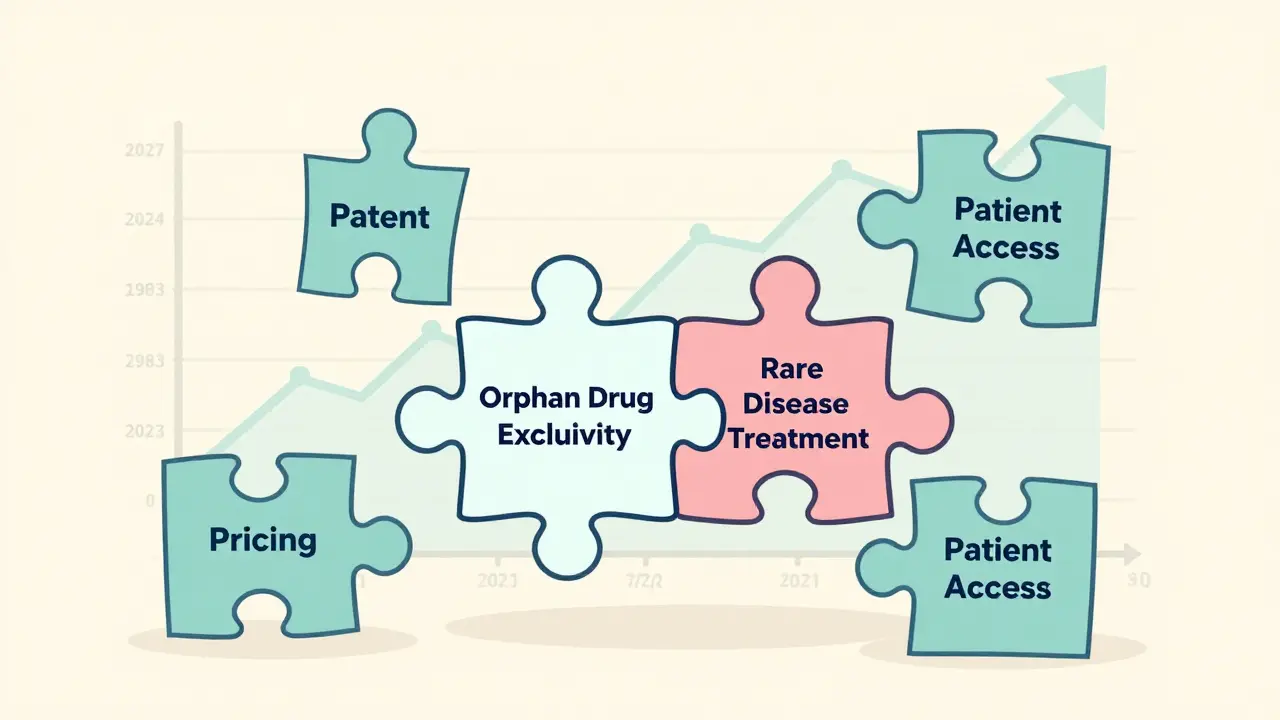
Orphan drugs are expensive. The average annual cost in the U.S. is over $200,000. Why? Because the market is tiny. A company needs to charge a lot to cover costs. Patient groups get this. A 2022 survey by the National Organization for Rare Disorders found 78% of advocacy groups said orphan exclusivity is “essential” to get treatments developed.But 42% also said they’re worried about the prices. And rightly so. With no competition for seven years, companies can set prices without fear. Some drugs cost more than $1 million per patient per year. That’s not just expensive - it’s unsustainable for health systems.
What’s Changing? The Future of Orphan Exclusivity
The system is under pressure. In 2023, the FDA issued new draft guidance to clarify what counts as the “same drug.” This came after the approval of Ruzurgi for Lambert-Eaton syndrome - a drug already approved for a different condition. Critics argued it was the same molecule, just repurposed. The FDA said yes, it’s allowed. But they’re now tightening how they define “same drug” to prevent loopholes.In Europe, they’re considering reducing the exclusivity period from ten to eight years for drugs that become too profitable. In the U.S., there’s talk of requiring companies to prove “unmet medical need” - not just low patient numbers. Right now, a disease affecting 199,000 people qualifies, even if there’s already a decent treatment.
Despite the debate, the trend is clear. In 2018, about half of all new FDA-approved drugs had orphan status. By 2027, Deloitte predicts that number will jump to 72%. Orphan exclusivity isn’t going away. It’s becoming the norm.
What This Means for Patients and Companies
For patients with rare diseases, this system is a lifeline. Without it, most of these drugs wouldn’t exist. For companies, it’s a business model. A small biotech with $150 million to spend on a drug for 8,000 patients can survive - if they get exclusivity. Without it? They’d go bankrupt.But the system isn’t perfect. It rewards speed over innovation. It lets companies extend monopolies on drugs that were already profitable. And it doesn’t guarantee affordability. Still, it works. More than 1,000 orphan drugs have been approved. Millions of lives have been changed. That’s not nothing.
The real challenge now? Balancing access with incentive. How do you keep companies motivated to develop these drugs - without letting them charge prices that break the system? That’s the next battle. And it’s just beginning.
How long does orphan drug exclusivity last in the U.S.?
In the United States, orphan drug exclusivity lasts for seven years, starting from the date the FDA approves the drug’s marketing application. This protection applies only to the specific drug for the specific rare disease indication it was approved for. During this time, the FDA cannot approve another company’s version of the same drug for the same condition unless the new version demonstrates clinical superiority.
Can a drug have both a patent and orphan exclusivity?
Yes, and most orphan drugs do. Patents protect the chemical structure or method of use and can last up to 20 years from filing. Orphan exclusivity is a separate, seven-year protection tied to FDA approval. Many companies rely on patents as their main barrier to competition, but orphan exclusivity kicks in even if the patent expires - as long as the drug is still protected for its rare disease use.
What qualifies as a rare disease for orphan status?
In the U.S., a disease qualifies as rare if it affects fewer than 200,000 people nationwide. Alternatively, a condition can qualify if the cost of developing and marketing the drug can’t be recovered through sales - even if more than 200,000 people have it. The FDA reviews applications based on epidemiological data, and about 95% of properly submitted applications are approved.
Can generics enter the market during orphan exclusivity?
No - not for the same drug and same rare disease indication. But generics can enter for other uses of the same drug. For example, if a drug is approved for both a rare disease and a common one, generics can be approved for the common use while the original drug retains exclusivity for the rare one. Competitors can also try to get approval by proving their version is clinically superior - but this has only happened three times since 1983.
Why do so many companies seek orphan designation now?
Because it’s a proven path to market success. With over 70% of new FDA-approved drugs now having orphan status, companies see it as a strategic advantage. The exclusivity period reduces competition, allows higher pricing, and attracts investment. Plus, orphan drugs come with benefits like tax credits, waived fees, and faster FDA review - making the entire development process more attractive, even for drugs that might later be used in larger populations.
Michael Bond
December 26, 2025 AT 07:22Orphan exclusivity isn’t perfect, but it’s the only thing keeping rare disease drugs alive.
josue robert figueroa salazar
December 28, 2025 AT 05:47Companies are gaming the system. Same drug. Different label. Same price. Same profit.
christian ebongue
December 29, 2025 AT 04:23patents are the real shield. orphan status is just the glitter on top.
jesse chen
December 30, 2025 AT 09:58I’ve met families who waited decades for a treatment-then got one because of this law. I don’t care how the math works-this saved lives.
carissa projo
December 30, 2025 AT 11:04Let’s not pretend this is altruism-it’s capitalism with a conscience. But sometimes, capitalism with a conscience is the only kind that works. We don’t need heroes; we need systems that make heroes possible. And this one? It’s quietly, stubbornly, doing the work.
It’s not about whether the drug was profitable before. It’s about whether it was developed at all. Before 1983, there was nothing. Now, there’s hope. That’s not a loophole-it’s a lifeline.
Yes, prices are insane. Yes, some companies stretch the definition of ‘rare.’ But ask the parent holding their child’s first bottle of medicine-ask them if they’d trade it for a ‘fairer’ system that never produced anything.
The real failure isn’t the law. It’s that we haven’t built a parallel system to make these drugs affordable after exclusivity ends. We gave them the race. We didn’t give them the finish line.
Let’s fix the access problem. But don’t break the engine that got us here.
Sarah Holmes
December 30, 2025 AT 13:07How can anyone defend this? A seven-year monopoly on a drug that costs over a million per patient? This isn’t innovation-it’s legalized extortion. The FDA is complicit in a system that rewards greed under the guise of compassion. And now, 72% of new drugs are orphan-designated? That’s not progress-it’s exploitation dressed in a lab coat.
Where is the accountability? Where is the ethical review? A disease affecting 199,000 people qualifies-but if it affects 201,000, it’s ‘too common’? This is arbitrary, absurd, and morally bankrupt. Companies are deliberately targeting diseases just under the threshold-not because they care about patients, but because they know the payout is guaranteed.
And let’s not forget: many of these drugs were repurposed from existing compounds. They didn’t invent anything. They just rebranded it. And now, they charge $200,000 a year for it. This isn’t incentivizing science-it’s incentivizing legal loopholes.
Meanwhile, families are choosing between rent and treatment. Children are dying because their insurance won’t cover it. And the FDA? They’re applauding the system. This isn’t medicine. It’s a casino where the house always wins.
We need price caps. We need transparency. We need to stop pretending that orphan status is noble when it’s just a profit machine. The fact that only three competitors have proven clinical superiority proves how broken this is. It’s not a race-it’s a lockout.
And don’t tell me ‘without this, no drugs would exist.’ That’s a myth. We’ve had breakthroughs without exclusivity before. We can do it again-if we stop rewarding monopolies and start rewarding public health.
Matthew Ingersoll
December 31, 2025 AT 06:51In Europe, they’ve got a smarter model: ten years, plus two more if you test in kids, but they’ll cut it to six if the drug becomes a cash cow. That’s balance. That’s accountability. The U.S. system is like giving someone a Ferrari and saying ‘go ahead, drive it into the ground.’ No check. No limit. No consequence.
It’s not that we don’t need incentives. It’s that we need smarter ones. Why not tie exclusivity to pricing transparency? Or require that a percentage of profits go into a patient access fund? The EU doesn’t punish success-they adjust for it. We just let it run wild.
And yet, somehow, the U.S. still gets 80% of global orphan drug development. Maybe it’s not the system’s fault that we’re not fixing the downstream mess.
Bryan Woods
January 2, 2026 AT 03:52It’s interesting how the exclusivity period starts only after approval, not filing. That means timing your clinical trial completion matters more than your science. It turns drug development into a sprint, not a marathon. And in a sprint, the best runner doesn’t always win-the one who avoids the most obstacles does.
That’s why companies file for orphan designation in Phase 1. It’s not about the science-it’s about legal positioning. The FDA’s role here is less regulator and more referee. And the rules are clear: first past the post wins.
It’s not ideal. But it’s functional. And functional is better than nonexistent.
Prasanthi Kontemukkala
January 3, 2026 AT 14:41I come from a country where even basic medicines are out of reach for most. Seeing this system work-even with its flaws-makes me hopeful. We don’t have orphan drug laws where I’m from. No incentives. No protections. No drugs. So I see this not as a flaw in capitalism, but as a rare example of capitalism doing something good. The pricing is unjust, yes. But the existence of the drug? That’s a miracle.
Maybe the answer isn’t to remove exclusivity-but to pair it with global access programs. Let companies keep their seven years. But require them to license the drug to low-income countries at cost after year three. That way, innovation isn’t punished. And lives aren’t sacrificed.
Alex Ragen
January 5, 2026 AT 00:23Let’s be honest: the real ‘orphan’ here isn’t the disease-it’s the patient’s wallet. This isn’t medicine. It’s a financial engineering exercise wrapped in a lab coat and a sob story.
And yet, somehow, the same people who scream about ‘big pharma greed’ are the ones defending this system. Cognitive dissonance is a beautiful thing.
It’s not about ‘saving lives’-it’s about creating a market where the only customers are the desperate and the insured. And the insurance companies? They’re just the middlemen who get to say ‘no’ while the pharma companies laugh all the way to the bank.
Jody Kennedy
January 6, 2026 AT 22:21Look-I get the outrage. But I’ve seen what happens when you take this away. No drugs. No hope. No future. This system is flawed, yes. But it’s the only one that’s ever worked. So let’s fix the pricing. Let’s demand transparency. Let’s create global access programs. But don’t you dare throw out the baby with the bathwater. These drugs exist because someone believed it was worth the risk. Don’t punish the believers.
Alex Ragen
January 7, 2026 AT 04:36So you’re saying we should keep the monopoly because someone cried? That’s not policy. That’s emotional blackmail.