
Opioid Side Effects Explained: Managing Constipation, Drowsiness, and Nausea
 Aug, 4 2026
Opioid Side Effects Management Planner
Select your primary side effects to receive personalized management strategies based on clinical guidelines.
You take the pill. The pain fades. But then, your stomach turns, your eyes feel heavy, and you realize you haven’t had a bowel movement in days. It’s a frustrating cycle that millions of people face when managing chronic or acute pain with opioids, which are powerful prescription medications derived from opium or synthesized to mimic its effects for pain management. While these drugs are essential for severe injuries, post-surgery recovery, and cancer care, they come with a baggage of predictable side effects.
Ignoring these symptoms often leads patients to stop their medication abruptly or increase doses dangerously. Instead, understanding exactly why your body reacts this way-and how to manage it proactively-can make the difference between effective pain control and miserable suffering. Here is what you need to know about the three most common hurdles: constipation, drowsiness, and nausea.
Why Opioids Cause These Specific Reactions
To handle side effects, you first have to understand the mechanism. Opioids work by binding to specific receptors in your brain and spinal cord to block pain signals. However, these same mu-opioid receptors exist throughout your body, including in your gut and brainstem. When the drug hits these areas, it triggers a cascade of reactions that aren't always helpful.
The American Academy of Family Physicians (AAFP) notes that these side effects are not random errors; they are direct pharmacological consequences. For instance, when opioids bind to receptors in your gastrointestinal tract, they slow down peristalsis-the wave-like muscle contractions that move food through your intestines. This slowdown allows more water to be absorbed from your stool, leading to hard, dry waste. Similarly, stimulation of the chemoreceptor trigger zone in the brainstem causes nausea, while depression of the central nervous system leads to sedation. Knowing this helps you realize that these issues are expected, not signs that something is uniquely wrong with you.
Constipation: The Persistent Problem
If there is one side effect that virtually every patient on long-term opioid therapy experiences, it is constipation. Unlike other side effects, your body rarely builds a tolerance to this. The AAFP identifies it as "the most common adverse effect occurring with chronic opioid use," meaning it will likely stay with you as long as you take the medication.
Waiting until you are backed up before taking action is a mistake. Because constipation is a predictable consequence, experts recommend prophylactic treatment-meaning you start treating it before it happens. The standard approach involves a combination of two types of laxatives:
- Stimulant laxatives: Drugs like senna or bisacodyl kickstart the intestinal muscles to move things along.
- Osmotic agents: Substances like polyethylene glycol (MiraLAX) draw water into the colon to soften the stool.
For those who don't respond to standard laxatives, there are targeted treatments. Methylnaltrexone bromide (Relistor), approved by the FDA in 2008, is a peripherally-acting mu-opioid receptor antagonist (PAMORA). It works specifically in the gut to reverse constipation without crossing the blood-brain barrier, so it doesn't interfere with your pain relief. If over-the-counter combinations fail after a few days, ask your doctor about these specialized options rather than suffering in silence.
Drowsiness and Mental Fog
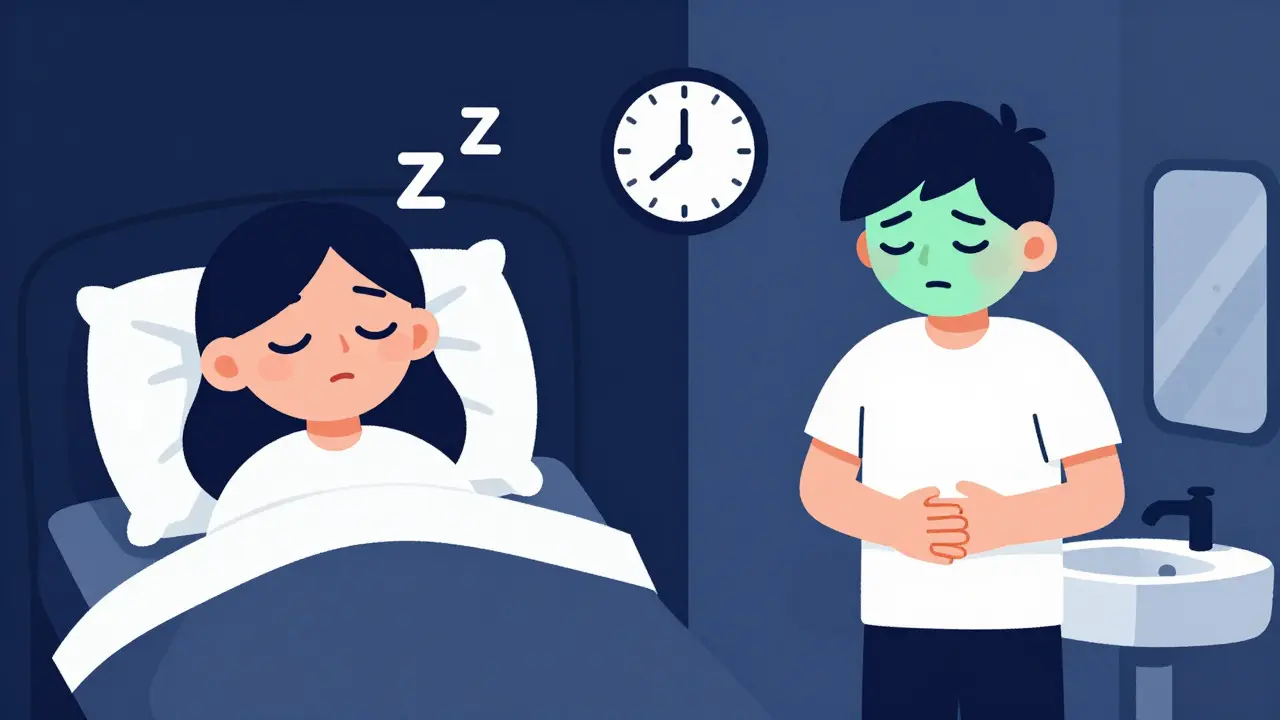
Feeling sleepy or experiencing "mental fog" is another frequent complaint. According to clinical reviews, between 20% and 60% of patients report significant sedation when they first start opioid therapy or when their dose is increased. This is your central nervous system reacting to the depressant nature of the drug.
The good news? For most people, this is temporary. Tolerance to the sedative effects usually develops within several days to weeks. You might feel groggy on day one, but by day five, you could be back to normal alertness. However, about 10-15% of long-term users still struggle with persistent sedation.
If drowsiness lingers, here are practical steps to manage it:
- Time your doses: Take your medication right before bed if possible, allowing the peak sedative effect to hit while you sleep.
- Avoid other depressants: Mixing opioids with alcohol, benzodiazepines (like Xanax or Valium), or antihistamines can dangerously amplify drowsiness and respiratory depression.
- Review other meds: Some non-opioid medications worsen cognitive function. Ask your doctor to review your entire regimen to eliminate unnecessary contributors to fatigue.
In rare cases where sedation severely impacts quality of life despite dose adjustments, doctors may consider psychostimulants like methylphenidate. However, this is a last resort due to potential side effects and lack of robust clinical trial data supporting its routine use for this purpose.
Nausea: The Temporary Barrier
Nausea affects roughly 25-30% of patients starting opioid therapy. It feels awful, and it’s a major reason people want to quit their pain medication early. The cause is twofold: opioids directly stimulate the vomiting center in your brain, and they also delay gastric emptying, making you feel full and queasy.
Like drowsiness, nausea is typically transient. Most patients develop tolerance within 3 to 7 days. During this critical window, antiemetics (anti-nausea drugs) can save your treatment plan. The choice of medication depends on the underlying mechanism:
- Dopamine antagonists: Medications like metoclopramide or prochlorperazine are often first-line treatments because they block the chemical signals triggering nausea.
- Serotonin antagonists: Ondansetron (Zofran) is another common option, particularly if dopamine blockers aren't effective.
- Antihistamines: Promethazine can help, though it may add to drowsiness, so use caution.
If nausea persists beyond a week, it’s not just an annoyance-it’s a sign that your current strategy isn't working. Don't just push through it. Persistent nausea affects about 10% of long-term users and can lead to dehydration and poor nutrition. Talk to your provider about switching antiemetics or adjusting the opioid type.
| Side Effect | Prevalence | Tolerance Develops? | Primary Management Strategy |
|---|---|---|---|
| Constipation | Virtually 100% of chronic users | No | Prophylactic laxatives (stimulant + osmotic) |
| Drowsiness/Sedation | 20-60% initially | Yes (usually within days/weeks) | Dose timing, avoid CNS depressants |
| Nausea | 25-30% initially | Yes (within 3-7 days) | Antiemetics (dopamine/serotonin antagonists) |
The Danger of Abrupt Discontinuation
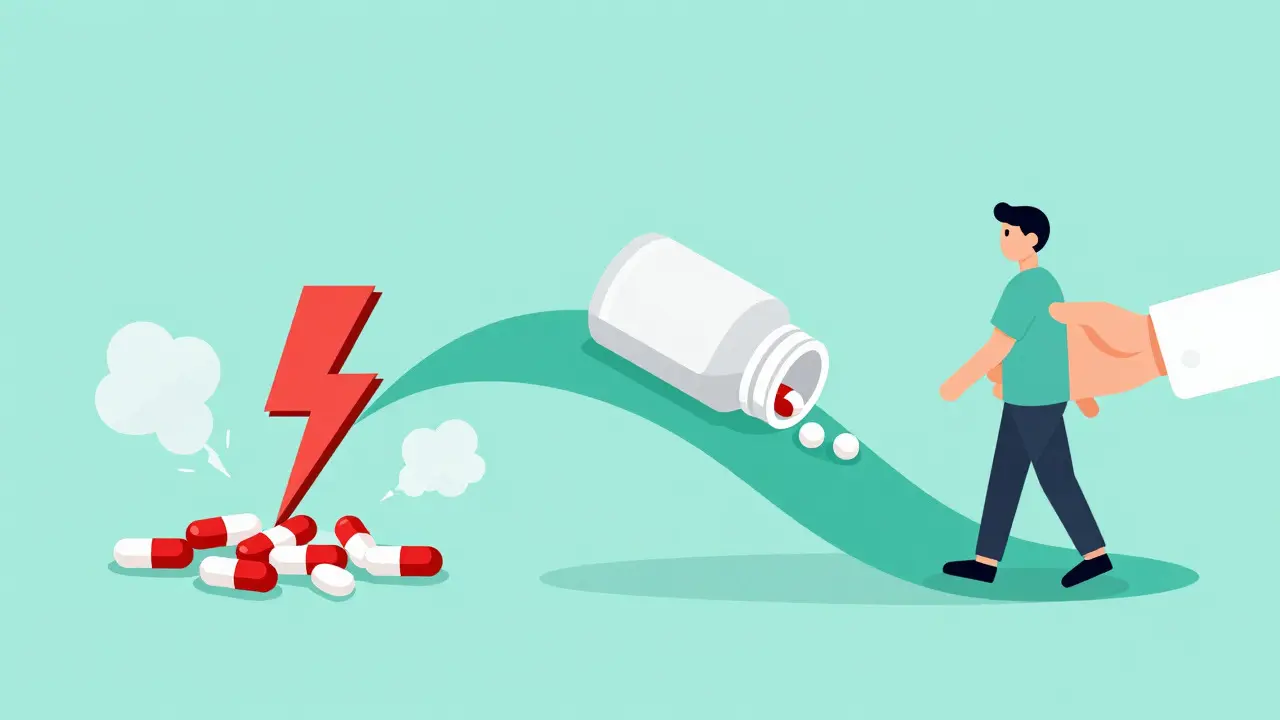
Frustrated by side effects, many patients decide to stop taking their opioids cold turkey. This is risky. The FDA issued a safety announcement in April 2019 warning that sudden discontinuation can lead to serious harm, including uncontrolled pain, psychological distress, and even suicide attempts. More immediately, it triggers withdrawal symptoms that mirror the very side effects you’re trying to escape: severe nausea, vomiting, diarrhea, and anxiety.
If you need to stop or reduce your dose, it must be gradual. Healthcare professionals follow expanded guidance to safely taper doses, minimizing the shock to your system. Rapid reduction can cause such intense physical discomfort that patients seek out other sources of opioids, potentially leading to misuse or overdose. Always coordinate changes with your doctor.
When to Seek Immediate Help
While constipation, drowsiness, and nausea are common, some symptoms signal danger. Respiratory depression-slow or shallow breathing-is the most serious risk, often accompanying extreme drowsiness. If you or someone else experiences choking sounds, gurgling, blue lips, or inability to wake up, call emergency services immediately. These are signs of overdose, not just side effects.
Additionally, if side effects persist despite management strategies, or if you find yourself increasing your dose to chase the initial level of pain relief, it’s time for a medical review. The CDC reports that nearly 8.6 million Americans misused prescription opioids in 2023, often driven by inadequate pain control or poorly managed side effects. Proactive communication with your healthcare team is your best defense against both suffering and dependency.
How long does opioid-induced nausea last?
For most patients, nausea develops tolerance within 3 to 7 days of starting therapy. If it persists beyond a week, it affects about 10% of long-term users and requires medical intervention, such as switching antiemetics or adjusting the opioid dosage.
Does constipation go away with opioid use?
No, unlike other side effects, the body rarely builds tolerance to opioid-induced constipation. It is considered a predictable and persistent consequence of chronic opioid use, requiring ongoing prophylactic treatment with laxatives throughout the duration of therapy.
Can I drive while taking opioids?
Initially, no. Drowsiness and mental fog affect 20-60% of new users. You should wait until you know how the medication affects your alertness, typically after several days or weeks when tolerance to sedation develops. Avoid driving if you feel any impairment, and never mix opioids with alcohol or other sedatives.
What is the best laxative for opioid constipation?
A combination therapy is recommended by the American Academy of Family Physicians. This includes a stimulant laxative (like senna) to stimulate bowel movements and an osmotic agent (like polyethylene glycol) to soften stool. For resistant cases, prescription PAMORAs like methylnaltrexone may be used.
Is it safe to stop opioids suddenly?
No. Abrupt discontinuation can cause severe withdrawal symptoms, including intense nausea, vomiting, diarrhea, and uncontrolled pain. The FDA warns that rapid cessation can lead to serious harm. Doses should be tapered gradually under medical supervision to minimize these risks.