
Norovirus Outbreaks: How to Control Gastroenteritis and Keep Patients Hydrated
 Jan, 14 2026
What Norovirus Really Does to Your Body
Norovirus doesn’t just give you a bad stomach ache. It hits fast and hard. One minute you’re fine; the next, you’re vomiting, having watery diarrhea, and cramping so badly you can’t stand up. This virus attacks the lining of your stomach and intestines, causing acute gastroenteritis - inflammation that turns your digestive system into a storm. Symptoms usually start within a day or two of exposure and last less than three days for most people. But here’s the scary part: you can spread it before you even feel sick, and you can keep shedding the virus for days after you think you’re better.
It takes as few as 18 virus particles to infect someone. That’s less than a speck of dust. One person vomiting in a nursing home can trigger an outbreak that spreads to dozens. In the U.S., norovirus causes 19 to 21 million illnesses every year. It’s the number one cause of foodborne illness and the leading reason for hospitalizations from diarrhea in kids and older adults.
How Norovirus Spreads - And Why It’s So Hard to Stop
Norovirus doesn’t need fancy conditions to thrive. It survives freezing, heat up to 140°F, and stays active on doorknobs, countertops, and even clothing for up to 12 days. It spreads in four main ways:
- Person-to-person contact (62% of outbreaks): Touching someone who’s sick, or touching something they touched - like a toilet handle or a shared remote.
- Contaminated food (23%): Ready-to-eat foods, especially leafy greens, sandwiches, and salads, handled by someone infected. Food doesn’t need to be raw - even food cooked and then touched by a sick worker can spread it.
- Contaminated surfaces (10%): A single vomit incident can aerosolize the virus into the air, landing on everything nearby. Floors, curtains, bedding - all become carriers.
- Water (5%): Rare, but happens when sewage contaminates drinking water supplies.
Outbreaks spike in winter. In long-term care facilities, 68% happen between November and March. That’s not coincidence. People are indoors more. Staff are stretched thin. And the virus? It’s waiting.
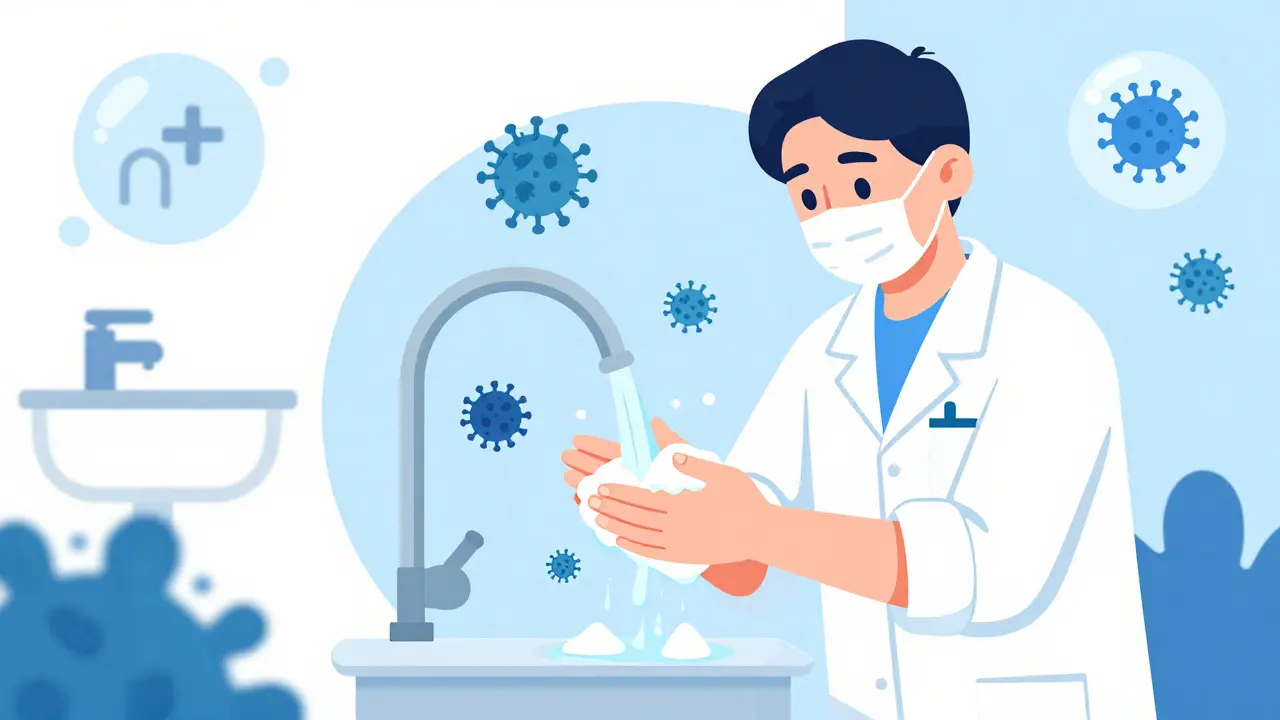
Handwashing Isn’t Optional - It’s Your First Line of Defense
You’ve heard it a million times: wash your hands. But with norovirus, it’s not just about washing - it’s about how you wash.
Alcohol-based hand sanitizers? They barely touch norovirus. The virus has a tough outer shell that alcohol can’t break. That’s why the CDC says: soap and water only.
Here’s what works:
- Wet hands with running water - warm or cold, doesn’t matter.
- Use regular soap. No need for antibacterial - plain soap kills the virus by breaking down its outer layer.
- Scrub for at least 20 seconds. Sing ‘Happy Birthday’ twice.
- Rinse under running water.
- Dry with a clean towel or air dryer.
Wash your hands after using the bathroom, before eating, after cleaning up vomit or diarrhea, and before preparing food. In healthcare settings, staff must wash every time they leave a patient’s room - even if they wore gloves. Gloves don’t replace handwashing. They just delay the spread.
Cleaning Up After Norovirus - What Actually Works
Regular disinfectants won’t cut it. You need bleach. Not the kind you use for laundry - the kind that kills viruses.
The CDC recommends a bleach solution: 1,000 to 5,000 parts per million (ppm). That’s 5 to 25 tablespoons of household bleach per gallon of water. Mix it fresh every day - bleach loses strength quickly.
Focus on high-touch surfaces:
- Toilet handles and flush buttons
- Door knobs and light switches
- Bedsides and railings
- Remote controls, phones, tablets
- Flooring around toilets and sinks
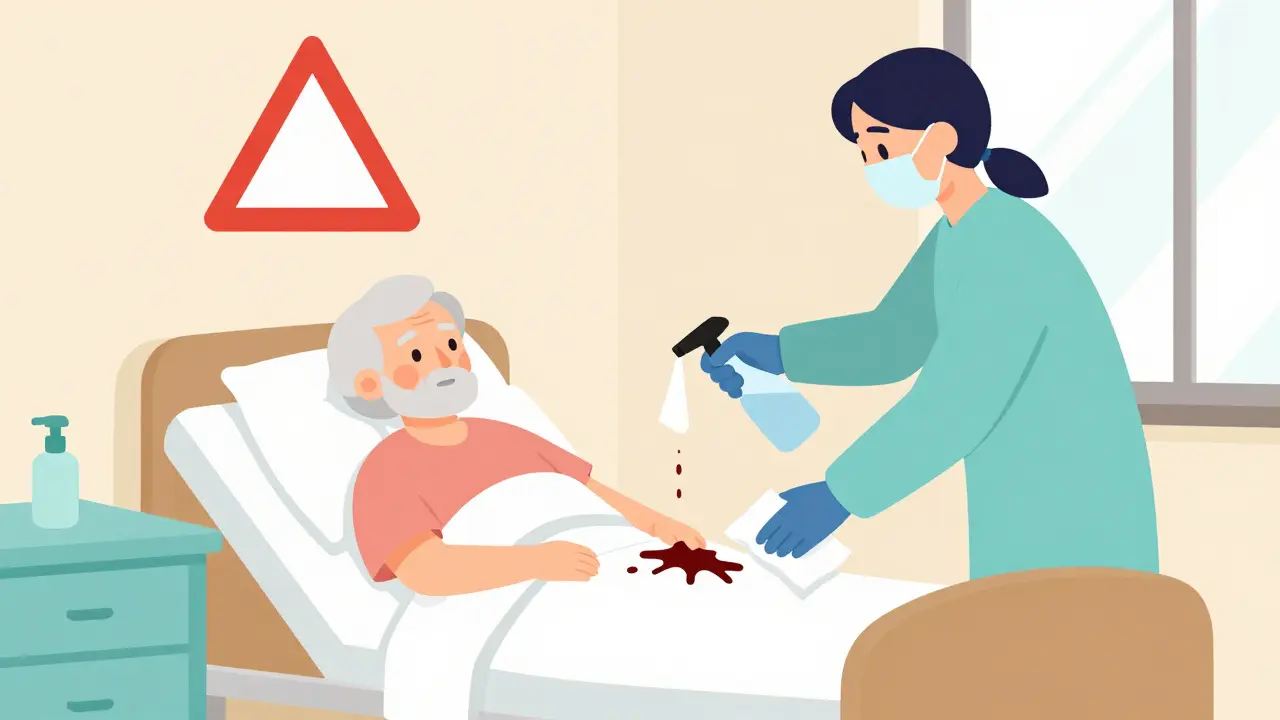
When someone vomits, don’t just wipe it up. Put on gloves and a mask. Cover the area with paper towels. Pour bleach solution over it. Let it sit for 5 minutes. Then wipe up. Dispose of everything in a sealed plastic bag. Wash your hands after.
Hospitals and nursing homes are now using hydrogen peroxide vapor systems to disinfect entire rooms after an outbreak. These machines fill a sealed room with vapor that kills 99.9% of the virus. It’s expensive, but in high-risk places, it’s becoming standard.
Isolation and Cohorting - Keeping the Sick Apart
In hospitals and care homes, isolating sick patients is non-negotiable. The CDC says: put them in single rooms if possible. If not, group them together - but never mix them with people who aren’t sick.
Here’s how it works in practice:
- Move symptomatic patients to one wing or floor.
- Use dedicated staff for that area - no cross-training between sick and well units.
- Cancel group meals, activities, and therapy sessions until 48 hours after the last person’s symptoms stop.
- Don’t move asymptomatic residents out of an affected area. They may already be infected and just not showing symptoms yet.
Staff must wear gloves and gowns when entering isolation rooms. Masks are recommended during vomiting events. And no one leaves the unit without washing hands - no exceptions.
Food Safety During an Outbreak - What Staff Must Do
Food handlers are the silent spreaders. A cook with mild nausea who thinks they’re just “a little off” can contaminate hundreds of meals.
Rules are strict:
- Anyone with vomiting or diarrhea must be sent home immediately.
- They can’t return to work for at least 48 hours after symptoms stop.
- In healthcare and long-term care settings, that waiting period extends to 72 hours.
- Never prepare food if you’ve had symptoms in the past 48 hours - even if you feel fine.
- Wash hands before handling any food, even if you’re wearing gloves.
Don’t serve raw or lightly cooked shellfish during outbreaks. Avoid pre-made salads. Stick to hot, freshly cooked food served immediately. And never let someone with a cough or runny nose handle food - they could be shedding virus too.
Hydration Is the Lifesaver - Not Medicine
There’s no pill for norovirus. No antiviral. No antibiotic. The only thing that saves lives is keeping people hydrated.
When you’re vomiting and having diarrhea, you lose water, salt, and potassium fast. Dehydration can land you in the hospital - especially for babies, older adults, and people with heart or kidney problems.
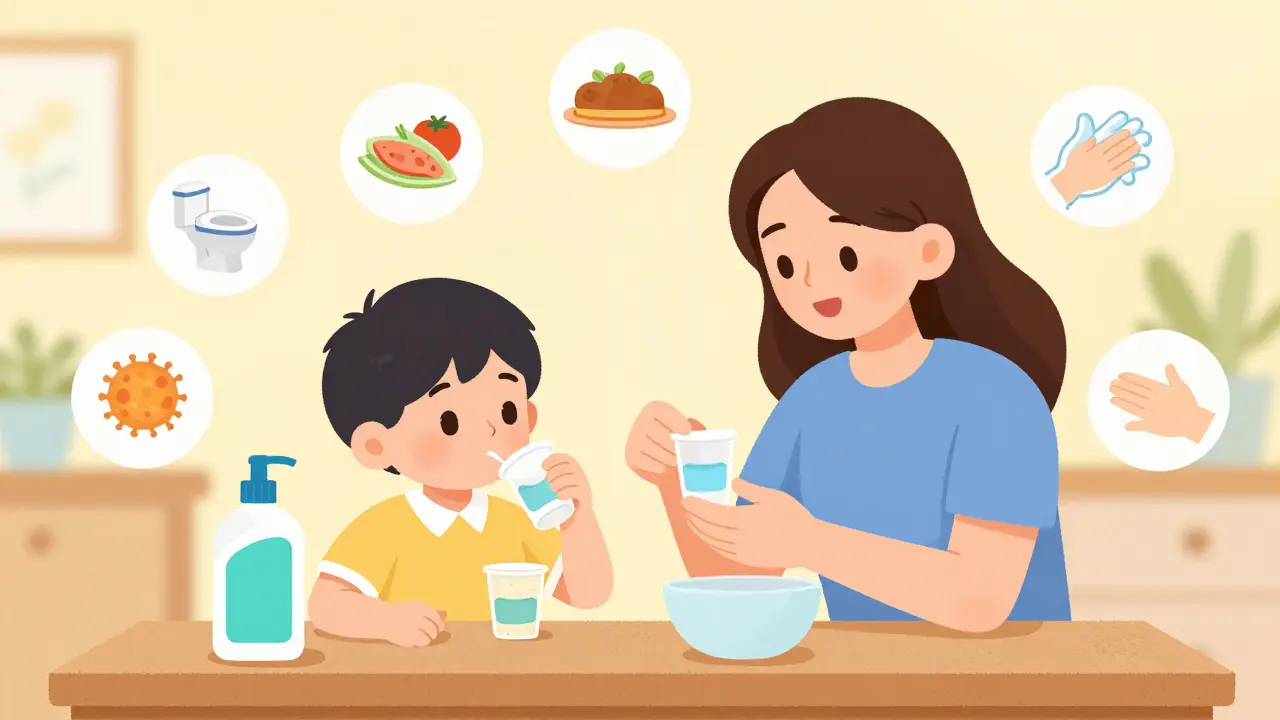
For mild to moderate cases, use oral rehydration solutions (ORS). These aren’t sports drinks or soda. They’re specially balanced liquids with the right mix of sodium, glucose, and potassium. WHO standards: 50-90 mmol/L sodium, 75-100 mmol/L glucose, 20-25 mmol/L potassium.
Give small sips often - a teaspoon every 5 minutes. If the person can’t keep fluids down, try ice chips or frozen ORS pops. For infants, give 50-100 mL after each episode of vomiting or diarrhea. For elderly patients, check for dry mouth, sunken eyes, low urine output, or confusion. These are signs of trouble.
If someone can’t drink, is dizzy, or has no urine for 8 hours - get IV fluids. Hospitals use 0.9% saline or lactated Ringer’s. A 20 mL/kg bolus over 15-30 minutes can turn a critical case around.
Who’s at Highest Risk - And Why You Need to Watch Them Closely
Not everyone gets equally sick. Some people bounce back in 12 hours. Others need weeks to recover.
High-risk groups:
- Infants and young children: Their small bodies lose fluid faster. Watch for wet diapers - if fewer than one every 6 hours, it’s a red flag.
- Older adults: They don’t feel thirsty like they used to. Urine output drops silently. Mental confusion can be the first sign of dehydration.
- People with weakened immune systems: Cancer patients, transplant recipients, those on steroids. They can shed the virus for weeks or months - turning them into long-term sources of infection.
- People with chronic illnesses: Heart failure, kidney disease, diabetes. Their bodies can’t handle the stress of fluid loss.
These groups need extra monitoring. Check every 4-6 hours for signs of dehydration. Don’t wait for them to ask for help.
What’s Coming Next - Vaccines and Better Tools
There’s hope on the horizon. Takeda’s norovirus vaccine showed 46.7% effectiveness in late-stage trials in 2022. It targets the most common strain, GI.1. FDA approval could come as early as 2025. That won’t stop all outbreaks, but it could cut them by half in nursing homes and hospitals.
Meanwhile, real-time outbreak reporting systems are being rolled out. Wisconsin’s system, launched in January 2023, cuts investigation time from 72 hours to just 24. That means faster isolation, faster cleaning, fewer infections.
One thing won’t change: norovirus will always be here. But with the right steps - soap, bleach, isolation, hydration - we can keep it from becoming a disaster.
What to Do If Someone in Your Home Gets Norovirus
- Keep the sick person in a separate room if possible.
- Use separate towels, plates, and utensils.
- Wash laundry in hot water and dry on high heat.
- Disinfect bathrooms after each use with bleach solution.
- Everyone washes hands after using the bathroom or helping the sick person.
- Don’t share food or drinks until 48 hours after symptoms stop.
It’s not about being paranoid. It’s about being smart.
Sarah Triphahn
January 15, 2026 AT 04:09Allison Deming
January 16, 2026 AT 06:02Susie Deer
January 17, 2026 AT 22:27Alvin Bregman
January 19, 2026 AT 15:22shiv singh
January 20, 2026 AT 14:31Dylan Livingston
January 21, 2026 AT 09:10Andrew Freeman
January 21, 2026 AT 17:43Henry Sy
January 22, 2026 AT 18:30Jason Yan
January 22, 2026 AT 23:32Rosalee Vanness
January 23, 2026 AT 07:25lucy cooke
January 24, 2026 AT 22:22Gregory Parschauer
January 26, 2026 AT 16:27Sarah -Jane Vincent
January 26, 2026 AT 16:31Anna Hunger
January 27, 2026 AT 16:22