
Metoclopramide and Antipsychotics: The Hidden Risk of Neuroleptic Malignant Syndrome
 Jul, 16 2026
NMS Risk Assessment Tool
This tool helps assess the potential risk of Neuroleptic Malignant Syndrome (NMS) when combining Metoclopramide with other medications or conditions. It is for educational purposes only and does not replace professional medical advice.
You might think taking a stomach medicine for nausea alongside your psychiatric medication is harmless. After all, one treats your gut, and the other treats your mind. But when those two worlds collide in your bloodstream, the result can be life-threatening. Combining Metoclopramide (often known by brand names like Reglan) with antipsychotic drugs creates a perfect storm for a rare but deadly condition called Neuroleptic Malignant Syndrome (NMS).
This isn't just a minor side effect warning; it's a critical safety alert that doctors and pharmacists must respect. If you or someone you care for is on both types of medication, understanding why this interaction happens-and what to look for-could save a life.
The Shared Mechanism: Why These Drugs Clash
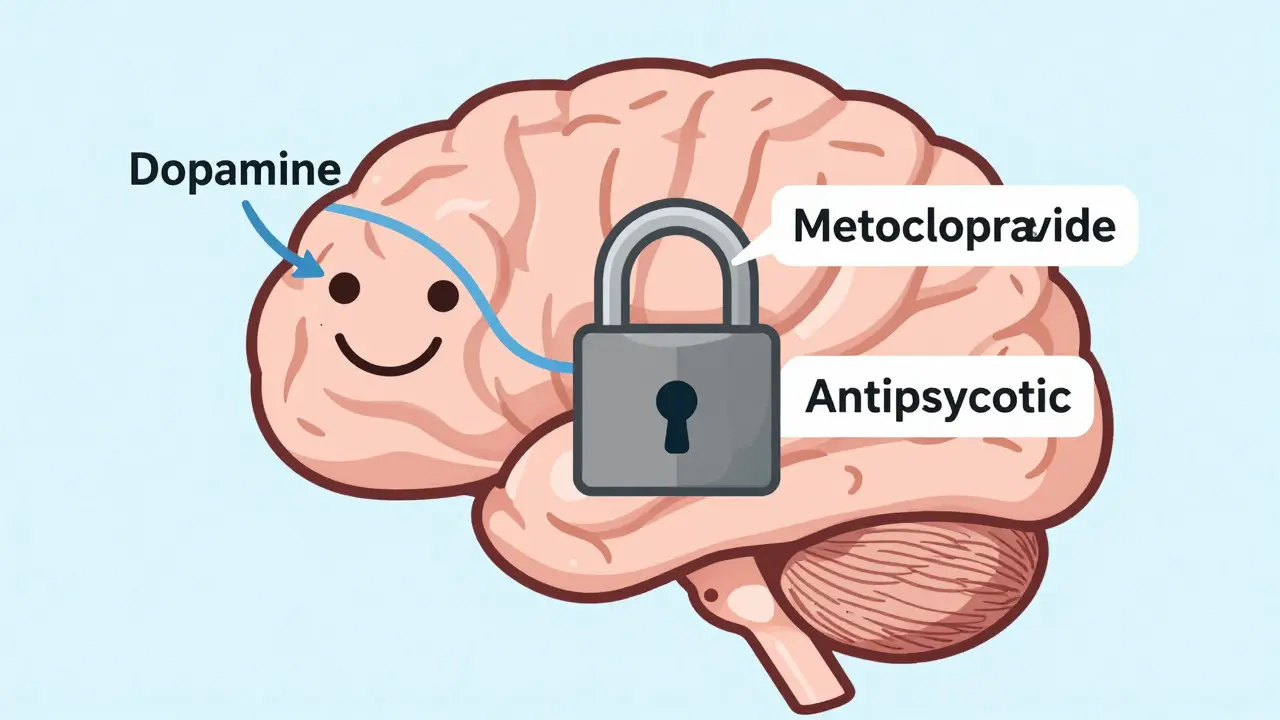
To understand the danger, we have to look at how these drugs work inside your brain. Both metoclopramide and antipsychotics are dopamine D2 receptor antagonists. In simple terms, they block dopamine receptors.
Dopamine is a neurotransmitter that helps control movement and reward signals in the brain. Antipsychotics block these receptors to manage symptoms of schizophrenia or bipolar disorder. Metoclopramide blocks them to stop nausea and speed up digestion. When you take them together, you aren't just adding their effects; you're stacking the blockade. This dual assault on dopamine signaling disrupts the delicate balance your brain needs to function normally.
The FDA explicitly warns against this combination. Their labeling states clearly: "Avoid Reglan in patients receiving other drugs associated with NMS, including typical and atypical antipsychotics." This isn't vague advice. It’s a directive based on the pharmacological reality that combining two dopamine blockers significantly increases the risk of severe movement disorders and systemic collapse.
What Is Neuroleptic Malignant Syndrome?
Neuroleptic Malignant Syndrome (NMS) is a medical emergency. It is not a mild discomfort or a temporary headache. It is a systemic reaction where the body essentially overheats and shuts down motor control.
If NMS develops, it typically presents with a specific set of symptoms, often referred to as the clinical tetrad:
- Hyperthermia: A high fever that spikes rapidly, often exceeding 104°F (40°C).
- Muscle Rigidity: Muscles become extremely stiff, sometimes described as "lead-pipe" rigidity. You cannot easily move the limbs.
- Altered Mental Status: Confusion, agitation, delirium, or even coma.
- Autonomic Instability: Erratic blood pressure, rapid heart rate, sweating, and drooling.
Without immediate medical intervention, NMS can lead to kidney failure, respiratory distress, and death. The mortality rate, while low in absolute numbers due to its rarity, is significant if treatment is delayed. Recognizing these signs early is crucial because they can mimic other conditions like sepsis or meningitis, leading to misdiagnosis.
The Double Hit: Pharmacokinetics and Pharmacodynamics
The risk isn't just about blocking receptors. There’s also a metabolic angle that makes this interaction worse. Metoclopramide is processed in the liver by an enzyme called CYP2D6. Many antipsychotics, such as risperidone and haloperidol, also interact with this enzyme system. Some antipsychotics inhibit CYP2D6, which means they slow down the breakdown of metoclopramide.
This creates a "double hit" scenario:
- Pharmacodynamic Interaction: Both drugs block dopamine receptors simultaneously, amplifying the neurological impact.
- Pharmacokinetic Interaction: The antipsychotic may cause higher levels of metoclopramide to build up in the blood because it isn't being cleared efficiently.
Research published in Pharmacy Times highlights that metoclopramide is a substrate for P-glycoprotein (P-gp), another transport system in the brain. Drugs that affect P-gp can increase the amount of metoclopramide entering the central nervous system, further raising the stakes for patients already on heavy psychiatric regimens.
Who Is Most at Risk?
Not everyone who accidentally takes these drugs together will develop NMS, but certain groups are far more vulnerable. Understanding your risk profile helps in having proactive conversations with your healthcare provider.
| Risk Factor | Why It Increases Danger |
|---|---|
| Renal Failure | Kidneys struggle to clear metoclopramide, leading to toxic buildup. |
| Dehydration | Common in nausea/vomiting patients; reduces kidney perfusion and worsens autonomic instability. |
| History of Movement Disorders | Prior exposure to tardive dyskinesia or Parkinson’s indicates sensitive dopamine pathways. |
| CYP2D6 Poor Metabolizers | Genetic variations mean the body naturally breaks down metoclopramide slower. |
| High-Dose Antipsychotics | Higher doses create a stronger baseline dopamine blockade. |
Patients with Parkinson’s disease are strictly contraindicated from using metoclopramide because it exacerbates parkinsonian symptoms. Similarly, those with a history of depression or seizures face additional risks, as metoclopramide lowers the seizure threshold and can trigger depressive episodes.
Safer Alternatives for Nausea
If you need relief from nausea but are taking antipsychotics, you don’t have to suffer. There are effective alternatives that do not block dopamine receptors in the same dangerous way.
Ondansetron (Zofran) is a common choice. It works by blocking serotonin (5-HT3) receptors, not dopamine. This mechanism avoids the synergistic blockade that leads to NMS. Another option is Promethazine (Phenergan), which acts primarily on histamine receptors. While promethazine has its own side effects (like sedation), it does not carry the same catastrophic risk of NMS when combined with antipsychotics.
Always ask your doctor or pharmacist: "Is there a non-dopaminergic antiemetic I can use?" This simple question can prevent a potentially fatal interaction.
What To Do If You Suspect an Interaction
If you are currently taking metoclopramide and start an antipsychotic-or vice versa-do not wait for symptoms to appear. Contact your healthcare provider immediately to review your regimen. They may decide to taper off one medication or switch to a safer alternative.
If you are already experiencing symptoms like unexplained muscle stiffness, high fever, or confusion after starting a new combination, seek emergency care. Tell the ER staff exactly what medications you are taking. Mentioning "possible Neuroleptic Malignant Syndrome" can help them prioritize testing for creatine kinase levels (which rise due to muscle breakdown) and initiate cooling measures quickly.
Key Takeaways for Patients and Providers
The intersection of gastrointestinal health and psychiatric care requires careful coordination. Here is what you need to remember:
- Avoid Combination: Do not take metoclopramide with typical or atypical antipsychotics unless absolutely necessary and closely monitored by a specialist.
- Know the Signs: Fever, rigidity, confusion, and unstable vitals are red flags for NMS.
- Check Your Med List: Bring a full list of all prescriptions, over-the-counter drugs, and supplements to every appointment.
- Ask About Alternatives: Ondansetron or other 5-HT3 antagonists are generally safer choices for nausea in this population.
- Respect the Warning: The FDA Boxed Warning on metoclopramide regarding tardive dyskinesia and movement disorders is a serious indicator of its neurological potency.
Your health depends on the synergy between your treatments, not their conflict. By staying informed and communicating openly with your care team, you can navigate these complex medication landscapes safely.
Can I take Reglan (metoclopramide) if I am on Seroquel or Risperdal?
Generally, no. Both Seroquel (quetiapine) and Risperdal (risperidone) are antipsychotics that block dopamine receptors. Taking them with metoclopramide significantly increases the risk of Neuroleptic Malignant Syndrome (NMS) and extrapyramidal symptoms. You should consult your doctor for a safer alternative like ondansetron.
How quickly can Neuroleptic Malignant Syndrome develop?
NMS can develop rapidly, often within days of starting or increasing the dose of the offending medication, but it can also occur weeks later. Symptoms like fever and muscle rigidity usually escalate quickly, requiring immediate emergency attention.
Is there a safe duration for taking metoclopramide?
The FDA recommends avoiding metoclopramide treatment for longer than 12 weeks due to the risk of tardive dyskinesia, a potentially irreversible movement disorder. Even short-term use carries risks when combined with other dopamine-blocking agents.
What are the symptoms of extrapyramidal symptoms (EPS)?
EPS includes tremors, muscle stiffness, restlessness (akathisia), and involuntary facial movements. These are often precursors to more severe conditions like NMS and indicate that dopamine blockade is affecting motor control.
Can dehydration make this interaction worse?
Yes. Dehydration impairs kidney function, which can lead to a buildup of metoclopramide in the body. Since many people take metoclopramide for vomiting-induced dehydration, this creates a vicious cycle that heightens the risk of toxicity and NMS.