
Methadone and QT-Prolonging Drugs: What You Need to Know About the Arrhythmia Risk
 Dec, 19 2025
QT Interval Risk Assessment Tool
Methadone Risk Assessment
This tool assesses your risk of QT interval prolongation when taking methadone with other medications. Remember: Methadone can cause dangerous arrhythmias when combined with other QT-prolonging drugs.
Select any other medications you're taking that may prolong QT interval
Risk Assessment Results
This tool estimates your risk of QT prolongation based on the information provided. Remember: This is not a substitute for medical advice. Always discuss your risk with your healthcare provider.
Urgent Action Required
If you're on doses above 100 mg/day with multiple risk factors, contact your doctor immediately.
Cautious Monitoring Needed
Your risk level indicates the need for regular ECG monitoring and close observation.
Low Risk
Your risk appears to be low based on the information provided, but regular monitoring is still recommended.
Important Recommendations
- Always get a baseline ECG before starting methadone
- Discuss all medications with your healthcare provider
- Get regular ECGs after dose changes and periodically during treatment
- Monitor electrolyte levels, especially potassium and magnesium
- Be aware of symptoms: dizziness, fainting, palpitations
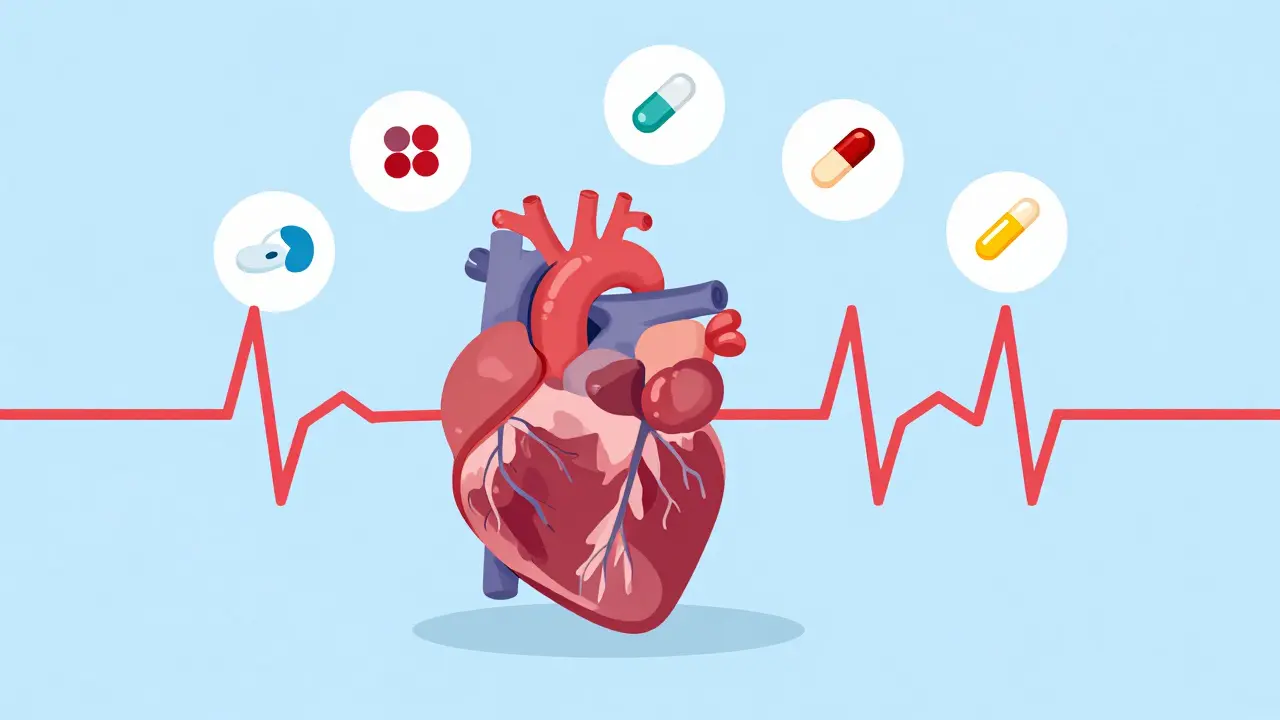
When someone starts methadone for opioid dependence or chronic pain, the focus is often on managing cravings or reducing pain. But there’s a silent, potentially deadly risk that many don’t talk about: methadone can stretch the heart’s electrical cycle - specifically, the QT interval - and when it’s combined with other common medications, that risk multiplies.
Why Methadone Stretches the Heart’s Electrical Cycle
Methadone isn’t just another opioid. Unlike buprenorphine, which barely touches the heart’s potassium channels, methadone blocks two critical ones: IKr and IK1. This dual blockade slows down the heart’s ability to reset after each beat. Think of it like a runner who can’t fully relax between sprints - the heart’s rhythm gets messy. This delay shows up on an ECG as a longer QT interval. A normal QTc (corrected for heart rate) is under 430 ms for men and 450 ms for women. When it climbs past 500 ms, the risk of a dangerous arrhythmia called torsades de pointes (TdP) jumps sharply.Studies show that even at moderate doses, methadone can push QTc up by 10-12 milliseconds on average. Over time, that adds up. In one study, after 16 weeks of therapy, nearly 70% of men and over 70% of women had QTc values above the danger threshold. And it’s not just the dose - it’s how long the drug stays in your system. Methadone has a half-life of up to 60 hours, meaning it builds up and lingers, constantly stressing the heart’s electrical system.
The Perfect Storm: Adding Other QT-Prolonging Drugs
Here’s where things get dangerous. Methadone doesn’t work in isolation. Many patients are also on medications that do the same thing - prolong the QT interval. When you stack them, the effect isn’t just added. It’s multiplied.Common culprits include:
- Antibiotics: Erythromycin and clarithromycin (macrolides), moxifloxacin (a fluoroquinolone)
- Antifungals: Fluconazole
- Psychiatric meds: Citalopram, venlafaxine, haloperidol
- HIV drugs: Ritonavir, which not only prolongs QT but also slows methadone breakdown, causing levels to spike
One case from 2006 involved a patient on methadone who started using cocaine - a short-acting drug that also prolongs QT. Within days, they developed sustained torsades de pointes. Even though cocaine leaves the body quickly, its effect overlapped with methadone’s lingering presence, triggering a lethal rhythm.
Regulatory agencies like the FDA and Medsafe have documented dozens of cases where patients on methadone died suddenly after being prescribed one or more of these drugs. In New Zealand, a patient on 120 mg/day of methadone developed torsades. When the dose was cut to 60 mg/day, the QT interval returned to normal. That’s not a coincidence - it’s a direct link.
Who’s at Highest Risk?
Not everyone on methadone will have problems. But certain factors turn a manageable risk into a life-threatening one:- Dose above 100 mg/day: QTc prolongation becomes much more common. Above 150 mg/day, the risk is substantial.
- Existing heart conditions: Structural heart disease, prior arrhythmias, or bradycardia (slow heart rate)
- Electrolyte imbalances: Low potassium or magnesium - common in people with poor nutrition or chronic vomiting
- Family history of long QT syndrome or sudden cardiac death
- Female sex: Women are more sensitive to QT prolongation, even at lower doses
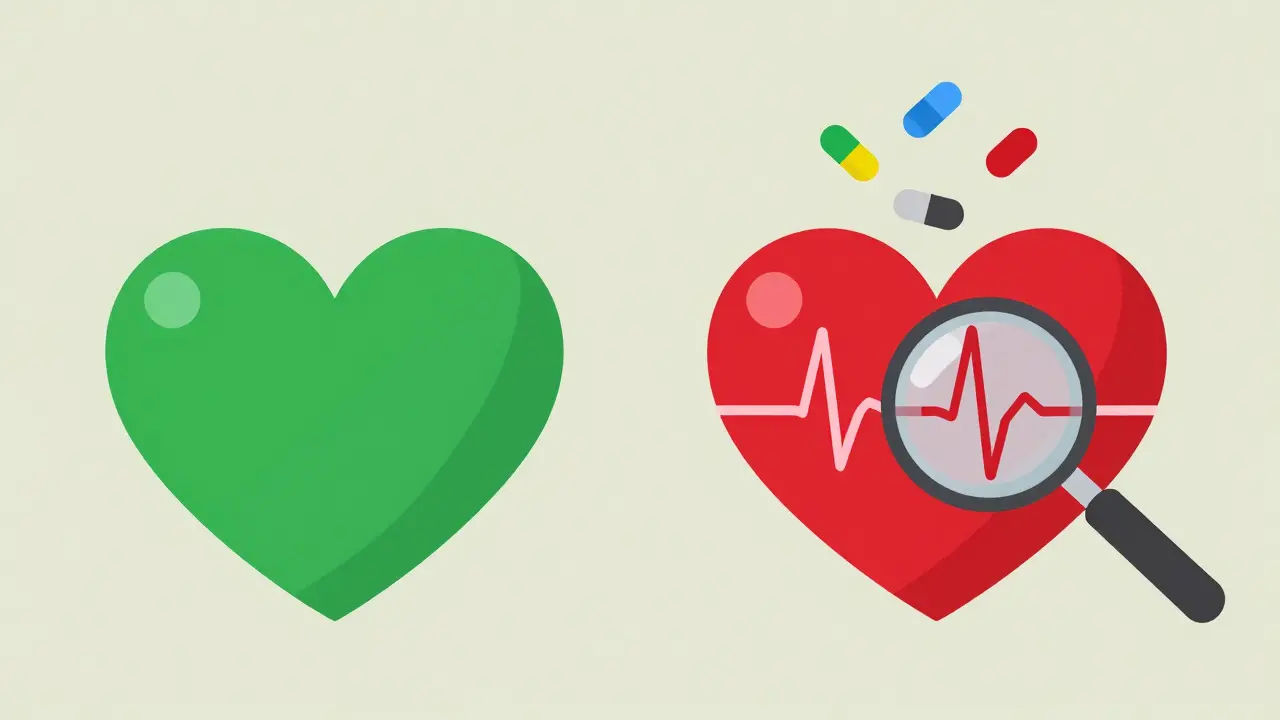
One study found that 16% of patients in methadone maintenance programs had QTc over 500 ms - the level where sudden death risk spikes. Many of these patients were also on antidepressants or antibiotics they didn’t realize were risky.
What Doctors Should Do - And What Patients Should Ask For
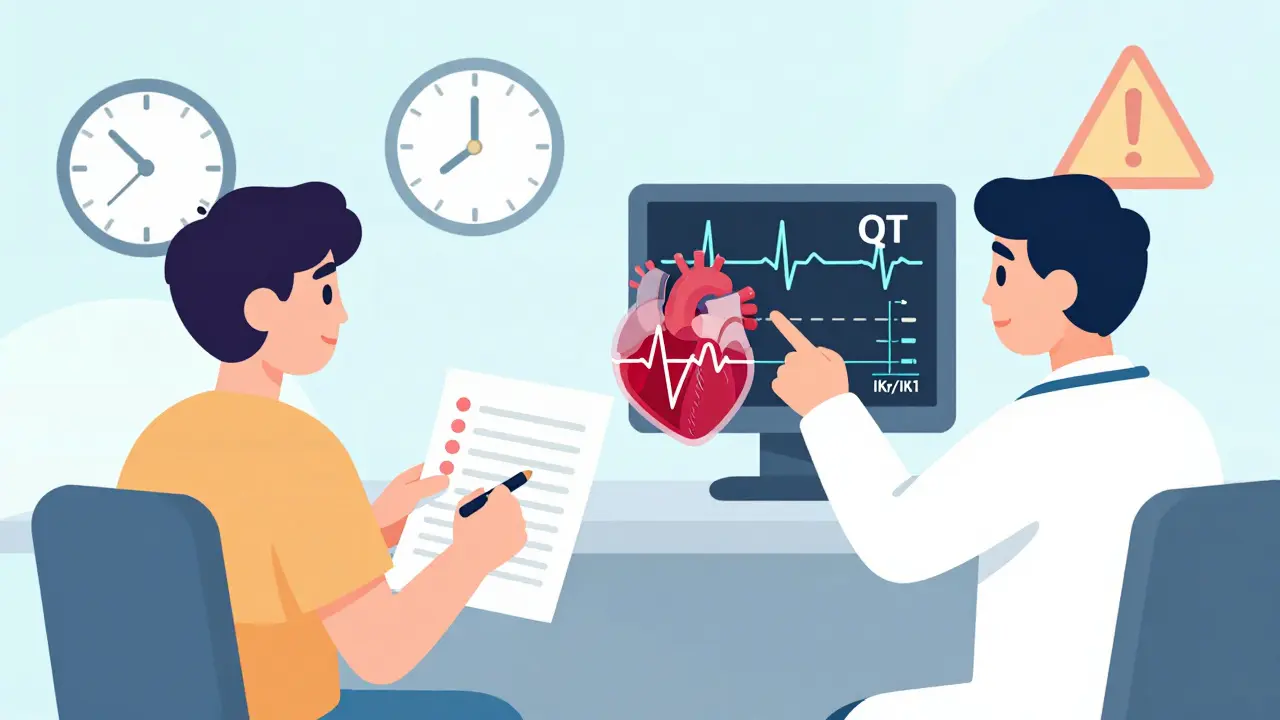
Before starting methadone, a baseline ECG is non-negotiable. It’s not optional. And it’s not enough to check once. Because methadone’s effect builds over weeks, follow-up ECGs are needed after stabilization - usually at 2-4 weeks and then every 3-6 months if the dose stays stable.If your QTc goes above 450 ms (men) or 470 ms (women), your doctor should reassess. If it hits 500 ms or increases by more than 60 ms from baseline, you’re in the red zone. Options include:
- Reducing the methadone dose
- Switching to buprenorphine - which has 100 times less hERG blockade
- Correcting potassium or magnesium levels
- Stopping or replacing any other QT-prolonging drugs
Patients should always ask: “Is this medication safe to take with methadone?” Many prescribers - especially psychiatrists or primary care doctors - don’t know methadone’s cardiac risks. Don’t assume they do. Bring a list of all your meds, including over-the-counter drugs and supplements. Even common antihistamines like diphenhydramine can add to the risk.
Why Keep Using Methadone If It’s So Risky?
It’s a fair question. Methadone does carry risk. But the alternative - untreated opioid addiction - carries far greater danger. Studies show people in methadone maintenance have 20-50% lower mortality than those not in treatment. They’re less likely to die of overdose, less likely to contract HIV or hepatitis from needle sharing, and more likely to stay employed and off the streets.The goal isn’t to stop methadone. It’s to use it safely. When monitored properly - with ECGs, dose control, and awareness of drug interactions - the benefits overwhelmingly outweigh the risks. But skipping monitoring? That’s where lives are lost.
What’s Next? Better Tools for Risk Prediction
Researchers are now looking beyond the QT interval. A 2022 study in the Journal of the American Heart Association found that methadone’s unique blockade of the IK1 channel causes not just longer QT, but also more prominent U-waves and a wider Tpeak-Tend interval - signs of uneven repolarization across the heart muscle. These features may be better predictors of danger than QTc alone.Soon, we may see ECG software that automatically flags “repolarization reserve loss” in methadone patients, not just prolonged QT. Until then, the simplest, most effective tool remains: the ECG, done right, at the right time.
Final Takeaway
Methadone saves lives. But it can also end them - especially when paired with other drugs that stretch the heart’s electrical rhythm. The risk isn’t theoretical. It’s documented, measurable, and preventable. If you’re on methadone, know your QTc. Ask about every medication you’re taking. If your doctor doesn’t check your ECG, find one who will. Your heart isn’t just a pump - it’s an electrical system. And methadone, especially with other drugs, can throw it out of sync.Can methadone cause sudden cardiac death even at low doses?
Yes, though it’s rare. Most cases of torsades de pointes linked to methadone occur at doses above 100 mg/day. But in patients with multiple risk factors - like low potassium, heart disease, or taking another QT-prolonging drug - even 40-60 mg/day has triggered dangerous rhythms. Dose isn’t the only factor; individual sensitivity and drug combinations matter just as much.
Is buprenorphine safer than methadone for the heart?
Yes, significantly. Buprenorphine has about 100 times less effect on the hERG potassium channel than methadone. Studies show minimal to no QT prolongation at standard doses. For patients with heart conditions or those on multiple QT-prolonging medications, switching to buprenorphine is often the safest choice - without sacrificing treatment effectiveness.
What should I do if I’m on methadone and need an antibiotic?
Never start a new antibiotic without checking with your methadone provider or cardiologist. Macrolides like erythromycin and fluoroquinolones like moxifloxacin are high-risk. Safer alternatives include azithromycin (lower risk than erythromycin), amoxicillin, or doxycycline - but always confirm. Your provider may delay the antibiotic, adjust your methadone dose, or schedule an ECG before and after.
How often should I get an ECG on methadone?
At least once before starting, then again 2-4 weeks after any dose change. If you’re stable on a dose under 100 mg/day with no other risk factors, every 6-12 months is reasonable. If you’re on higher doses, have heart disease, or take other QT-prolonging drugs, get an ECG every 3 months. Any new symptoms - dizziness, fainting, palpitations - require an immediate ECG.
Can electrolyte imbalances make methadone more dangerous?
Absolutely. Low potassium (hypokalemia) and low magnesium (hypomagnesemia) make the heart more electrically unstable. Methadone already slows repolarization - without enough potassium and magnesium, the heart can’t recover properly. This combo is a known trigger for torsades. Regular blood tests for electrolytes are essential, especially if you’re vomiting, sweating heavily, or taking diuretics.
Are there any new guidelines for methadone and heart monitoring?
Current guidelines from the FDA, the American Heart Association, and addiction medicine societies all agree: baseline ECG is mandatory. Repeat ECGs are recommended after dose changes and periodically during treatment. Many clinics now use automated QTc alerts in their ECG machines. If your clinic doesn’t monitor ECGs, ask why - and consider switching to one that does. Your life depends on it.
Nancy Kou
December 19, 2025 AT 19:40Methadone saved my life but nearly killed my heart too. I was on 120mg for years, no issues-until my doctor prescribed clarithromycin for a sinus infection. I started feeling dizzy, like my chest was skipping beats. Got an ECG-QTc was 540ms. They switched me to azithromycin and cut my dose. I’m alive because I asked questions. Don’t wait for a near-death experience to learn this.
Ryan van Leent
December 20, 2025 AT 11:15people dont die from methadone they die from being dumb and not reading the fucking label. if you take 10 different meds with your opioid replacement therapy you deserve what you get. why is everyone acting like this is some secret conspiracy
Hussien SLeiman
December 20, 2025 AT 19:15Let me tell you something about the medical-industrial complex. They push methadone because it’s cheap and profitable. The QT prolongation risk? Oh, it’s documented in peer-reviewed journals since the 90s. But do clinics screen patients? No. Do they warn you? Only if you ask. And even then, they’ll say ‘it’s rare.’ Rare doesn’t mean impossible-it means it happened to someone else until it happened to you. I’ve seen three people in my program collapse from torsades. All of them were on antidepressants. All of them were told ‘it’s fine.’ The system doesn’t care. It’s not about safety. It’s about compliance. And compliance is measured in pills dispensed, not lives saved.
Sajith Shams
December 21, 2025 AT 18:24Anyone who thinks buprenorphine is the silver bullet hasn’t looked at the pharmacokinetics. Yes, it’s safer for QT-but it’s not zero risk. And it doesn’t work for everyone. I tried it. My cravings came back like a freight train. Methadone’s half-life keeps me stable. I’d rather have a monitored QT interval than relapse and OD. The real problem isn’t methadone-it’s doctors who don’t check labs or ECGs. Stop blaming the drug. Start blaming the negligence.
Matt Davies
December 22, 2025 AT 12:23This is one of those posts that makes you want to hug a cardiologist. The fact that we’re still having this conversation in 2025 is wild. We’ve got AI that can predict heart attacks from a single ECG, yet we’re letting people on methadone fly blind. I work in a clinic in London-we do baseline ECGs, monthly electrolytes, and we flag every single new script in the system. It’s not hard. It’s just not sexy. But saving someone from sudden cardiac death? That’s the ultimate win. Keep pushing this info. It matters.
Adrienne Dagg
December 23, 2025 AT 13:11just had to share this with my sister who’s on methadone 🙏 she didn’t even know about the QT thing until i sent her this. i’m so glad we’re talking about this now. i used to think opioids were just about the high or the cravings but this? this is real life or death stuff. thanks for writing this 🫶
Chris Davidson
December 23, 2025 AT 17:29The data is clear. QT prolongation is dose dependent and drug interaction dependent. The risk is quantifiable. The solution is simple. Baseline ECG. Repeat ECG at 2 4 weeks. Monitor electrolytes. Avoid macrolides and fluoroquinolones. If these steps are followed the mortality rate from torsades drops to near zero. The failure is not in the medication. The failure is in the implementation.
Anna Sedervay
December 24, 2025 AT 23:05Have you ever considered that the entire methadone program is a covert pharmaceutical experiment? The FDA approved it in 1947 for pain, then quietly repurposed it for addiction because it’s cheaper than rehab centers. The QT prolongation? A side effect they knew about but suppressed. Why else would they refuse to mandate ECGs in all clinics? It’s not negligence-it’s intentional. And now they’re pushing buprenorphine as the ‘safer’ alternative… which is still patented, still profitable, still monitored. Who benefits? Not you. Not me. The corporations do. Always the corporations.
Mike Rengifo
December 26, 2025 AT 10:20I’ve been on 80mg for 5 years. Got my first ECG at 6 months. QTc was 460. My doc didn’t blink. I asked again at 18 months. It was 485. Then I switched to buprenorphine. No more anxiety about antibiotics or cold meds. It’s not about fear. It’s about awareness. You don’t need to panic. Just ask.
Ashley Bliss
December 27, 2025 AT 20:01I lost my brother to this. He was 32. On 90mg methadone. Took amoxicillin for a tooth infection. Said he felt ‘weird’ for two days. Went to sleep. Never woke up. The coroner said torsades de pointes. No one told him the risks. No one asked if he was on anything else. They just assumed. And now I have to live with the fact that he died because no one cared enough to check. This isn’t medical advice. This is a funeral notice. Please. Please. Ask your doctor. Before it’s too late.
bhushan telavane
December 28, 2025 AT 09:47In India, methadone is barely available. Most addicts get no treatment at all. But when I worked in a clinic in Kerala, we had a guy on 150mg who got fluconazole for a fungal infection. He collapsed. We didn’t have an ECG machine. We gave him magnesium IV and called an ambulance. He survived. I’ll never forget how scared he looked. If you’re reading this and you’re on methadone-don’t wait for a crisis. Ask for the test. Even if they say no. Push. Your heart is worth it.