
Medication-Related Suicidal Thoughts: Key Warning Signs You Can't Ignore
 Dec, 3 2025
Medication Safety Checker
Check Your Symptoms
Results
What you should do
These steps are critical for safety:
- Call your prescriber immediately
- Use specific phrases: "I feel restless," "I have thoughts I don't recognize," or "I feel like I can't control myself"
- Do not stop medication abruptly
- Use the Columbia-Suicide Severity Rating Scale (C-SSRS) at your next appointment
Safety Plan
Write down these emergency contacts:
- Emergency: 911
- Local crisis line: [Your local number]
- Trusted friend: [Your name]
- Doctor: [Your doctor's number]
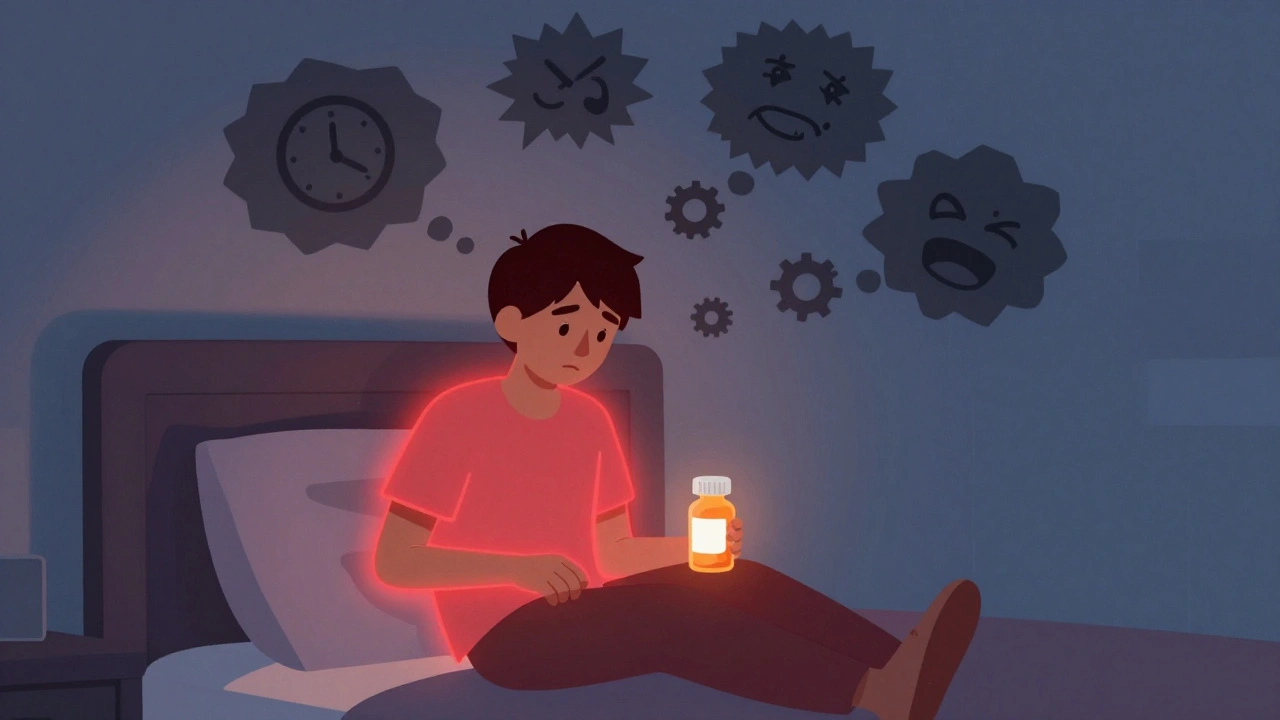
When you start a new medication for depression, anxiety, or another mental health condition, you expect to feel better. But for some people, the very drug meant to help triggers something terrifying: sudden, intense suicidal thoughts that feel foreign, overwhelming, and impossible to control. This isn’t rare. It’s not just a myth. It’s a documented, serious reaction - and knowing the warning signs can save a life.
It’s Not Depression Getting Worse - It’s Something Else
Many assume that if someone on an antidepressant starts having suicidal thoughts, their depression is just getting worse. That’s often not true. In fact, research shows the opposite: the most dangerous period isn’t when sadness deepens - it’s when the person starts to feel activated. They may have more energy, but it’s restless, jittery, and chaotic. They’re not sitting in bed crying - they’re pacing, unable to sit still, thinking about ending their life with terrifying clarity. This is called the activation syndrome. It’s not the illness returning. It’s the medication triggering a neurological reaction that can push someone over the edge. The FDA first flagged this in 2004 after reviewing data from 24 clinical trials involving 4,400 young patients. The result? A mandatory black box warning on all antidepressants - the strongest safety alert the agency can issue. By 2007, every major antidepressant carried this warning. The message was clear: these drugs can cause suicidal thinking, especially in the first few weeks.The Three Red Flags You Must Watch For
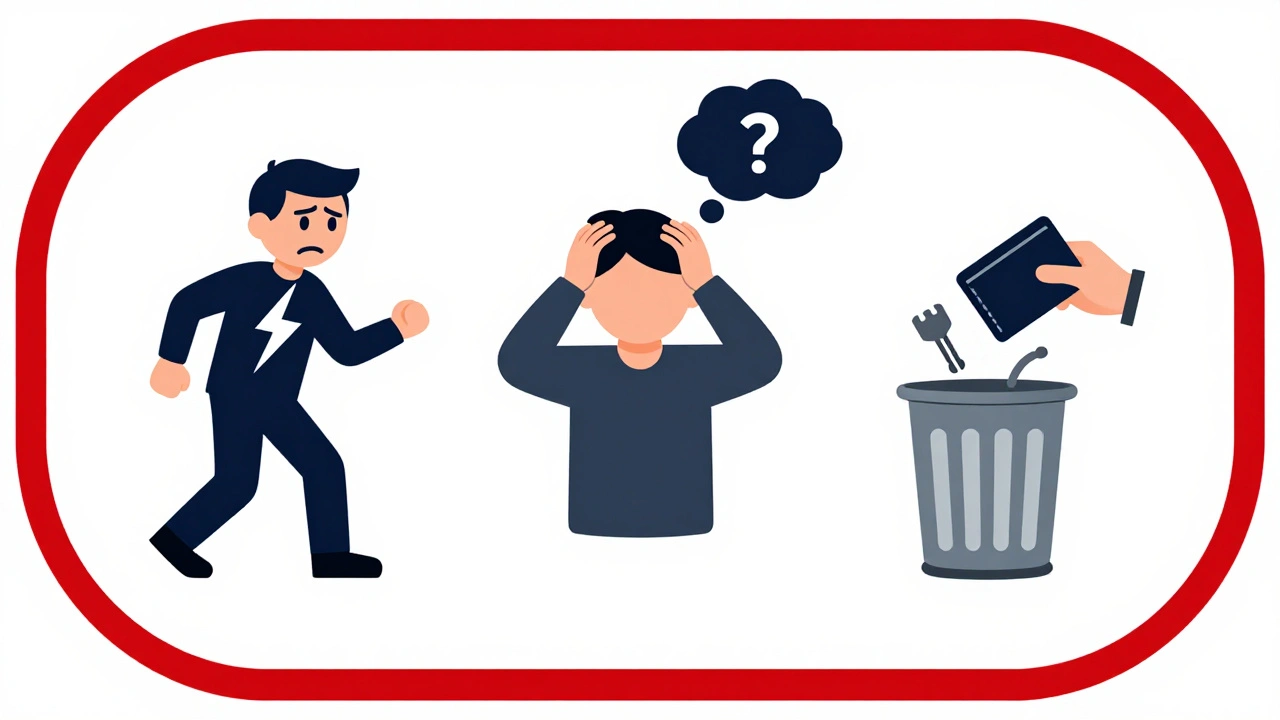
Not every person on medication will have this reaction. But if you or someone you care about starts taking a new drug - especially an antidepressant - watch for these three specific warning signs:- Severe restlessness (akathisia): This isn’t just being fidgety. It’s an unbearable inner tension - like your nerves are buzzing under your skin. You can’t sit still. You pace. You shift constantly. You feel like you’re going to explode. Studies show this is the most common sign, appearing in over half of all cases. Dr. David Healy’s research found that 73% of people who developed medication-induced suicidality had akathisia before the suicidal thoughts hit.
- Ego-dystonic thoughts: These are thoughts that feel alien. You don’t believe them. You don’t want them. But they keep coming. You think, “I should just end it,” and you’re horrified by the thought. It doesn’t match who you are. That disconnect is a red flag. It’s not depression talking - it’s the drug hijacking your mind.
- Sudden impulsiveness: You start making reckless decisions. You say things you wouldn’t normally say. You act without thinking. You might suddenly cancel plans, quit your job, or give away possessions. When this combines with depressive symptoms, the risk spikes. Impulsivity removes the buffer between thought and action.
When Does This Happen? Timing Matters
This isn’t a slow burn. The danger window is narrow. Stanford researchers found that 78% of medication-related suicidal events happen within the first 28 days - most within the first two weeks. The risk is highest when:- You start a new medication
- You increase the dose
- You switch from one drug to another
It’s Not Just Antidepressants
Most people assume this only happens with antidepressants. But it doesn’t. A 2024 study in JMIR Public Health and Surveillance looked at 9 non-psychiatric drugs linked to suicidal behavior - and one stood out: doxycycline, a common antibiotic. Patients taking doxycycline for acne or infections began reporting suicidal thoughts 7 to 21 days after starting the drug. Researchers think it may interfere with retinoid metabolism in the brain, triggering mood changes. Other drugs on the list include painkillers like piroxicam, cancer drugs like paclitaxel, and even asthma inhalers like formoterol. This means: if you start any new medication - even for a cough or a rash - and suddenly feel off, restless, or have dark thoughts, don’t dismiss it. Ask your doctor: “Could this drug be causing this?”Who’s Most at Risk?
Some people are more vulnerable. The biggest risk factor? Age. People under 25 are 2.3 times more likely to experience this reaction than those over 24. That’s why the FDA’s warning specifically targets children, teens, and young adults. Other risk factors:- History of prior suicide attempts - increases risk by 47%
- Family history of suicide - adds 32% more risk
- Co-existing anxiety disorders - boosts risk by 58%
- Starting treatment after a recent trauma or loss
What Should You Do If You See These Signs?
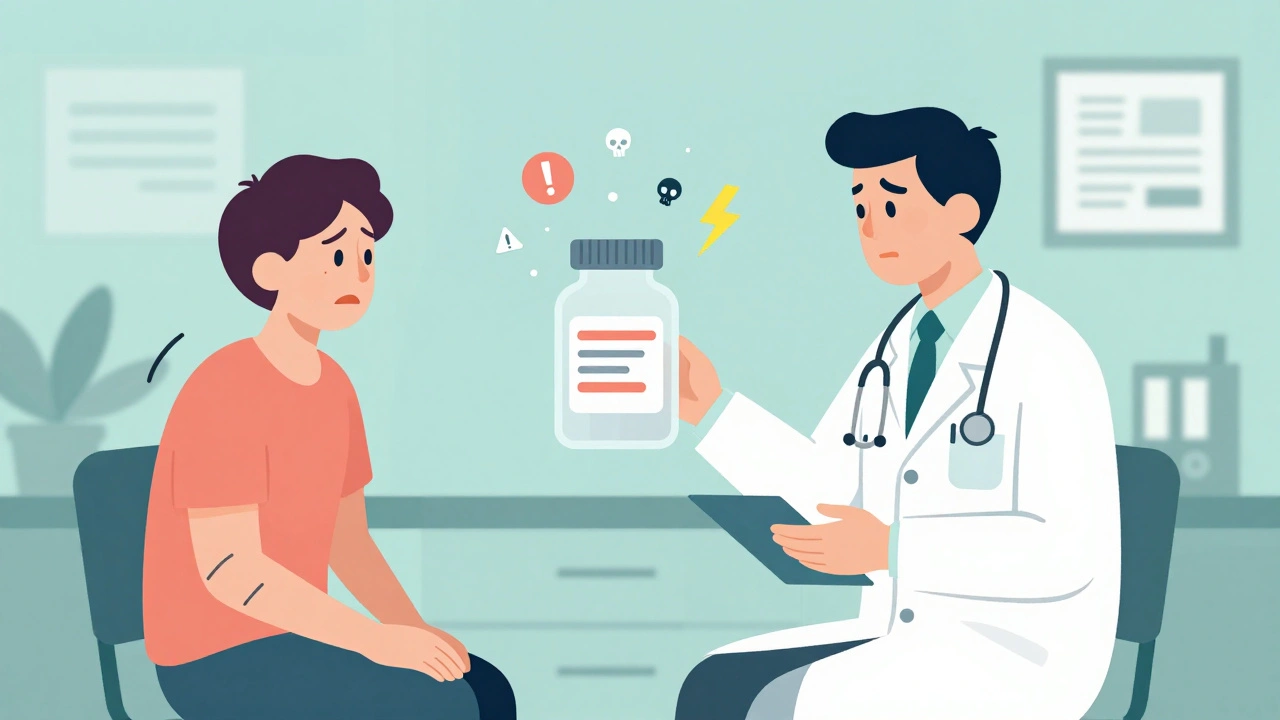
If you notice any of these warning signs - especially severe restlessness or alien suicidal thoughts - don’t wait. Don’t hope it’ll pass. Don’t assume it’s just “adjusting.” Here’s what to do:- Call your prescriber immediately. Tell them exactly what you’re feeling. Use the words: “I feel restless,” “I have thoughts I don’t recognize,” or “I feel like I can’t control myself.”
- Don’t stop the drug cold. Abruptly quitting can cause withdrawal or worsen symptoms. Work with your doctor on a safe plan.
- Use the Columbia-Suicide Severity Rating Scale (C-SSRS). This simple tool asks 6 key questions about suicidal thoughts and plans. Ask your doctor to use it at every visit during the first month.
- Have a safety plan. Write down: who to call, where to go, what to say. Keep it on your phone and in your wallet. Studies show safety planning cuts hospitalizations by 41%.
- Ask about alternatives. If this reaction happens, it’s not a failure. It’s a signal. There are other medications, therapies, and approaches. Don’t give up on treatment - just switch strategies.
What’s Changing Now?
The medical world is catching up. In 2023, the FDA updated labeling requirements to make warnings clearer. They’re also pushing for better monitoring systems. By 2025, new tools will use smartphone data - sleep patterns, typing speed, social activity - to detect early signs of activation before the person even realizes it. Genetic testing is also becoming available. If you have certain variants in the CYP2D6 or CYP2C19 genes, your body processes some antidepressants differently - making you more prone to side effects. Testing for these can help avoid dangerous starts. But the biggest gap? Communication. Only 68% of doctors document warning sign discussions with patients during informed consent, according to the American Psychiatric Association. That means too many people start these drugs without knowing what to watch for.You’re Not Alone - And Help Is Possible
If you’ve experienced this, you’re not broken. You’re not weak. You’re someone who had a rare but real reaction to a powerful chemical. The good news? When the medication is stopped or changed, symptoms resolve in 87% of cases, according to a 2024 study. This isn’t about avoiding treatment. It’s about safer treatment. Millions benefit from antidepressants. But for a small group, the path to healing requires more awareness - not more pills. The goal isn’t to scare you. It’s to arm you. If you’re starting a new medication, know the signs. If you’re caring for someone who is, pay attention. The difference between noticing and ignoring could be the difference between life and death.Can antidepressants really cause suicidal thoughts?
Yes. While antidepressants help most people, a small but serious subset - especially those under 25 - can develop sudden suicidal thoughts as a side effect. This isn’t due to worsening depression. It’s caused by a neurological reaction called activation syndrome, which includes restlessness, impulsivity, and intrusive thoughts that feel alien. The FDA has required black box warnings on all antidepressants since 2007 because of this risk.
How soon after starting a medication do these thoughts appear?
In most cases, suicidal thoughts linked to medication appear within the first 28 days - with 78% happening in the first two weeks. The highest risk is right after starting a new drug or increasing the dose. Even non-psychiatric drugs like antibiotics can trigger this reaction, sometimes taking 7 to 21 days to show effects.
Is akathisia the same as anxiety?
No. Akathisia is a physical sensation of inner restlessness - you feel like you must move, even if you’re exhausted. Anxiety is mental worry. Akathisia is more intense, more urgent, and often accompanied by a feeling of being trapped inside your own body. It’s a known trigger for suicide in people taking antidepressants, and it’s been documented in over 50% of cases.
Are there other drugs besides antidepressants that can cause this?
Yes. Research has linked several non-psychiatric drugs to suicidal ideation, including the antibiotic doxycycline, the painkiller piroxicam, cancer drugs like paclitaxel, and even asthma inhalers like formoterol. These drugs may affect brain chemistry indirectly - through inflammation, hormone disruption, or enzyme interference. Always ask your doctor if a new medication could affect your mood.
What should I do if I notice these signs in myself or someone else?
Contact your prescriber immediately. Don’t wait. Use clear language: “I feel restless,” “I have thoughts I don’t recognize,” or “I can’t sit still.” Don’t stop the medication on your own - work with your doctor to adjust safely. Use a safety plan, keep emergency contacts handy, and consider asking for the Columbia-Suicide Severity Rating Scale (C-SSRS) at your next visit. Most cases resolve quickly once the drug is changed or stopped.
Is it safe to keep taking the medication if I feel a little restless?
No. Mild restlessness can escalate quickly. Studies show that even low-level akathisia is a strong predictor of future suicidal behavior. If you feel inner tension, an urge to move constantly, or a sense of being “on edge” without reason, tell your doctor. Waiting to see if it gets worse is dangerous. Early intervention prevents tragedy.
Dematteo Lasonya
December 4, 2025 AT 20:29Been on SSRIs for 3 years and never had this happen, but I know someone who did. The restlessness was insane-like their nerves were live wires. Scary stuff.
Don’t ignore it. Just talk to your doctor.
Gillian Watson
December 6, 2025 AT 01:01I’m from the UK and this is so under-discussed here. My cousin had akathisia after starting sertraline. Thought it was just anxiety until she started pacing at 3am like she was being chased.
Doctors dismissed it for weeks. She ended up in ER.
Everyone needs to know this.
Jessica Baydowicz
December 7, 2025 AT 04:22Y’all need to hear this. If you’re starting meds and suddenly feel like your soul’s buzzing under your skin? That’s not ‘adjusting.’ That’s your body screaming.
Don’t be brave. Don’t wait. Call your doc. Right now.
You’re not overreacting. You’re surviving.
Pavan Kankala
December 7, 2025 AT 05:46Big Pharma doesn’t want you to know this. Antidepressants are just chemical traps. They sell you hope then hijack your mind. Doxycycline? Of course it causes suicidal thoughts-antibiotics mess with your gut, your gut messes with your brain. They’ve been covering this up since the 90s.
They’re not healing you. They’re controlling you.
Rudy Van den Boogaert
December 7, 2025 AT 06:03I’m a nurse and I’ve seen this firsthand. The worst part isn’t the thoughts-it’s how fast people feel ashamed for having them. Like they’re broken for thinking it.
It’s not them. It’s the drug.
And yeah, even a simple antibiotic can do this. I had a patient on doxycycline for acne who started talking about jumping off the balcony. No prior history. Just… changed.
Doc didn’t connect it until we asked.
Listen to your body. Even if it feels weird.
Martyn Stuart
December 7, 2025 AT 22:44Important note: The Columbia-Suicide Severity Rating Scale (C-SSRS) is not just a tool-it’s a lifesaver. It’s validated, simple, and free. Every primary care provider should be using it during the first 30 days of any psychotropic or potentially neuroactive medication. If your provider doesn’t know what it is, ask them to look it up. Or print it out yourself. It’s on the Columbia University website. Seriously. Do it.
Also: Akathisia is not anxiety. It’s a movement disorder. Think of it like a neurological fire alarm that’s stuck on. You can’t calm it with breathing. You need to stop the trigger.
Jordan Wall
December 8, 2025 AT 15:35Wow, such a *fascinating* exposition on the *neurochemical fragility* of the modern psyche. Truly, we live in an age of *pharmaco-neurological existentialism*. Doxycycline? Piroxicam? *Formoterol?!* The pharmaceutical-industrial complex is just a *symptom* of a deeper ontological collapse. We’re not treating depression-we’re *weaponizing* neurotransmitters. I mean, have you *seen* the CYP2D6 polymorphisms? It’s like your genes are a *hackable API*. 🤖🧠
Gareth Storer
December 10, 2025 AT 10:08So let me get this straight-you’re telling me if I take a pill for acne, I might suddenly want to jump off a bridge? And the doctor won’t believe me because ‘it’s just anxiety’? Wow. So we’re just supposed to trust Big Pharma’s *clinical trials*? Next thing you know, aspirin will be labeled ‘may cause spontaneous enlightenment.’
Libby Rees
December 11, 2025 AT 08:25It’s important to note that while these reactions are rare, they are real and documented. The FDA’s black box warning exists for a reason. Patients deserve informed consent-not just a pamphlet tucked into a prescription bottle.
Doctors should be required to verbally review these risks before prescribing. Not just check a box.
And if you’re reading this and you’re on a new med? Pay attention. Not because you’re paranoid. Because you’re smart.
Elizabeth Crutchfield
December 11, 2025 AT 12:46my friend took doxy for a rash and started crying for no reason then said she wanted to die. we thought it was stress. turns out the doc had never heard of this. she’s fine now but omg. why isn’t this on the bottle??
Shofner Lehto
December 12, 2025 AT 01:56This is the kind of info that needs to be in every ER, every pharmacy, every high school health class. Not just a footnote in a medical journal. We’re talking about young people here-kids who think they’re failing because they feel this way. It’s not their fault. It’s not weakness. It’s biology.
And if you’re reading this and you’re scared to start meds? You’re not alone. But don’t let fear stop you from getting help. Just know the signs. And speak up.
You’re not broken. You’re human.
val kendra
December 13, 2025 AT 23:46I’m a therapist and I’ve had clients tell me they felt like their thoughts weren’t theirs after starting meds. One said, ‘It’s like someone else is whispering in my head.’ That’s ego-dystonic. That’s not depression. That’s a chemical glitch.
And here’s the thing-when you stop the drug, the whisper stops. 87% of cases. That’s not a failure. That’s feedback.
So if you’re feeling off? Don’t shame yourself. Don’t wait. Call your prescriber. Say: ‘This doesn’t feel like me.’ That’s all you need to say.
You’re not crazy. You’re just reacting.
And that’s okay.