
Mail-Order Pharmacy Cost Savings: Pros and Cons
 Feb, 24 2026
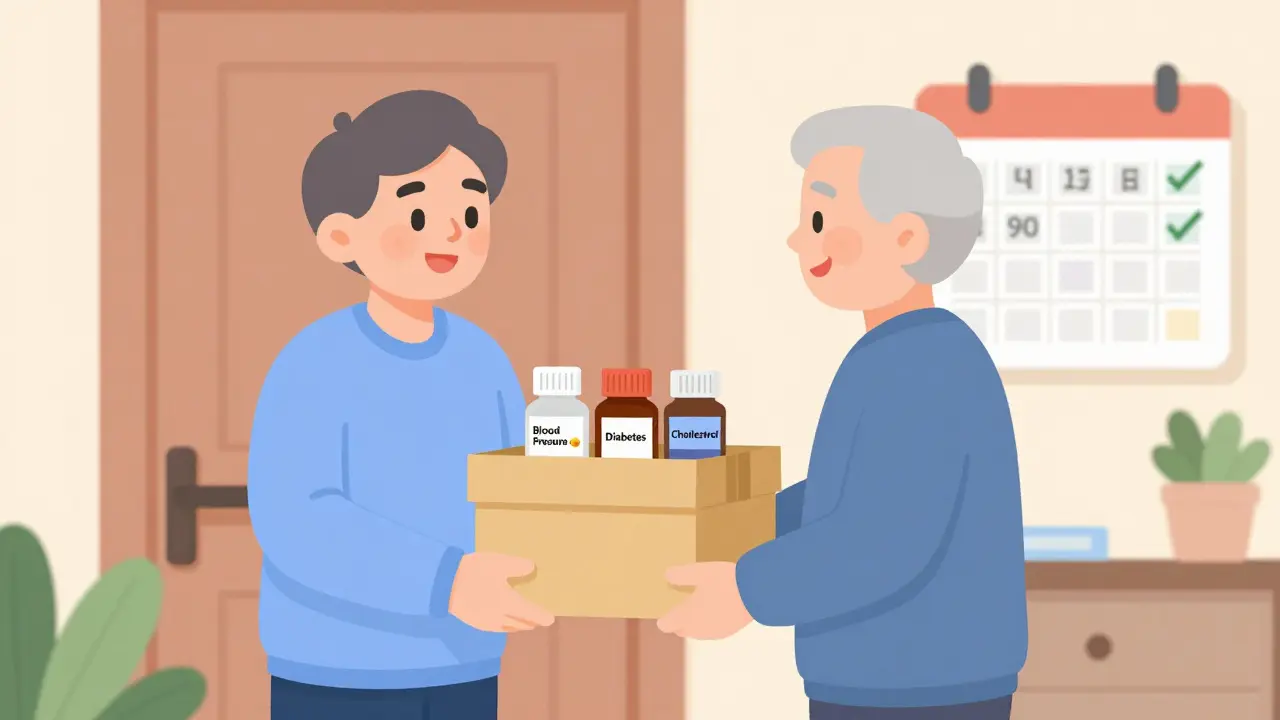
Getting your medications delivered to your door sounds simple, but it’s not always the obvious choice. For people managing long-term conditions like high blood pressure, diabetes, or cholesterol, mail-order pharmacies can mean big savings - but they’re not perfect. If you’re on three or more maintenance meds, you could be saving hundreds a year. But if you’ve ever waited days for a prescription that you needed yesterday, you know the frustration. Let’s break down what’s really happening with mail-order pharmacies in 2026.
How Mail-Order Pharmacies Save Money
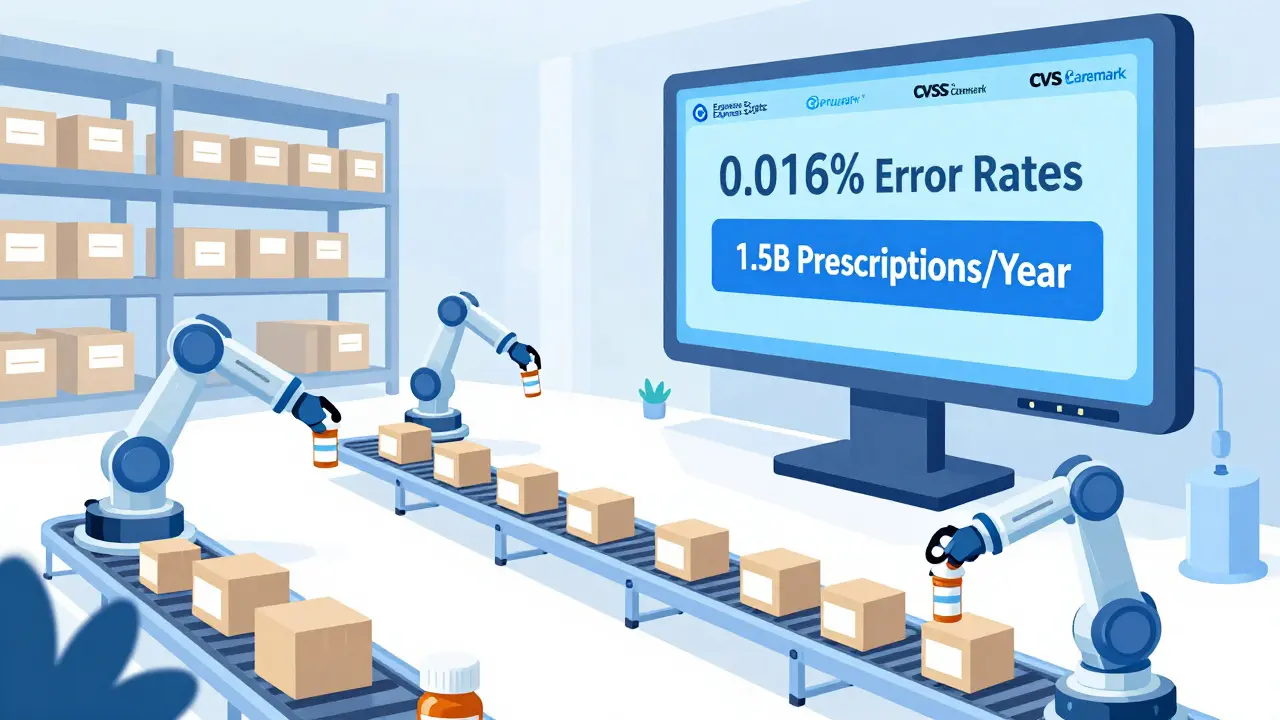
Mail-order pharmacies don’t just ship pills. They’re built for efficiency. Instead of filling one 30-day prescription at a time, they send you a 90-day supply. That’s the key. Most health plans charge you the same amount for a 90-day supply as they would for two 30-day fills. So if your monthly copay is $15, a 90-day supply through mail-order might cost $30 - not $45. That’s a $15 monthly saving, or $180 a year, just on one drug. Multiply that by three or four medications, and you’re talking $500-$700 saved annually.This isn’t a trick. It’s how the system works. The big pharmacy benefit managers - Express Scripts, CVS Caremark, and OptumRx - negotiate lower prices with drug makers because they buy in bulk. They also automate dispensing. Machines fill prescriptions with near-perfect accuracy. The error rate? Just 0.016%, compared to 0.04% at local pharmacies. That means fewer mistakes, fewer dangerous mix-ups, and less waste.
Most major insurers, including Blue Cross NC and Sutter Health Plus, include mail-order as part of standard coverage. No extra fees. No hidden charges. You just need to enroll. Many plans even let you set up automatic refills so you never run out. For someone with a busy schedule, a disability, or living far from a pharmacy, this isn’t a luxury - it’s a necessity.
The Hidden Benefits: Adherence and Safety
Saving money is nice, but the real win is sticking with your meds. Studies show people who use mail-order pharmacies are 5% to 15% more likely to take their drugs as prescribed. Why? Because they don’t have to remember to go to the pharmacy every month. The pills show up. Automatic refills mean no gaps. That’s huge for conditions like heart disease or diabetes, where missing even a few doses can lead to hospital visits.And it’s not just about convenience. Mail-order pharmacies use electronic systems that check all your prescriptions - even ones filled elsewhere - for dangerous interactions. If you’re on five different drugs, they’ll flag a conflict before you even get the bottle. Retail pharmacists can do this too, but they’re often juggling 100 customers a day. Mail-order pharmacists have time to review each case thoroughly. A 2023 report from the Academy of Managed Care Pharmacy found that mail-order use increases generic substitution rates, which lowers costs and improves safety.
The Downsides: Delays, Losses, and Limited Use
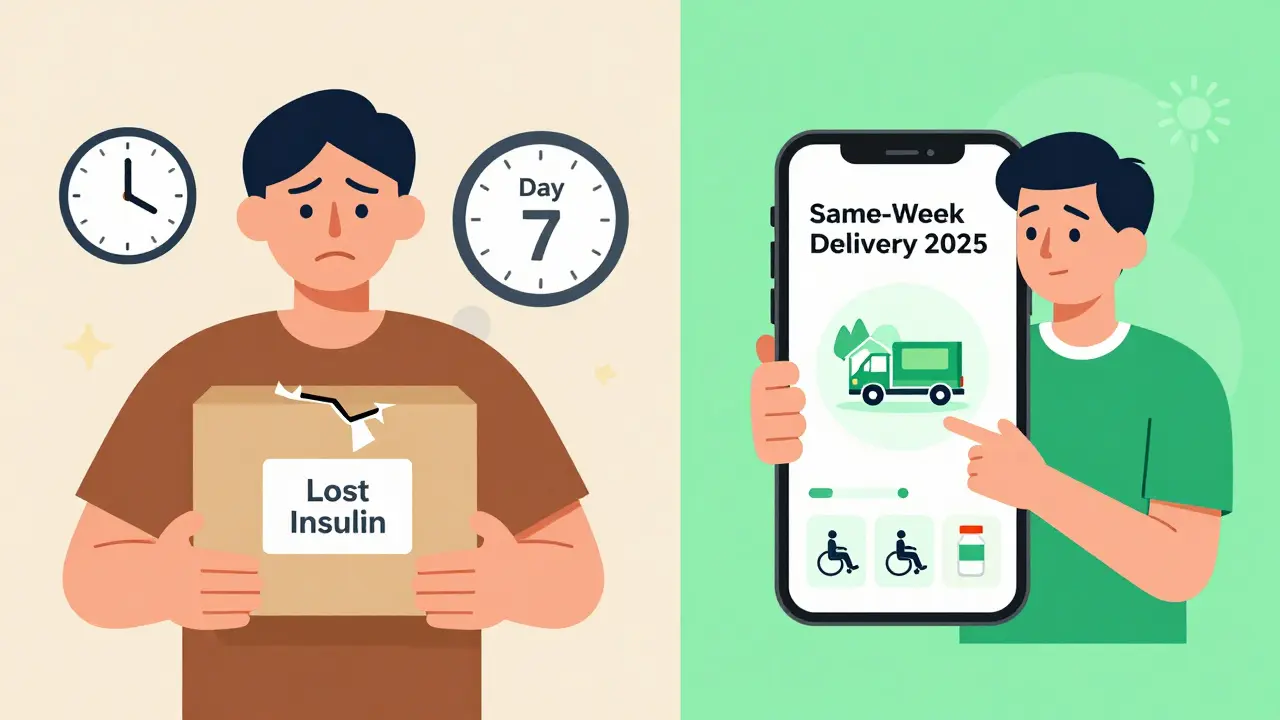
Here’s where it gets messy. Mail-order pharmacies aren’t built for emergencies. If you get sick and need an antibiotic tomorrow, you’re out of luck. Most deliveries take 5 to 7 business days. Some users report their meds being lost, damaged, or delayed. Industry data shows about 0.5% of shipments have issues - sounds low, but if you’re relying on that pill, it’s a big deal. One Reddit user shared how their blood pressure meds vanished in transit and they had to pay full price at Walgreens.Another problem? Not all drugs are available. Specialty meds, like biologics for rheumatoid arthritis or insulin pens that need refrigeration, are still tricky. While companies like CVS Caremark are rolling out cold-chain delivery in 2025, not everyone can get them yet. And if you’re switching from your local pharmacy, transferring your prescription can be a hassle. About 32% of new users say they had to call customer service multiple times to get it done.
Also, if your plan doesn’t offer mail-order as a preferred option, you might not save anything. Some plans charge more for mail-order than retail. Always check your plan’s formulary. And if you need face-to-face advice - maybe you’re confused about side effects or have a new symptom - you can’t just walk in and ask. You’ll have to call, wait on hold, or use a chatbot.
Who Benefits Most?
Mail-order pharmacy isn’t for everyone. But it’s a game-changer for certain people:- People on three or more daily maintenance medications
- Those living in rural areas with no nearby pharmacy
- Patients with mobility issues or chronic pain
- Anyone tired of driving to the pharmacy every month
- People with complex drug regimens who need careful monitoring
For example, a 68-year-old with diabetes, high blood pressure, and high cholesterol takes five pills a day. With mail-order, they get all five delivered in one box every three months. Their monthly copay drops from $75 to $50. That’s $300 saved per year - just for sticking with the system.
On the flip side, if you’re healthy, rarely take meds, or need quick refills for occasional antibiotics or painkillers, mail-order adds more hassle than help. It’s not worth it.
Who Runs These Services?
You probably don’t know it, but three companies control 90% of the mail-order market:- Express Scripts - Owned by Cigna, handles 34% of all mail-order prescriptions
- CVS Caremark - Part of CVS Health, runs 31%
- OptumRx - From UnitedHealth Group, manages 25%
These aren’t small players. Together, they process over 1.5 billion prescriptions a year. They’ve got warehouses, automated systems, 24/7 pharmacist lines, and apps with real-time tracking. Express Scripts started offering GPS tracking for every shipment in early 2024. That means you can see exactly where your meds are - like a package from Amazon.
But here’s the catch: these companies are owned by giant health insurers. That means their main goal isn’t just to save you money - it’s to reduce overall healthcare spending. Sometimes that means steering you toward generics or specific brands that benefit their bottom line. It’s not fraud. It’s business. But you should still ask: Is this the cheapest option, or just the one they want me to use?
What’s Changing in 2026?
The mail-order model is evolving. In 2025, CVS Caremark announced it will offer same-week delivery to 85% of U.S. addresses. That’s a big shift. No more waiting a week for a refill. UnitedHealth Group is expanding cold-chain delivery so insulin and other temperature-sensitive drugs arrive safely. And more employers are adding it: 89% of Fortune 500 companies now offer mail-order, compared to just 63% of small businesses.But threats are growing too. The 2023 Lower Drug Costs Now Act could limit how much more you pay at retail versus mail-order. If passed, it could cut your savings by up to 40%. That’s why some experts warn that mail-order might become less attractive if regulations change. Still, the trend is clear: more people will use it. By 2030, usage could jump from 12% to 35% of all maintenance prescriptions - saving billions.
Should You Use It?
Ask yourself:- Do I take at least two maintenance meds every day?
- Do I forget to refill prescriptions or run out often?
- Is my local pharmacy far, hard to get to, or crowded?
- Am I okay waiting 5-7 days for a refill?
If you answered yes to the first three and no to the last, mail-order is likely a win. Enroll through your insurer’s website. Transfer your prescriptions. Set up auto-refills. Track your first shipment. If it works, stick with it. If you need meds fast or keep having delivery problems, go back to retail.
There’s no one-size-fits-all. But for millions of Americans, mail-order pharmacy isn’t just convenient - it’s changing how they stay healthy.
Can I use mail-order pharmacy for all my medications?
No. Mail-order pharmacies are designed for maintenance medications - drugs you take daily for chronic conditions like high blood pressure, diabetes, or cholesterol. They’re not meant for acute needs like antibiotics, painkillers, or emergency refills. Most plans limit mail-order to 90-day supplies of ongoing prescriptions. Always check your plan’s formulary to see which drugs are eligible.
How long does it take to get my meds through mail-order?
Typically, your first order takes 5 to 7 business days to arrive. Refills are faster if you’re on auto-renewal. Some providers, like Express Scripts, now offer real-time tracking so you can see where your package is. In 2025, CVS Caremark plans to offer same-week delivery to 85% of U.S. addresses, which will cut wait times significantly.
Is mail-order pharmacy cheaper than my local pharmacy?
Usually, yes - if you’re on a 90-day supply. For example, if your 30-day copay is $20, a 90-day mail-order supply might cost $40 instead of $60. That’s a 33% savings. But some plans don’t offer better pricing, so always compare your copay at retail versus mail-order before switching. Use tools like GoodRx to check prices side-by-side.
What if my meds get lost or damaged in the mail?
Most major pharmacy benefit managers (PBMs) like Express Scripts and OptumRx have replacement policies. If your package is lost, damaged, or delayed, call their customer service line - they’re available 24/7. You’ll typically get a replacement shipped out within 24-48 hours. Some even cover emergency refills at retail pharmacies if you’re in a bind. Keep your plan’s contact info handy.
Can I switch back to my local pharmacy later?
Yes. You’re never locked in. If mail-order isn’t working for you - whether because of delivery delays, lack of access to certain drugs, or personal preference - you can switch back to retail anytime. Just call your insurer or log into your account to change your preferred pharmacy. Most plans allow you to toggle between options without penalty.
Christina VanOsdol
February 26, 2026 AT 01:54Joseph Cantu
February 28, 2026 AT 01:24Jacob Carthy
February 28, 2026 AT 03:24Lisandra Lautert
February 28, 2026 AT 09:58Cory L
March 2, 2026 AT 07:54Anil bhardwaj
March 3, 2026 AT 18:24Joanna Reyes
March 4, 2026 AT 15:57Stephen Archbold
March 6, 2026 AT 09:43Nerina Devi
March 7, 2026 AT 16:26Dinesh Dawn
March 8, 2026 AT 07:43Haley Gumm
March 9, 2026 AT 21:25Gabrielle Conroy
March 11, 2026 AT 05:50Spenser Bickett
March 12, 2026 AT 00:52