
How to Ask for 90-Day Medication Supplies to Cut Pharmacy Trips
 Dec, 30 2025
Why You Should Ask for a 90-Day Supply of Your Medications
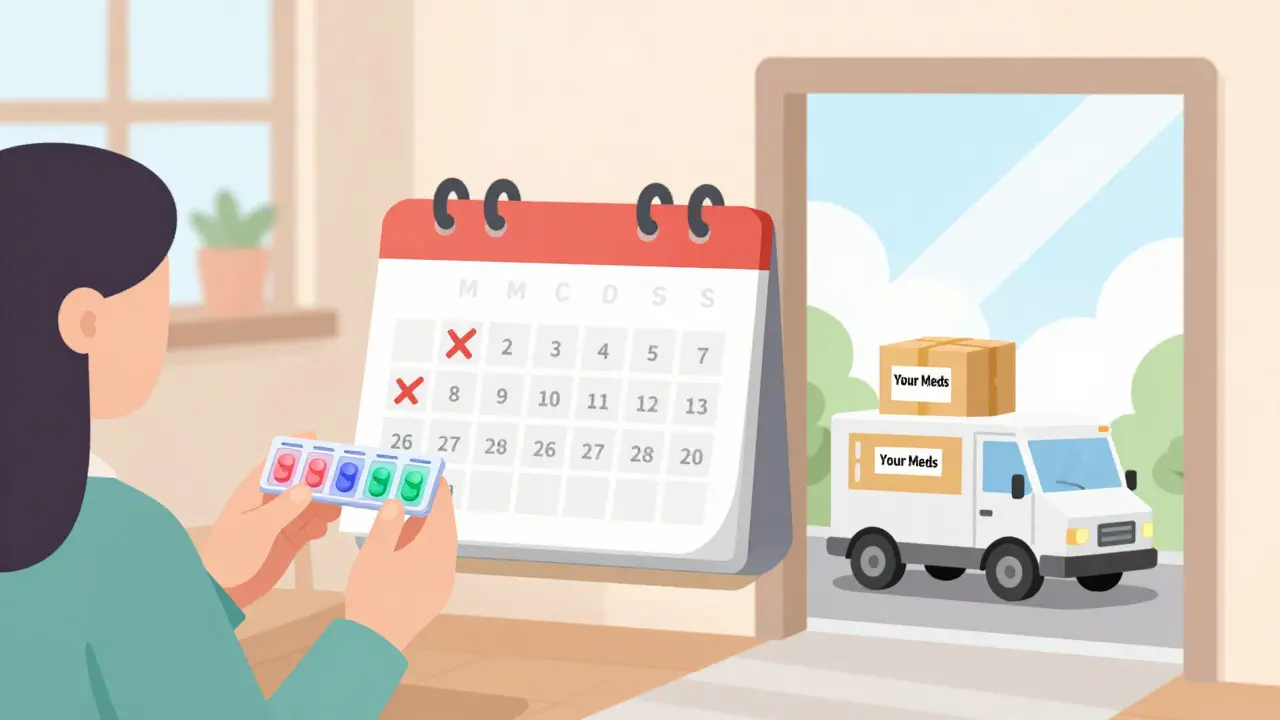
If you’re taking medication every month for high blood pressure, diabetes, cholesterol, or depression, you’re probably tired of going to the pharmacy. You know the routine: drive there, wait in line, hand over your prescription, and hope it’s ready. Then you do it all again in 30 days. It’s not just annoying-it’s making it harder to stick with your treatment.
Here’s the truth: getting a 90-day supply of your maintenance meds can cut your pharmacy trips by two-thirds. Studies show people who switch to 90-day fills are 27% more likely to keep taking their meds as prescribed. That’s not a small boost-it’s the difference between staying healthy and ending up in the hospital.
And it’s not just about convenience. Most insurance plans lower your out-of-pocket cost when you get a 90-day supply. On average, you save $2.35 per prescription each month. For someone taking three medications, that’s over $80 a year. Plus, many plans offer free mail delivery, so your meds arrive right at your door.
What Medications Qualify for a 90-Day Supply
Not every drug can be filled for 90 days. These programs are meant for maintenance medications-drugs you take daily for long-term conditions. That includes:
- High blood pressure (like lisinopril, amlodipine)
- Diabetes (metformin, glimepiride, insulin)
- High cholesterol (atorvastatin, rosuvastatin)
- Depression and anxiety (sertraline, escitalopram)
- Thyroid medication (levothyroxine)
What doesn’t qualify? Antibiotics, painkillers, or short-term treatments. If you only need it for a week or two, you won’t get a 90-day supply. Same goes for most specialty drugs like those for MS or rheumatoid arthritis-those usually start as 30-day fills and only switch after you’ve taken them a few times.
Some medications have weird rules. For example, birth control pills often come as 84-day supplies (three packs), but that still counts as a 90-day fill under most plans. Always check with your pharmacy or insurer if you’re unsure.
How to Get Your Doctor to Write a 90-Day Prescription
Here’s the biggest hurdle: most doctors automatically write 30-day scripts. They don’t think to ask if you want more. So you have to ask them.
When you’re in for your next appointment, say something simple: “I’d like to switch to a 90-day supply for my [medication name]. It would help me stay on track and cut down on trips to the pharmacy.” Most doctors will say yes. If they hesitate, tell them you’ve read that extended fills improve adherence-and that’s backed by research from the JAMA Network Open.
If your doctor’s office uses electronic prescribing, they can send the 90-day script directly to your mail-order pharmacy. If they’re not tech-savvy, ask them to call in the prescription or give you a paper script marked “90-day supply.”
Pro tip: Bring a list of your meds to your appointment. That way, you can ask about all of them at once. Don’t assume they know what you’re taking-doctors are busy.

Choosing the Right Pharmacy or Mail-Order Service
Once your doctor approves it, you need to pick how you’ll get your meds. You’ve got two main options: mail-order or retail pharmacy.
Mail-order pharmacies (like CVS Caremark, Express Scripts, or Aetna’s service) are great if you want zero trips. You sign up online, your script gets sent over, and your meds arrive in 7-10 days. Some even include free delivery, refill reminders, and safety checks for drug interactions. Express Scripts even sends out needles and syringes if you need them.
Retail pharmacies like Walmart, CVS, or Walgreens can also fill 90-day prescriptions-but only if they’re part of your plan’s network. For example, Cigna’s 90 Now program only works at select pharmacies. Walmart is the cheapest for generics: $10 for a 90-day supply of common drugs like metformin or atorvastatin. But they don’t offer mail delivery or support services.
Check your insurance website or call your plan’s customer service. Ask: “Which pharmacies can fill my 90-day prescriptions?” Don’t just show up at your usual spot-some won’t be able to help you.
What to Do If Your Plan Doesn’t Offer 90-Day Supplies
Not all plans do. Medicare Part D usually does. Medicare Advantage often goes even further-some offer 100-day fills. But Medicaid and certain state plans may block 90-day supplies in places like California, Texas, or Minnesota.
If you’re stuck with a 30-day-only plan, here’s what you can do:
- Ask if your insurer offers a mail-order option as a separate benefit-even if it’s not standard.
- Switch to a different Medicare Part D plan during open enrollment (November-December). Many have better 90-day coverage.
- Use Walmart or other discount pharmacies for generics. Even if you can’t get 90 days, you can still save by buying three 30-day supplies at once.
Some insurers let you request exceptions. If you’ve been taking your meds for over a year and have no issues, write a letter to your plan asking for a 90-day override. Include your doctor’s note. It’s not guaranteed, but it’s worth a shot.
How to Set Up Your 90-Day Supply Without Stress
Getting started is easier than you think. Here’s a simple step-by-step:
- Check your insurance plan’s website or call customer service. Look for “90-day supply,” “mail-order pharmacy,” or “extended fill.”
- Confirm your medications are eligible. If unsure, ask for a list of covered maintenance drugs.
- Call your doctor’s office and ask them to write a new prescription for a 90-day supply. Specify if you want it sent to mail-order or a retail pharmacy.
- Sign up for the pharmacy’s online portal (like Caremark.com or myCigna.com). Set up auto-refills so you never run out.
- Wait 7-10 days for your first shipment, or pick it up at the pharmacy.
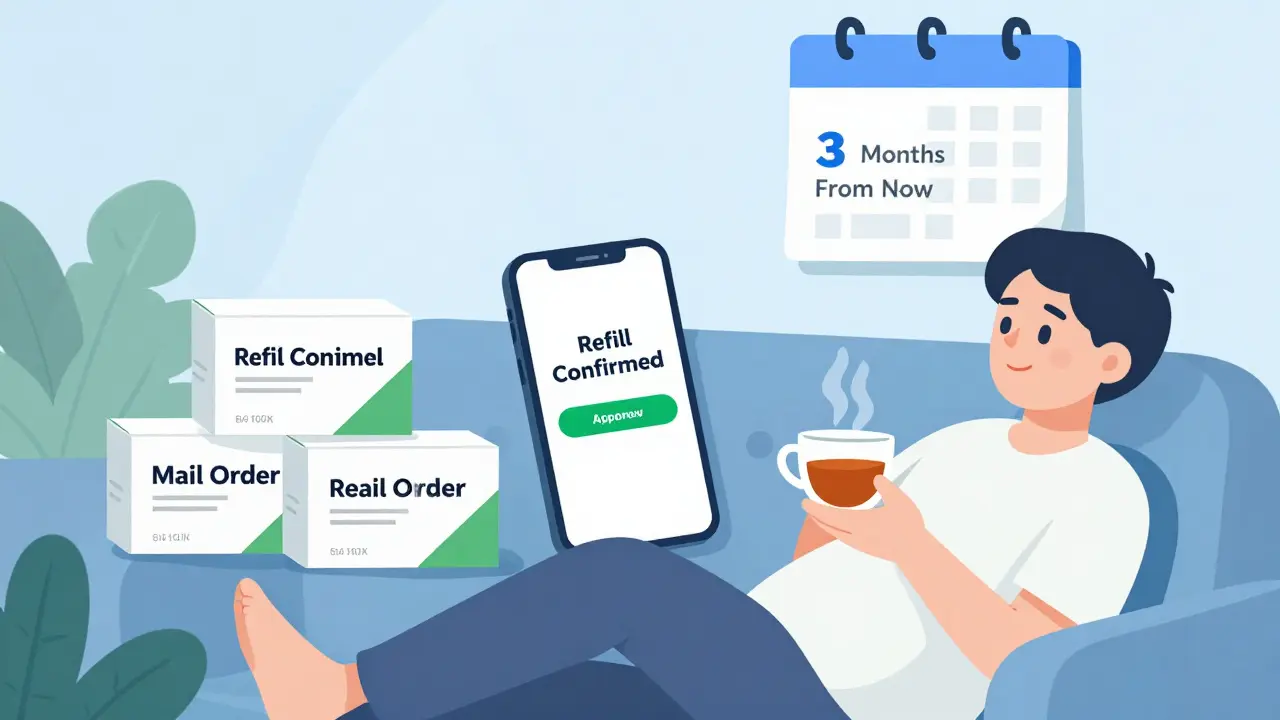
Once it’s set up, you’ll only need to refill every three months. That’s one trip a year instead of twelve. You’ll forget how often you used to go.
Common Mistakes and How to Avoid Them
People mess this up in predictable ways.
Mistake 1: Assuming your doctor already knows you want 90 days. They don’t. You have to ask.
Mistake 2: Going to the wrong pharmacy. If your plan only works with Cigna’s network, your local CVS might not be able to help. Always verify before you go.
Mistake 3: Trying to get 90-day fills for new medications. Most plans require you to take a drug for 30-60 days before switching. Be patient.
Mistake 4: Forgetting to update your address. If you move and don’t tell your mail-order pharmacy, your meds go to the wrong place. Update your info online every time.
Mistake 5: Waiting until you’re out of pills. Set up auto-refills or calendar reminders. Don’t risk missing a dose.
What Happens After You Switch
After your first 90-day fill, things get easier. You’ll start noticing:
- Less stress about running out
- More money in your pocket
- Fewer missed doses
- Less time spent driving to the pharmacy
Some people report feeling more in control of their health. That’s not just psychological-it’s real. When you’re not constantly juggling refills, your brain stops treating meds as a chore. You start thinking of them as part of your routine, like brushing your teeth.
And if you ever have questions? Most mail-order services have 24/7 pharmacists on call. You can text, call, or chat online. No need to wait for office hours.
Final Thoughts: It’s Not a Big Ask
Asking for a 90-day supply isn’t complicated. It’s not a special request-it’s a standard benefit you’re already paying for through your insurance. You’re not asking for more. You’re asking for what you’re entitled to.
Think of it this way: if you had a monthly subscription to a streaming service, you wouldn’t want to log in and click “renew” every 30 days. You’d want it to just keep going. Your medication should work the same way.
Take the next step today. Call your doctor. Check your plan. Ask for the 90-day option. It’s one small change that can make your health management feel a lot less like work-and a lot more like care.
Marilyn Ferrera
December 31, 2025 AT 08:33Lawver Stanton
December 31, 2025 AT 16:47Kayla Kliphardt
January 1, 2026 AT 17:37Martin Viau
January 1, 2026 AT 18:34Sara Stinnett
January 2, 2026 AT 02:36John Chapman
January 2, 2026 AT 21:29Urvi Patel
January 4, 2026 AT 11:13Emma Hooper
January 6, 2026 AT 06:10Branden Temew
January 6, 2026 AT 12:58Brady K.
January 7, 2026 AT 09:47linda permata sari
January 8, 2026 AT 23:11