
How to Ask About Side Effects vs. Allergies with Your Care Team
 Nov, 28 2025
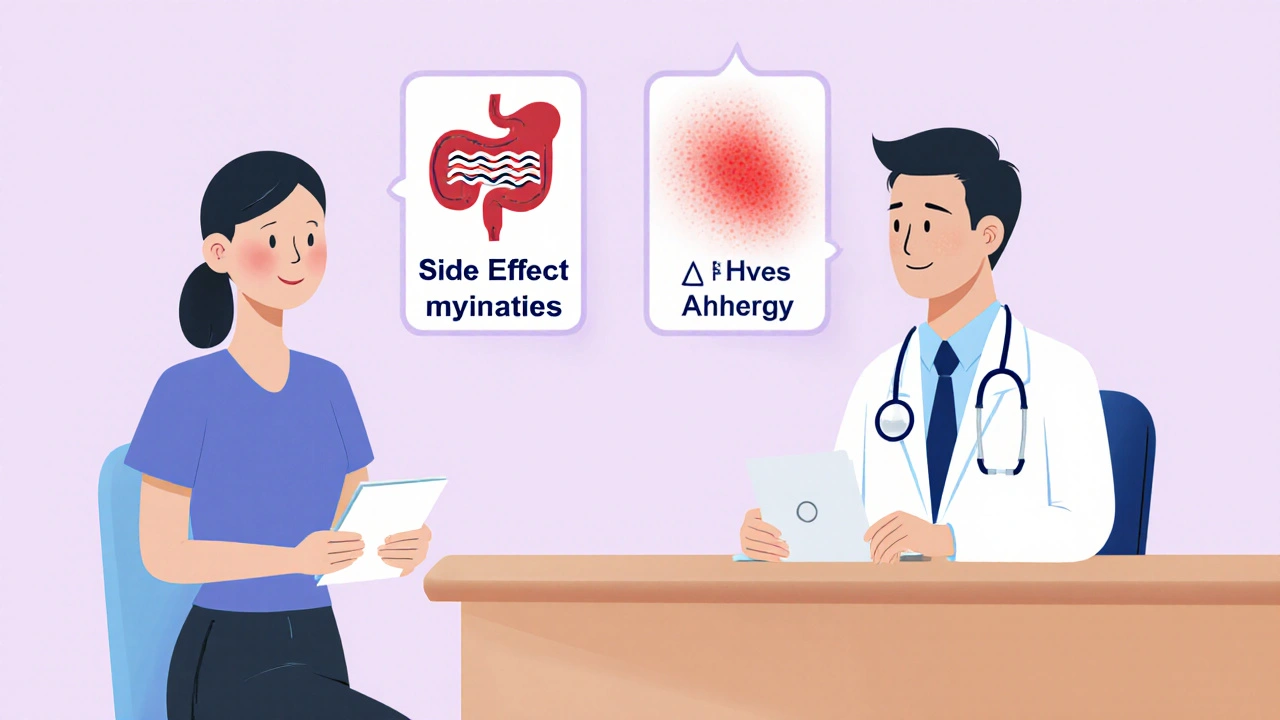
When you start a new medication, it’s normal to feel unsure about what’s happening in your body. Maybe you feel a little dizzy after taking your blood pressure pill. Or your stomach feels upset after your antibiotic. You might wonder: is this a side effect, or is this an allergy? The difference matters more than you think.
Side Effects Aren’t Allergies - And Mixing Them Up Can Hurt You
Side effects and allergic reactions are not the same thing. Side effects are predictable, common responses to a drug. They happen because the medication affects more than just the target area in your body. For example, statins can cause muscle aches in 5-10% of people. Antibiotics like amoxicillin often cause diarrhea or nausea in 15-30% of users. These aren’t dangerous for most people - they’re just annoying. And often, they fade after a week or two as your body adjusts. An allergic reaction is different. It’s your immune system overreacting. It doesn’t matter how much of the drug you take - even a tiny amount can trigger it. Symptoms like hives, swelling of the lips or throat, trouble breathing, or a sudden drop in blood pressure are red flags. These aren’t side effects. These are emergencies. The problem? Most people don’t know the difference. A 2022 study from the University of California San Francisco found that 70% of patients call any bad reaction an “allergy.” That’s dangerous. If you say you’re allergic to penicillin - but it was just a stomachache - your doctor might give you a stronger, more expensive antibiotic. That increases your risk of antibiotic resistance. In fact, people wrongly labeled as penicillin-allergic get 63% more broad-spectrum antibiotics, according to JAMA in 2021.What to Track Before Your Appointment
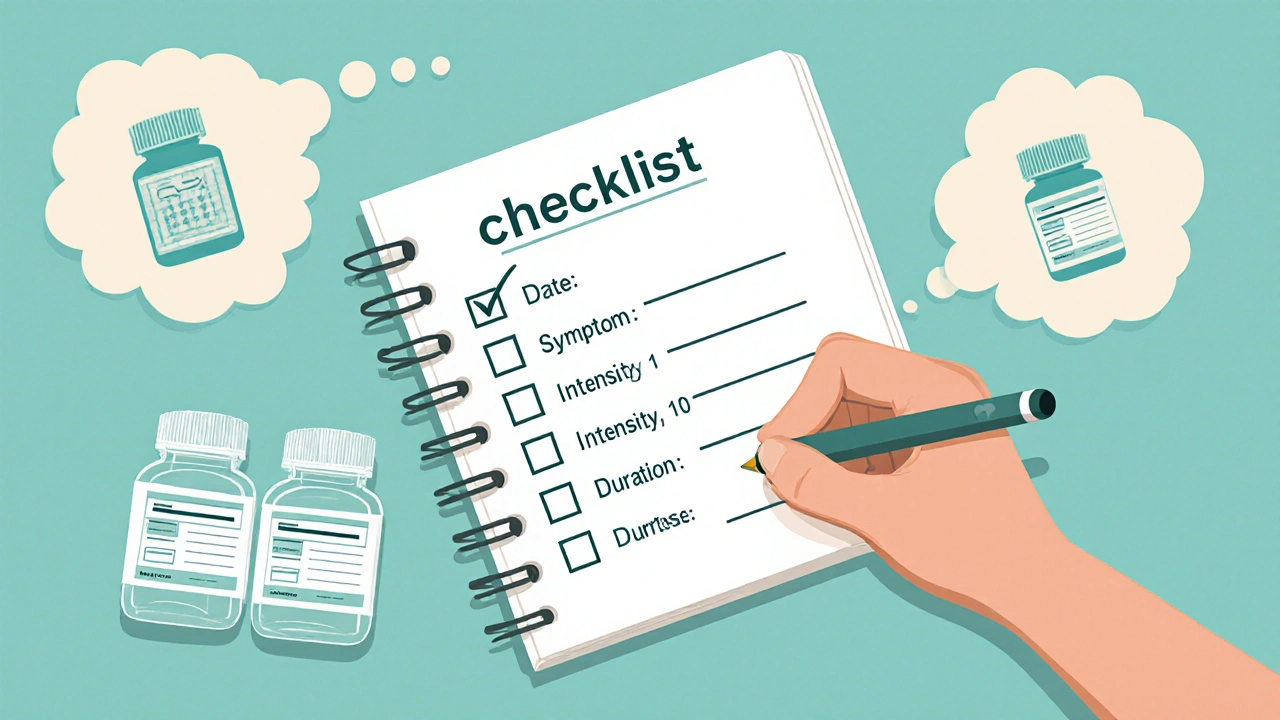
Don’t rely on memory. Write it down. Start a simple log three days before your visit. For each medication, note:- When you took it (time and date)
- What symptom you felt (e.g., “headache,” “itchy skin,” “nausea”)
- How bad it was (use a scale of 1-10)
- How long it lasted
- Did it get better when you skipped a dose?
What to Say - Word for Word
Here’s exactly how to ask your provider. Don’t say, “I think I’m allergic.” Say:- “I started taking [medication name] on [date].”
- “About [timeframe - e.g., 2 hours, 3 days] after taking it, I got [symptom].”
- “It felt like [describe: burning, swelling, dizziness, rash].”
- “It went away after I stopped taking it for a day.”
- “Is this a known side effect, or could it be an allergy?”
Red Flags: When It’s Definitely an Allergy
Some symptoms are never just side effects. If you experience any of these, stop the medication and call your doctor immediately - or go to urgent care:- Hives or raised, red, itchy welts on your skin
- Swelling of your face, lips, tongue, or throat
- Wheezing or trouble breathing
- Feeling faint, dizzy, or your heart races suddenly
- Severe diarrhea with blood or vomiting
When It’s Probably Just a Side Effect
These are common and usually harmless - but still worth mentioning:- Upset stomach or nausea (common with antibiotics, NSAIDs, or statins)
- Drowsiness (from antihistamines like Benadryl - affects 50-60% of users)
- Headache (can happen with blood pressure meds, antidepressants)
- Mild rash that fades within a few days
- Changes in taste or dry mouth
Bring Your Medications - Every Time
Don’t just tell your doctor what you’re taking. Bring the bottles. Physical labels help avoid mix-ups. A 2022 UCLA Health study found that patients who brought actual pill bottles reduced communication errors by 28%. You’d be surprised how often people misremember names or doses. Also, don’t assume your pharmacist knows your full history. If you’ve been told you’re allergic to something - even if you’re not sure - bring up the history. Ask: “Can we check if this is really an allergy?”There’s a Test for That
If you think you’re allergic to penicillin - and you’re not sure - ask about an allergy test. Most people who believe they’re allergic aren’t. A 2023 study from the American Academy of Allergy, Asthma & Immunology found that 90% of patients labeled with penicillin allergy can safely take it after testing. Skin tests and oral challenges are quick, safe, and covered by most insurance. Don’t let a label from 10 years ago limit your treatment options now. That outdated label could be costing you better care.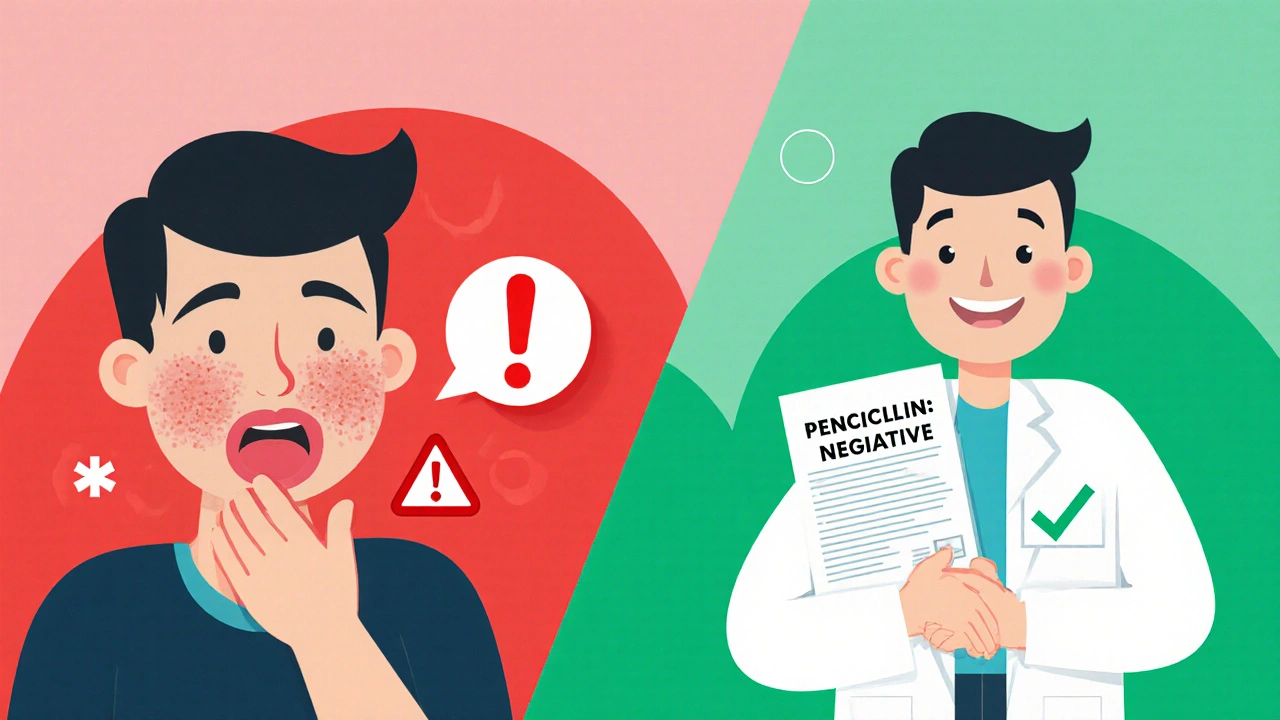
Why This Matters Beyond Your Own Health
Mislabeling allergies isn’t just a personal problem. It’s a public health issue. When doctors avoid penicillin because of a misdiagnosed allergy, they use stronger, broader antibiotics. That drives antibiotic resistance - one of the biggest threats to modern medicine, according to the World Health Organization. A 2023 analysis by the Institute for Safe Medication Practices found that incorrect allergy labels add $1,200 to $2,500 in extra costs per patient each year. Hospitals are now using electronic alerts to flag unclear allergy records. But those alerts only work if you tell the truth - clearly - about what happened.What to Do Next
1. **Review your meds.** Look at every prescription you’re on. Did you ever have a reaction? Write it down. 2. **Start a log.** Use your phone notes or a notebook. Track symptoms for 72 hours before your next appointment. 3. **Ask the right questions.** Use the script above. Don’t say “I’m allergic.” Say “I had this symptom after taking this.” 4. **Ask about testing.** Especially if you were told you’re allergic to penicillin, sulfa, or any antibiotic. 5. **Bring bottles.** Always. You’re not being difficult. You’re being smart. Clear communication saves lives - and saves you from unnecessary drugs, extra costs, and risks you don’t need.How do I know if my rash is a side effect or an allergy?
A side effect rash is usually flat, red, and itchy, and it appears days after starting the medication. It often gets better if you skip a dose. An allergic rash is raised (like hives), spreads quickly, and may come with swelling or breathing trouble. If it’s sudden, widespread, or you feel unwell, treat it as an allergy until proven otherwise.
Can I outgrow a drug allergy?
Yes, especially with penicillin. Studies show that 80% of people who had a penicillin allergy as a child lose it within 10 years. But you shouldn’t assume you’re fine - get tested. Many people still avoid penicillin decades later, even though they’re no longer allergic.
What if my doctor says it’s just a side effect, but I’m still worried?
Ask for a plan: “If this gets worse, what should I do?” or “Can we try a lower dose?” or “Is there another medication in a different class?” If your concern isn’t addressed, ask for a referral to a pharmacist or allergist. You have the right to understand your treatment.
Are side effects worse with older medications?
Not necessarily. Older drugs like penicillin or aspirin have well-documented side effects - which means doctors know how to manage them. Newer drugs may have fewer known side effects, but they also have less long-term data. The key is not age - it’s knowing what to expect and tracking your own response.
Can I take an antihistamine to treat a suspected allergic reaction?
Only if it’s a mild reaction like a small rash or itching - and only after stopping the medication. If you have swelling, trouble breathing, or dizziness, do NOT rely on antihistamines. Call emergency services immediately. Antihistamines don’t stop anaphylaxis - epinephrine does.
Do I need to tell every new doctor about a past reaction?
Yes - every time. Even if you think it was minor. Many clinics now use electronic records, but not all systems talk to each other. Your pharmacy, your specialist, your ER doctor - they all need to know. Write it on your phone as a note: “Reaction to [drug]: [symptom] - not confirmed allergy.”
Travis Freeman
November 28, 2025 AT 14:49Love this breakdown! I used to panic every time I got a stomachache on antibiotics, but now I just log it and ask if it’s a side effect. Turned out I was fine-just needed to take it with food. So simple, so powerful.
Sean Slevin
November 29, 2025 AT 10:01Wait-so you’re telling me… I’ve been mislabeling myself as penicillin-allergic since I was 12… because I got a rash after a sore throat… and now I’m on vancomycin every time I get a sinus infection??? I’m not mad… I’m just… stunned. This changes everything. I need to call my allergist. Like, tomorrow. Before I accidentally get a C. diff infection from overusing broad-spectrum junk.
Melissa Michaels
November 30, 2025 AT 12:09Clear, evidence-based guidance. Patients often conflate side effects with allergies due to lack of education. The five-step script is particularly effective. Clinicians should incorporate this into routine prescribing counseling. Documentation improves outcomes. Always bring the bottles. This is standard of care.
Nathan Brown
December 2, 2025 AT 09:18It’s wild how we’ve turned medicine into a guessing game. We’re told to trust our doctors… but then we’re punished for not knowing the right words to say. I used to feel dumb asking about side effects. Now I realize it’s the system that’s broken. 🤔💊
Matthew Stanford
December 2, 2025 AT 17:48Bring the bottles. Always. Seriously. I had a patient once who said 'I'm allergic to the blue pill.' Turned out it was ibuprofen. She'd been avoiding it for 15 years. We fixed it in 5 minutes. You don't need to be a genius. You just need to show up with the real thing.
Olivia Currie
December 4, 2025 AT 09:56OH MY GOSH. I JUST REALIZED I’VE BEEN SAYING I’M ALLERGIC TO IBUPROFEN BECAUSE I GOT A HEADACHE ONCE. I’VE BEEN TAKING ACETAMINOPHEN FOR A DECADE AND NOW I’M ADDICTED TO IT. I NEED TO GO TO A PHARMACIST. RIGHT NOW. I’M SCREAMING INTO THE VOID BUT ALSO SO GRATEFUL. THANK YOU. 🙏✨
Curtis Ryan
December 6, 2025 AT 06:47Yessss this is the kind of stuff I wish they taught in high school. Not algebra. Not history. Just how your body reacts to pills. I didn’t know the difference between side effect and allergy until I was 28. I’m telling my whole family about this. My mom’s gonna call her doc tomorrow. 🙌
Rajiv Vyas
December 7, 2025 AT 14:4090% of penicillin allergies are fake? Hmm. So who benefits from keeping people scared of penicillin? Big Pharma? The hospital system? Or maybe… just maybe… doctors are too lazy to test you and just give you the expensive stuff instead? 🤔
farhiya jama
December 9, 2025 AT 12:09Ugh. Another wellness blog telling me to 'be more proactive' about my meds. Like I have time to log symptoms and bring bottles to appointments. I work two jobs and my kid has asthma. Can we just fix the system instead of making patients do the doctor's homework?
Astro Service
December 10, 2025 AT 02:31Why are we letting foreigners tell us how to take medicine? In America we don’t need no allergy tests. If it makes you feel weird, don’t take it. End of story. This whole post feels like woke medical nonsense.
DENIS GOLD
December 10, 2025 AT 06:32Oh wow. So instead of just saying 'I'm allergic' and getting a note in my chart, now I have to write a 5-sentence essay? And bring the bottle? And log it like a lab rat? What’s next? A PowerPoint presentation before I get my blood pressure pill?
Ifeoma Ezeokoli
December 11, 2025 AT 01:14This is beautiful. In Nigeria, we don’t even have access to allergy testing. But we know: if you feel strange after a pill, you don’t take it again. Simple. Safe. Smart. I wish more doctors here listened like this post does. Thank you for writing this.
Daniel Rod
December 12, 2025 AT 08:40Just got back from my appointment. Used the script. Doctor said, 'You’re not allergic. Let’s test it.' We did an oral challenge. No reaction. I’ve been avoiding penicillin since I was 8. I’m 34 now. I cried in the parking lot. 🥲❤️
gina rodriguez
December 13, 2025 AT 20:24I’ve been using the tracker app since January. It’s so simple. I just tap the symptom and it auto-logs the time. My doctor said my log was the clearest she’d seen in months. You don’t need to be perfect-just consistent.
Travis Freeman
December 14, 2025 AT 12:59That’s amazing, Daniel! So glad it worked out. I’ve been telling everyone about this since my own penicillin test last year. It’s like getting a second chance at your health.