
How to Address Forgetfulness with Smart Pill Caps and Dispensers
 Jun, 4 2026
Imagine this: your parent or loved one misses their heart medication again. Not because they don’t care, but because the day blurred together, or the alarm didn’t go off, or they simply forgot. This isn’t just a minor inconvenience; it’s a health crisis. Medication non-adherence costs the U.S. healthcare system up to $300 billion annually. For seniors, who often manage four or more prescriptions daily, forgetfulness is the leading cause of missed doses.
The good news? Technology has caught up. Smart pill caps and automated dispensers that track, remind, and alert caregivers about medication intake are no longer sci-fi concepts. They are practical, affordable tools that can save lives by ensuring pills are taken when prescribed. In this guide, we’ll break down how these devices work, which ones fit different needs, and how to choose the right solution without getting overwhelmed by tech jargon.
Why Traditional Pillboxes Fail
We’ve all used them: those plastic weekly boxes with compartments for Monday through Sunday. They’re cheap, simple, and widely available. But they have a fatal flaw-they do nothing if you forget to look at them. If you miss Tuesday morning, you might not realize until Thursday that you haven’t taken your blood pressure meds. By then, the damage may already be done.
For people with early-stage dementia, vision issues, or complex schedules involving multiple medications at different times, traditional pillboxes create anxiety rather than peace of mind. Caregivers often find themselves playing detective, checking empty slots to guess whether a dose was taken. Smart medication adherence technology solves this by adding two critical features: active reminders and remote monitoring.
Types of Smart Medication Solutions
Not all smart pill devices are created equal. They fall into three main categories based on how they interact with the user and the level of automation they provide. Understanding these differences helps you pick the right tool for the specific situation.
- Smart Bottle Caps: These attach to standard prescription bottles. When the cap is opened, sensors record the time. They send alerts if a dose is missed. Examples include AdhereTech (now Aidia) and AARDEX Group’s Pill Connect.
- Automated Dispensers: These are standalone units that hold pills in locked compartments. At scheduled times, the device unlocks, lights up, sounds an alarm, and sometimes even calls the user or caregiver if the door remains closed. Hero Health and MedQ offer popular models.
- Cellular-Connected Pillboxes: Designed for users who struggle with smartphones, these devices use cellular networks to send data directly to caregivers without requiring Wi-Fi or app pairing. Tenovi’s Cellular Pillbox is the market leader here.
Each type addresses forgetfulness differently. Caps rely on the user opening the bottle, while dispensers physically control access to the medication. The choice depends on the user’s cognitive ability, dexterity, and living situation.
Top Devices Compared: Features and Costs
| Device | Type | Upfront Cost | Monthly Fee | Key Feature | Best For |
|---|---|---|---|---|---|
| Aidia Smart Bottle (AdhereTech) | Smart Cap | $149 | $39 | Weight sensors detect actual pill removal | Independent seniors who want minimal setup |
| Tenovi Cellular Pillbox | Cellular Box | $199 | $29 | No app needed; works via cellular network | Seniors with low tech literacy; rural areas |
| Hero Health Automatic Dispenser | Auto Dispenser | $499 | None | Locked compartments; phone call reminders | Complex regimens; high-risk patients |
| MedQ Electronic Programmable Dispenser | Basic Dispenser | $80-$120 | None | Repeating alarms every 30 minutes | Budget-conscious buyers; mild forgetfulness |
| AARDEX Pill Connect | Smart Cap | $299 | $49 | Clinical-grade analytics; AI predictions | Clinical trials; healthcare providers |
Note that prices are approximate as of 2026 and may vary by retailer or insurance coverage. Some Medicare Advantage plans now cover certain devices, so check with your provider before purchasing.
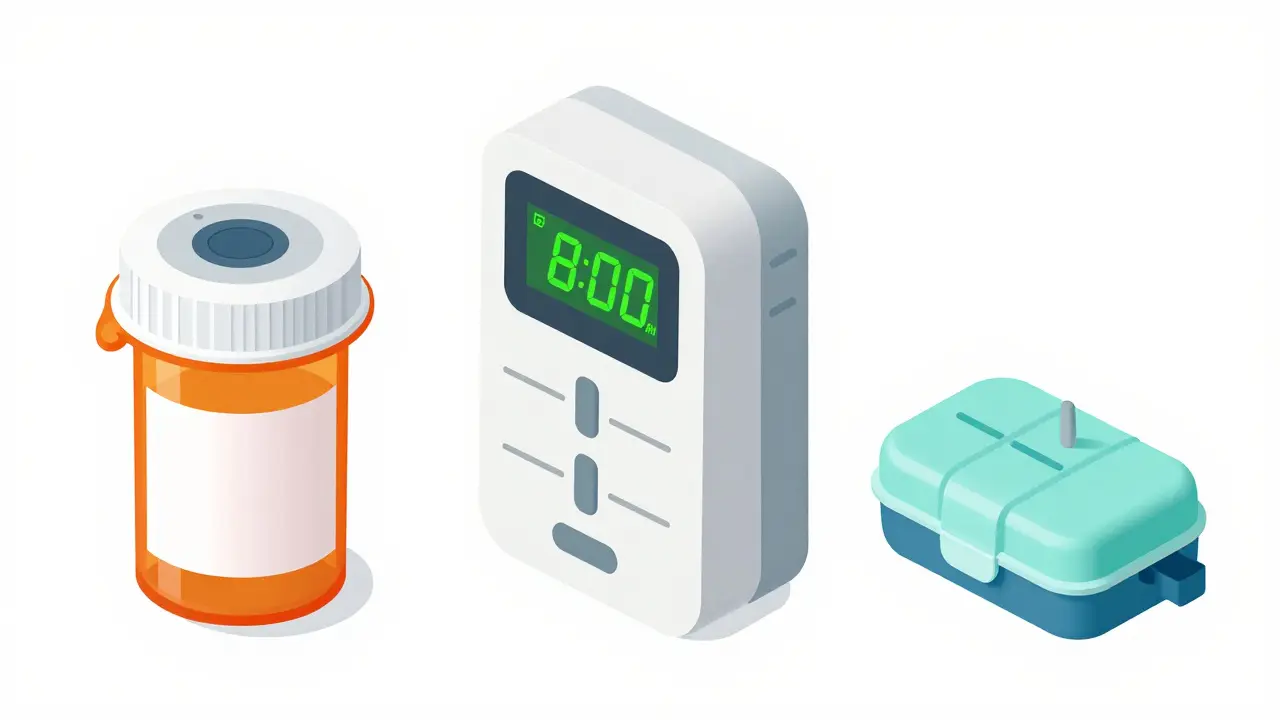
How Smart Caps Work Behind the Scenes
Smart caps like Aidia’s Smart Bottle seem magical, but the technology inside is straightforward. Each cap contains tiny sensors-often weight-based or optical-that detect when the bottle is opened and whether pills are actually removed. This distinction matters because some users open the bottle out of habit but don’t take the pill. Weight sensors can tell the difference between a full bottle and one missing a tablet.
Once the event is recorded, the cap sends data via Bluetooth to a smartphone app or directly via cellular network. The app then analyzes patterns using algorithms. For example, if a user consistently misses doses on Tuesdays, the system might flag this trend and suggest adjusting the reminder time or notifying a caregiver. AARDEX Group uses over 70 proprietary algorithms to predict adherence risks, making their platform particularly valuable for clinical research.
The real power lies in the feedback loop. Instead of guessing whether mom took her meds, you get a notification: “Dose taken at 8:15 AM.” Or, if she hasn’t opened the bottle by 9:00 AM, you receive an alert. This reduces anxiety for both patients and families.
Choosing the Right Device for Your Situation
Selecting a smart pill dispenser isn’t one-size-fits-all. Consider these factors before buying:
- Cognitive Ability: If the user has early dementia or memory loss, an automated dispenser with locked compartments (like Hero Health) prevents double-dosing or skipping entirely. Smart caps require the user to remember to open the bottle, which may not be reliable in advanced stages.
- Tech Comfort: Does the user own a smartphone? Are they comfortable downloading apps? If not, avoid Bluetooth-dependent systems. Tenovi’s cellular-only design requires zero app interaction from the patient, making it ideal for older adults who resist new technology.
- Number of Medications: Patients taking 1-2 pills daily might benefit from a simple smart cap. Those managing 5+ medications at different times need a multi-compartment dispenser with customizable alarms.
- Hearing or Vision Impairments: Look for devices with bright visual cues (flashing lights), loud alarms, or vibration options. Hero Health scores highly for accessibility due to its customizable notification system.
- Budget Constraints: Subscription fees add up. A $39/month fee becomes $468/year. If cost is a barrier, consider basic electronic dispensers like MedQ, which have no recurring charges but lack remote monitoring.

Real-World Challenges and Limitations
While smart pill devices are powerful tools, they aren’t perfect. Here’s what users commonly report:
False Alarms and Connectivity Issues: Some users complain that their device sends “missed dose” alerts even though they took the pill. This often happens with Bluetooth-dependent caps if the phone is too far away or battery dies. Cellular-based systems like Tenovi avoid this problem since they operate independently of personal devices.
User Resistance: Older adults may feel monitored or infantilized by constant alerts. One Reddit user noted that their father initially refused to use a dispenser because he felt it implied he couldn’t manage his own health. Gradual introduction and framing the device as a “helper” rather than a “monitor” can ease this transition.
Maintenance Burden: Automated dispensers require weekly refilling. If the caregiver forgets to refill, the device becomes useless. Smart caps eliminate this step since they work with existing prescription bottles.
Cost Barriers: Despite proven benefits, 63% of potential users cite subscription fees as prohibitive. However, CMS (Centers for Medicare & Medicaid Services) expanded coverage in 2024 for devices that demonstrate reduced hospitalizations, improving access for many seniors.
Setting Up for Success: Practical Tips
To maximize adherence and minimize frustration, follow these steps when introducing a smart pill device:
- Involve the User: Let them choose between two options. Autonomy increases acceptance.
- Simplify the Routine: Place the device near a daily activity-coffee maker, TV remote, or bathroom mirror-to build habit association.
- Test Notifications: Ensure alarms are loud enough and lights are visible. Adjust settings during daylight hours to verify functionality.
- Train Caregivers: Show family members how to interpret alerts. Not every “missed dose” means danger-sometimes it’s a delayed meal or nap.
- Review Monthly: Check usage reports together. Celebrate improvements and troubleshoot persistent issues.
Remember, technology supports behavior-it doesn’t replace human connection. Regular check-ins remain essential.
Future Trends in Medication Adherence Tech
The field is evolving rapidly. MIT’s AgeLab is developing edible sensors that confirm ingestion, solving the “opened but not swallowed” gap. Expected around 2025-2026, this innovation could make smart caps obsolete by providing definitive proof of compliance.
Additionally, integration with broader healthcare ecosystems is accelerating. UnitedHealthcare partnered with Tenovi in 2023 to feed adherence data directly into care management platforms, reducing hospitalizations by nearly 19% in pilot studies. As AI improves, expect predictive alerts-systems that anticipate missed doses before they happen based on weather, travel, or mood patterns.
For now, however, current solutions are mature enough to deliver significant value. The key is matching the right tool to the individual’s needs.
Do smart pill dispensers really improve medication adherence?
Yes. Studies show patients using smart adherence technologies achieve 92%+ adherence rates compared to 67% in control groups. Visual and auditory reminders combined with remote monitoring significantly reduce missed doses, especially among seniors managing multiple medications.
Are smart pill caps safe for people with dementia?
Smart caps alone may not be sufficient for moderate to severe dementia since they rely on the user opening the bottle. For these cases, locked automated dispensers like Hero Health are safer because they prevent accidental overdosing and ensure only one dose is accessible at a time.
Does Medicare cover smart pill dispensers?
Coverage varies. As of 2024, CMS expanded Medicare coverage for adherence technologies that prove they reduce hospitalizations by 15% or more. Many Medicare Advantage plans also offer partial reimbursement. Contact your insurer to verify eligibility and approved devices.
What’s the difference between a smart cap and an automated dispenser?
A smart cap attaches to your existing prescription bottle and tracks when it’s opened. An automated dispenser holds pills in locked compartments and releases them at set times. Caps are simpler and cheaper; dispensers offer greater control and security for complex regimens or cognitive impairment.
Can I use a smart pill device without a smartphone?
Yes. Devices like Tenovi’s Cellular Pillbox operate entirely via cellular networks and send alerts to caregivers’ phones without requiring the patient to use a smartphone or app. This makes them ideal for users with limited tech experience.
How long do batteries last in smart pill devices?
Battery life varies by model. AdhereTech’s smart caps last about 30 days, while Tenovi’s cellular pillbox offers up to 90 days. Most devices provide low-battery warnings weeks in advance. Always keep spare batteries or charging cables handy.
Is there a risk of false alarms with smart pill dispensers?
Yes, especially with Bluetooth-dependent devices if the phone is out of range or disconnected. Cellular-based systems are more reliable. To minimize errors, test notifications regularly and adjust sensitivity settings if your device allows customization.
Which smart pill dispenser is best for budget-conscious buyers?
The MedQ Electronic Programmable Pill Dispenser offers strong value at under $120 with no monthly fees. While it lacks remote monitoring, its repeating alarms every 30 minutes effectively combat forgetfulness for users with mild memory lapses.