
Hepatitis A Guide: Symptoms, Prevention, and Recovery Timeline
 Apr, 16 2026
How the Infection Actually Happens
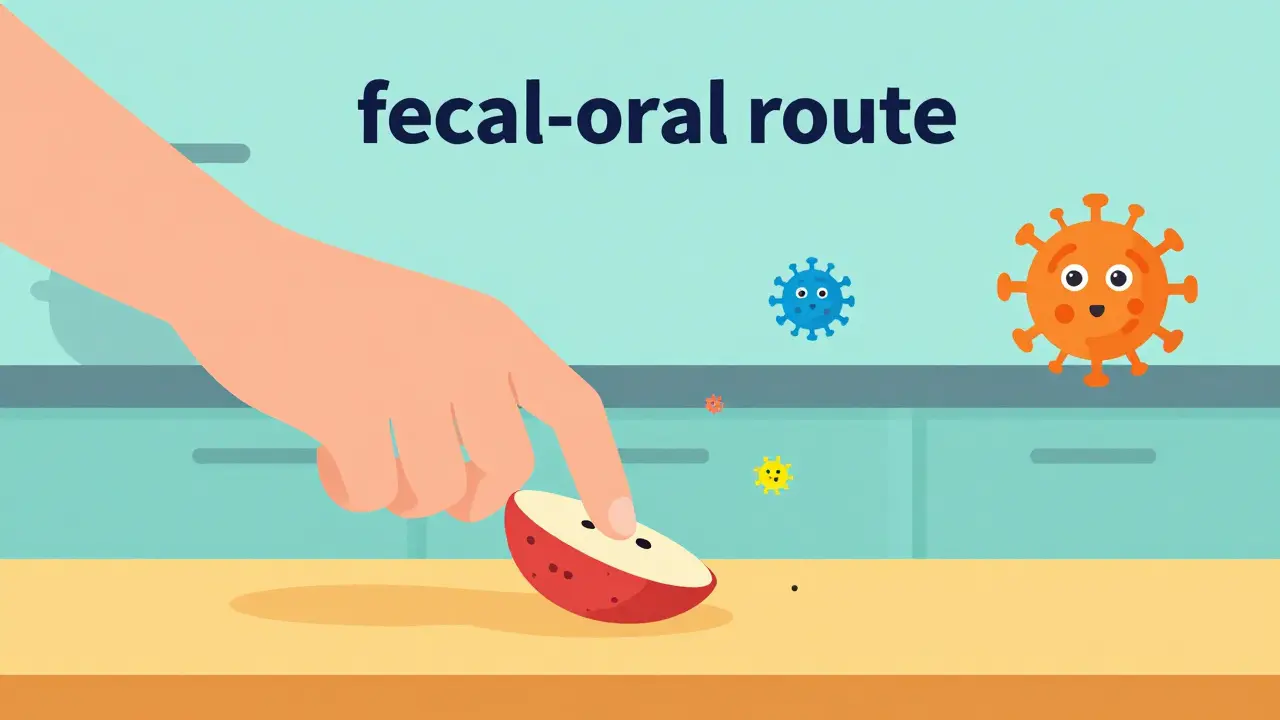
The Hepatitis A Virus (or HAV) is a tough little organism. It doesn't need a fancy envelope to survive; it can hang out on surfaces or in water for up to 30 days. It primarily spreads through the fecal-oral route. In plain English? It happens when someone consumes food or water contaminated by the feces of an infected person. This often occurs when a food handler doesn't wash their hands properly or when you travel to a region with poor sanitation.
Once the virus enters your mouth, it doesn't just sit in your stomach. It travels through your bloodstream to your liver, where it attacks the hepatocytes-the functional cells of the liver. This triggers an immune response, causing the inflammation that makes you feel sick. Interestingly, you are most contagious during the two weeks before you even notice the jaundice, meaning you could be spreading the virus to friends and family while you still feel relatively fine.
Spotting the Signs: What to Expect
Hepatitis A is a bit of a shapeshifter depending on who catches it. If you're looking at a child under six, there's a 70% chance they won't show any symptoms at all. They might just seem a bit tired or fussy. But for adults and older children, the experience is much more intense. About 70-80% of adults will develop jaundice.
The symptoms usually hit in a "prodromal phase"-that window where you feel like something is wrong but you aren't sure what. You might experience:
- Extreme Fatigue: This is often the most debilitating part. Many people report a bone-deep exhaustion that lasts for over six weeks.
- Digestive Issues: Nausea and vomiting are common, and a total loss of appetite often makes it hard to keep weight on.
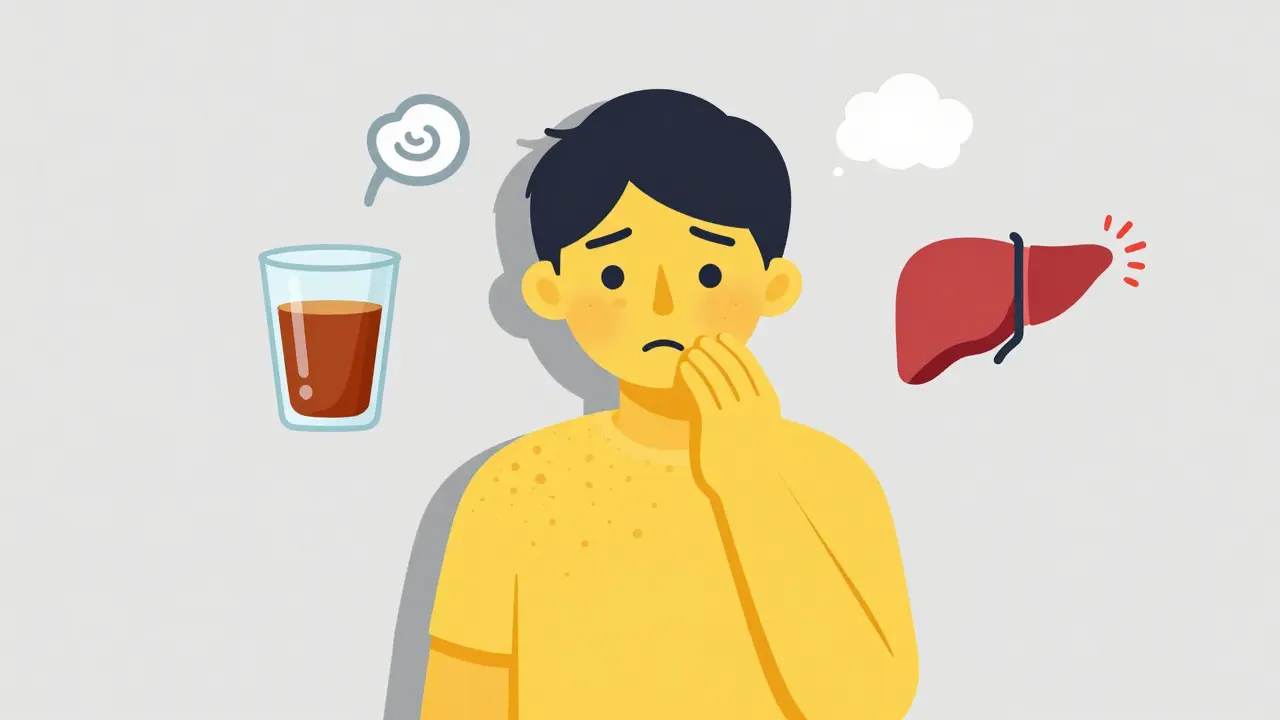
- Physical Markers: Dark-colored urine (which looks like tea or cola) and clay-colored stools are classic red flags that the liver is struggling to process bilirubin.
- General Aches: Fever, joint pain, and abdominal discomfort, specifically in the upper right side where the liver sits.
One frustrating reality is that this is often misdiagnosed. Because the early signs mimic a stomach bug, many people are told they have gastroenteritis, which can delay the right medical management by over a week.
The Recovery Roadmap: A Timeline
Recovery from Hepatitis A is generally a slow burn. You won't wake up one morning and suddenly be 100% again. Instead, it's a gradual return to normal. Here is the typical timeline for an adult recovery:
| Phase | Timing | What's Happening | Key Action |
|---|---|---|---|
| Incubation | 15-50 Days | Virus is multiplying; no symptoms yet. | Monitor for early flu-like signs. |
| Acute Phase | Weeks 1-8 | Peak symptoms, jaundice, and extreme fatigue. | Hydration and liver rest. |
| Early Recovery | Month 2-3 | Jaundice fades; liver enzymes begin to drop. | Gradual return to light activity. |
| Full Normalization | Up to 6 Months | Laboratory markers return to baseline. | Resume normal diet and meds. |
It's worth noting that about 10-15% of people-especially those over 50-experience "relapsing" symptoms. You might feel great for two weeks, then suddenly crash back into fatigue or nausea for another 7 to 14 days. This isn't a new infection; it's just your body's erratic way of clearing the virus.
Practical Steps for Healing
There is no specific "cure" or antiviral drug for Hepatitis A because your body does the heavy lifting. The goal is supportive care-keeping you comfortable while your liver repairs itself.
Dietary Choices: When you're in the thick of it, your liver can't process fats well. Stick to a low-fat diet (roughly 1,800 to 2,200 calories) and eat small, frequent meals since your appetite will likely be shot. Focus on hydration-water, broth, and electrolyte drinks are your best friends.
Activity Levels: Don't try to "push through" the fatigue. The American College of Gastroenterology suggests starting with just 30-45 minutes of moderate activity, like a slow walk, and only increasing that by about 10% each week. If you overdo it, you'll likely trigger a relapse in fatigue.
What to Avoid: This is the most critical part. You must completely avoid alcohol until your liver enzymes are back to normal. Alcohol puts extra stress on an already inflamed liver. Additionally, be very careful with Acetaminophen (Tylenol). Taking more than 2,000 mg a day can be toxic to a compromised liver.
Stopping the Spread: Prevention Strategies
The most effective way to handle Hepatitis A is to never get it in the first place. We have incredibly powerful tools for this.
First, there is the Hepatitis A Vaccine. This inactivated vaccine is a game-changer. One dose provides about 95% protection, and a second dose brings that up to nearly 100%. For children, the standard is a two-dose series started around age one. If you're traveling to a high-risk area, getting the shots at least four weeks before you leave is the gold standard.
If you've actually been exposed-say, you ate at a restaurant during an outbreak-you have a tight window. Getting the vaccine or Immune Globulin within two weeks of exposure can prevent the infection in 85-90% of cases.
Beyond the needle, basic hygiene is your best defense. Washing hands with soap and water after using the restroom and before touching food can cut your risk by up to 50%. If you're cleaning up a contaminated surface, a bleach solution (about 5-10 tablespoons per gallon of water) will kill the virus in about two minutes.

When to Worry
While most people recover without a hitch, there are rare cases of acute liver failure. This is most common in adults over 50 or people who already have chronic liver disease. If you notice extreme confusion, excessive bleeding, or a complete inability to keep fluids down, hospitalization is necessary. Most hospitalizations for HAV aren't for the virus itself, but to treat severe dehydration caused by vomiting.
Can I get Hepatitis A more than once?
No. Once you have recovered from a Hepatitis A infection, your body develops lifelong immunity. You cannot catch it again.
How long am I contagious after getting sick?
You are most contagious in the two weeks before jaundice appears. Generally, people stop being contagious about one week after the jaundice develops, as the amount of virus in the stool drops significantly.
Does Hepatitis A cause permanent liver damage?
In healthy people, no. Unlike Hepatitis B or C, Hepatitis A does not cause chronic liver disease or cirrhosis. It is an acute infection that resolves completely.
What is the best diet during recovery?
A low-fat diet is recommended because the liver struggles to process fats during inflammation. Focus on high-calorie, nutrient-dense foods in small portions and avoid all alcohol and excessive acetaminophen.
How long does the fatigue usually last?
Fatigue is the most lingering symptom. While most people feel better within two months, some experience extreme tiredness for 6 to 12 weeks, and a small percentage may have relapses for up to six months.
Next Steps for Recovery and Prevention
If you suspect you've been exposed, don't wait for the jaundice to appear. Contact a healthcare provider immediately to see if you qualify for post-exposure prophylaxis (the vaccine or immune globulin), as the window of effectiveness is very short (14 days).
For those currently recovering, keep a simple log of your energy levels. If you notice a relapse in fatigue, scale back your activity immediately. The biggest mistake people make is trying to return to a full work schedule too quickly, which often extends the overall recovery time. Check your liver enzyme levels via blood tests every few weeks until your doctor confirms you've hit your baseline.
william wang
April 18, 2026 AT 07:16The part about the prodromal phase is so key. I've seen a lot of people ignore those early flu-like symptoms and then panic when the jaundice hits. It's definitely worth mentioning that staying hydrated with electrolytes can really help manage that initial nausea before the liver starts to stabilize.
Joshua Nicholson
April 19, 2026 AT 22:23Kinda long read but seems okay i guess.
Randall Barker
April 21, 2026 AT 00:50The sheer negligence of food handlers who don't wash their hands is a moral failing of the highest order. We live in a civilized society, yet we allow basic hygiene to be optional for some people. It's not just a medical issue; it's a lack of respect for the collective well-being of the community. If you can't manage a simple soap-and-water routine, you have no business touching anyone's food. The fragility of the human liver is a reminder that our physical existence is precarious, and yet some people treat their hygiene as a suggestion rather than a requirement. It's absolutely pathetic.
Cheryl C
April 22, 2026 AT 03:03Omg i bet this stuff is way worse in other countries lol!! 🇺🇸 USA has the best doctors anyway 🇺🇸 keep your hands clean people!! 🧼✨ thnx for the info!
Kim Hyunsoo
April 23, 2026 AT 05:45The way it travels through the bloodstream to the liver is just... wild. 😵 I wonder if there are any weird food cravings during the recovery phase? Like, does the low-fat diet make you crave the most greasy burgers imaginable? (。-_-。)
Ben Ferguson
April 24, 2026 AT 03:10Oh, the sheer tragedy of a bone-deep exhaustion that lingers for weeks is something that truly tests the spirit of a human being! I remember a colleague of mine who suffered through a similar ailment, and the way he described the heavy, suffocating weight of fatigue was almost poetic in its misery, leaving him adrift in a sea of lethargy while the rest of the world continued to spin with an indifference that was simply heartbreaking to witness!
Josephine Wyburn
April 24, 2026 AT 18:37I literally cannot even imagine the horror of waking up and seeing my eyes turn yellow 😱 it would actually be the end of my entire social life and I would just be in a state of complete and utter devastation for months on end!!!! 😭😭😭 Plus the thought of not being able to eat anything fatty for months is just a cruelty I couldn't survive, I'm actually shaking just thinking about the emotional toll of such a diagnosis 💔✨
Autumn Bridwell
April 25, 2026 AT 02:10I had a cousin who had this and she actually hid it from her parents for three weeks! She just kept wearing sunglasses inside and saying she had a migraine, but she was actually turning bright yellow! I wonder if anyone here has had to deal with a family member lying about their symptoms like that?
Heer Malhotra
April 26, 2026 AT 00:55It is a grave concern that sanitation standards in various regions remain substandard. It is an obligation for every global citizen to adhere to the highest standards of hygiene to prevent such preventable outbreaks. The lack of discipline in public health is unacceptable.
Dana Chichirita Nicoleta
April 26, 2026 AT 13:47It is truly wonderful that there is such a highly effective vaccine available to protect our loved ones from this ordeal! I believe that by spreading awareness and encouraging everyone to complete their two-dose series, we can create a future where no one has to endure the debilitating fatigue or the frightening experience of jaundice! Let us all embrace the science and the optimism of a healthier tomorrow for every single person on this beautiful planet!
Adele Shaw
April 27, 2026 AT 04:31Typical. I bet the people in these "high-risk areas" just don't care about their health as much as we do here. It's disgusting how some places just let these viruses run wild without any control. 🙄