
Heavy Menstrual Bleeding on Blood Thinners: What You Need to Know and How to Manage It
 Feb, 7 2026
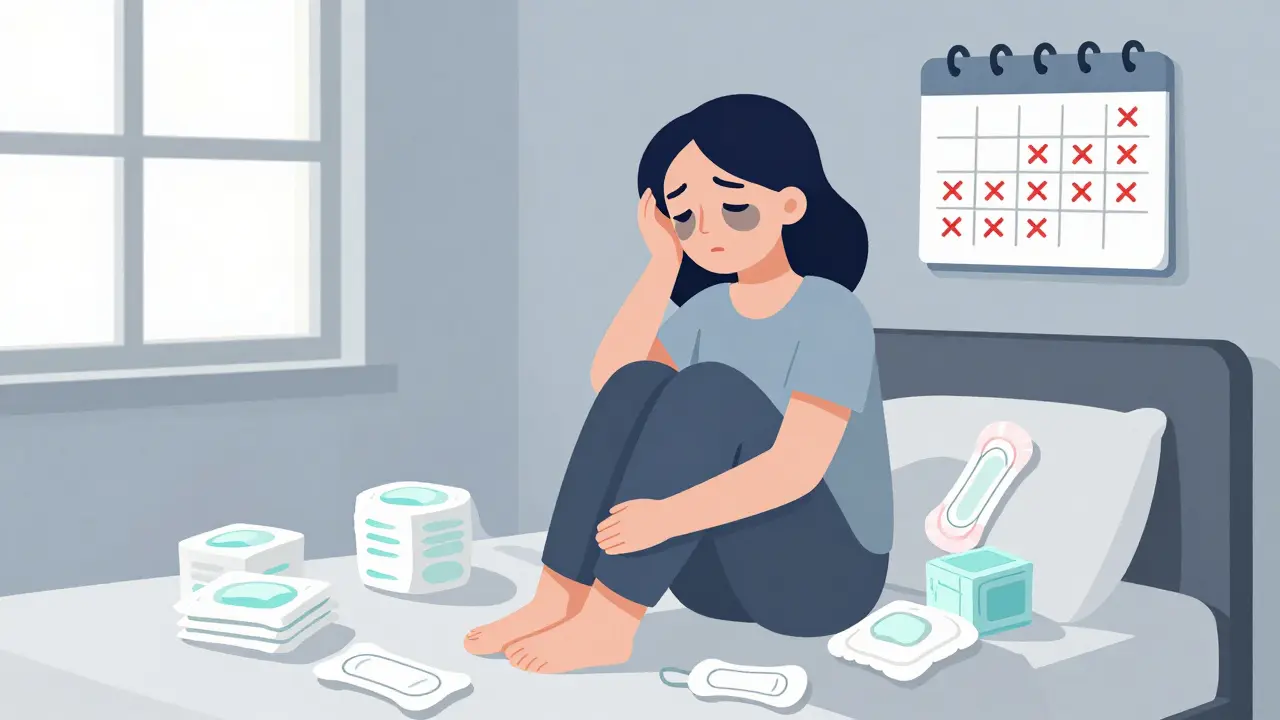
Imagine having to change your pad or tampon every 30 minutes. Not just once in a while - every day during your period. You’re scared to leave the house. You miss work. You’re exhausted. And your doctor never asked you if your periods got worse since you started your blood thinner.
This isn’t rare. It’s happening to 70% of menstruating women on anticoagulants. That’s not a side effect you can ignore. It’s a major health issue that’s been overlooked for years. If you’re on a blood thinner and your periods have become unbearable, you’re not alone. And more importantly - there are real, effective ways to fix this without stopping your life-saving medication.
Why Blood Thinners Make Periods So Much Heavier
Blood thinners - also called anticoagulants - are designed to stop dangerous clots from forming. That’s why they’re prescribed after a blood clot, for atrial fibrillation, or after certain surgeries. But they don’t just stop clots where they’re dangerous. They also make it harder for your body to stop bleeding when it shouldn’t, like during your period.
Normally, about 10% to 30% of women have heavy menstrual bleeding. But once you start a blood thinner, that number jumps to 70%. A 2022 study in Blood found that two out of every three women on these medications had abnormally heavy periods within months of starting. And for many, it wasn’t just a nuisance - it was a life disruption.
Signs you’re dealing with heavy menstrual bleeding on blood thinners:
- Needing to change your pad, tampon, or menstrual cup every hour or less
- Leaking through products, even on heavy days
- Passing large blood clots (bigger than a quarter)
- Feeling dizzy, tired, or short of breath - signs of iron deficiency
- Having to plan your day around your period, carrying emergency supplies
Many women end up with iron deficiency anemia because of this. Your body loses so much blood that it can’t keep up with making new red blood cells. And if you’re already on blood thinners, your doctor might not even think to check your iron levels. A 2023 survey by the National Blood Clot Alliance found that 68% of women said their hematologist never asked about menstrual changes after they started their medication.
Not All Blood Thinners Are the Same
If you’re on a blood thinner and your periods are terrible, the problem might not be you - it might be the drug.
Research shows that different anticoagulants carry different risks for heavy bleeding. A 2020 study in Blood Advances found that women on apixaban (Eliquis) or dabigatran (Pradaxa) had significantly lower rates of heavy menstrual bleeding than those on rivaroxaban (Xarelto). Warfarin, the older blood thinner, also carries a high risk.
Why does this matter? Because switching might help - without stopping your protection against clots. If you’re on rivaroxaban and your periods are unbearable, talk to your doctor about switching to apixaban. It’s not a guarantee, but for many women, it’s a game-changer. One Reddit user on r/anticoag wrote: “Switched from Xarelto to Eliquis. My bleeding dropped by 60% in two cycles.”
Don’t switch on your own. But do ask: “Is there a different blood thinner that’s less likely to make my periods worse?”
The First-Line Treatment: Hormonal Therapy
The good news? You don’t have to choose between protecting yourself from clots and having a decent quality of life. There are treatments that work while you stay on your blood thinner.
The most effective option? Hormonal IUDs - specifically the levonorgestrel intrauterine system (LNG-IUD), like Mirena or Kyleena. This small device releases progesterone directly into your uterus. It thins the lining, so there’s less tissue to shed. Studies show it reduces menstrual blood loss by 70% to 90% within 3 to 6 months. Some women stop getting periods altogether.
And here’s the key: it’s safe with anticoagulants. No need to stop your blood thinner. No major surgery. Just a quick office procedure.
Other hormonal options:
- Subdermal implant (Nexplanon) - a tiny rod under the skin that lasts 3 years
- Progestin-only pills - taken daily
- Extended progestin regimens - like norethisterone 5 mg three times a day for 21 days, as recommended by the American Society of Hematology
Combined estrogen-progesterone pills can also work, but they’re not always safe for women with clotting risks. Your doctor will need to evaluate your personal risk before recommending them.
Tranexamic Acid: A Non-Hormonal Option
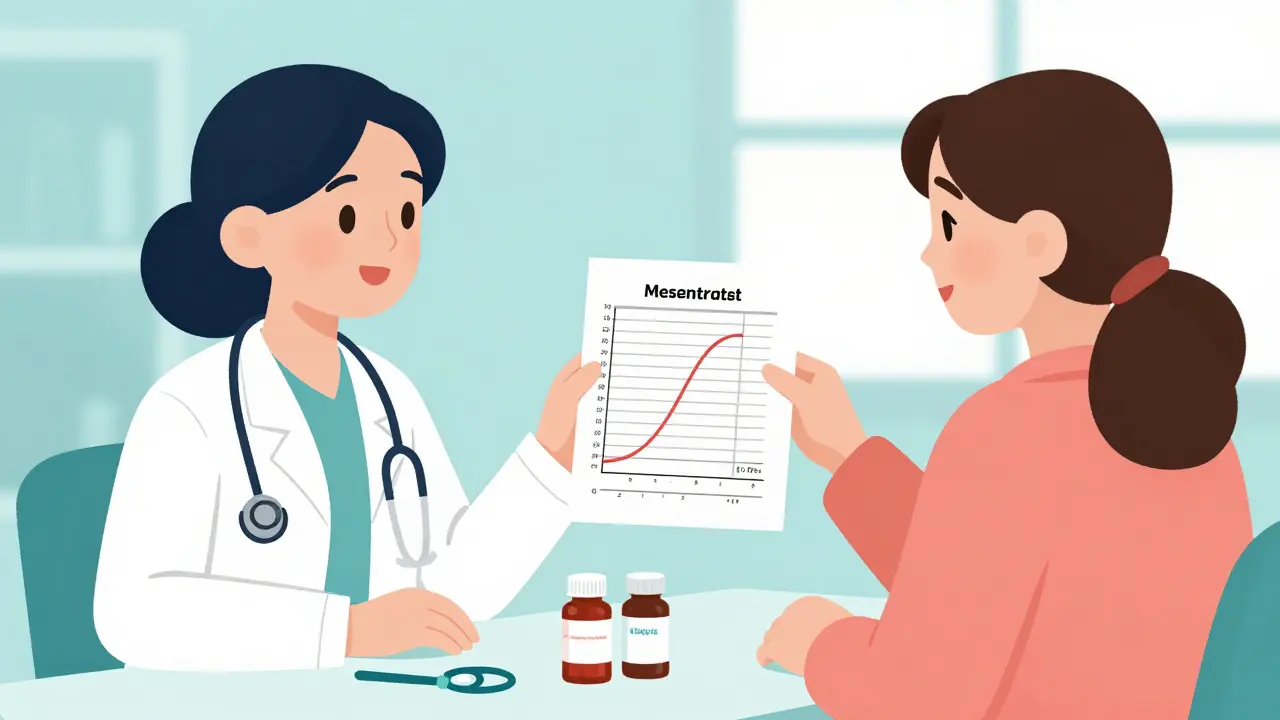
If you don’t want hormones, there’s another option: tranexamic acid. It’s a medication that helps your blood clot more effectively - right at the site of bleeding. It’s taken only during your period, usually two or three times a day for up to five days.
Studies show it cuts menstrual bleeding by 30% to 50%. It’s not as powerful as an IUD, but it’s a solid choice if you’re not ready for long-term hormonal treatment.
Important note: You can take tranexamic acid while on blood thinners. But timing matters. Don’t take it at the same time as your anticoagulant. Space them out by a few hours. Ask your pharmacist or doctor for the best schedule.
What About NSAIDs Like Ibuprofen?
You might think: “I’ll just take more ibuprofen.” But that’s risky.
NSAIDs like ibuprofen and aspirin can reduce bleeding by 20% to 40% in some women. But they also thin the blood. Taking them on top of your anticoagulant? That’s doubling down on bleeding risk. It’s not a safe long-term fix.
If you need pain relief during your period, acetaminophen (paracetamol) is safer. It doesn’t affect clotting. But it won’t reduce bleeding. So don’t rely on it to solve the problem - just for cramps.
What About Surgery?
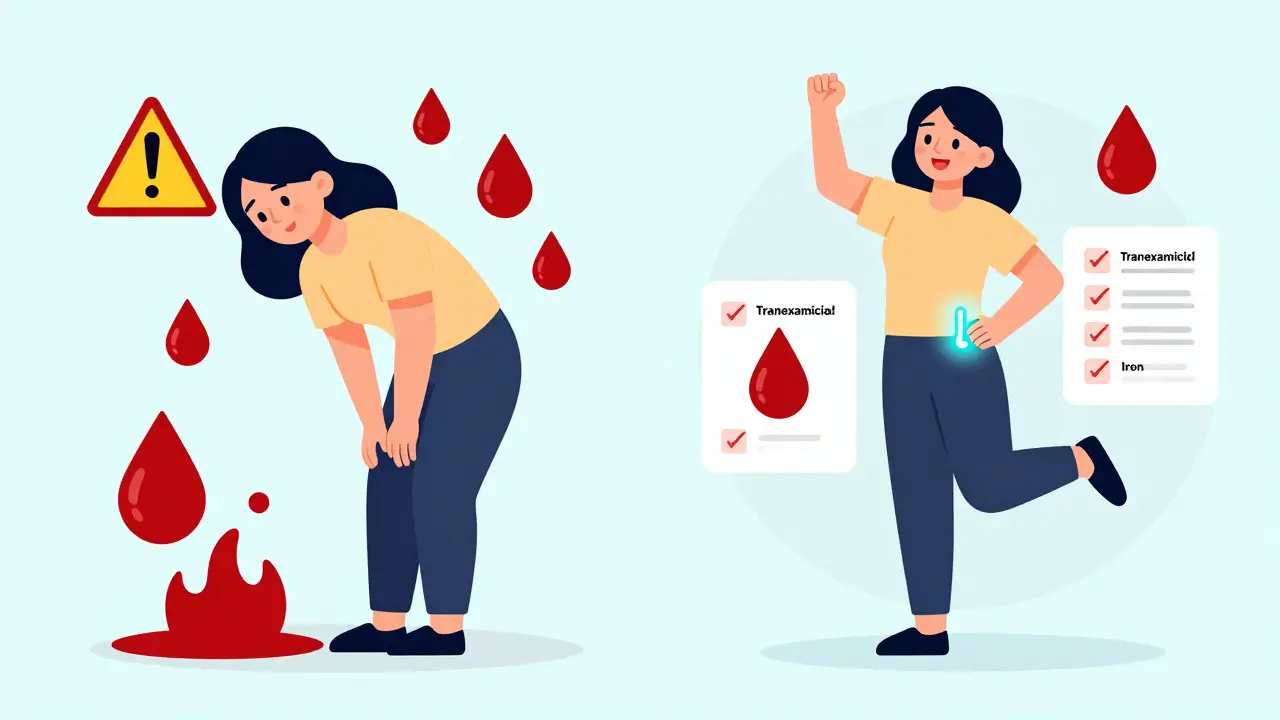
Some women hear “endometrial ablation” and think it’s the answer. It’s a procedure that destroys the lining of the uterus. It works well - 80% to 90% of women see big improvements. But for women on blood thinners? It’s risky.
Because you can’t stop your anticoagulant before surgery without risking a life-threatening clot. The risk of bleeding during or after the procedure is too high. Even if you bridge with heparin, it’s complex and not always safe.
ACOG and the American Society of Hematology now recommend endometrial ablation only as a last resort - and only if you’ve tried and failed hormonal options.
Why This Is Still Overlooked
Here’s the uncomfortable truth: most doctors aren’t trained to ask about periods.
A 2023 survey of hematology clinics found that only 22% routinely check for heavy menstrual bleeding in women under 50. That’s not because they don’t care. It’s because there are no official guidelines - yet.
That’s changing. In 2021, the International Society on Thrombosis and Haemostasis added menstrual bleeding to its standard bleeding assessment tools. In 2024, ACOG updated its guidelines to specifically address anticoagulant-related heavy bleeding. And by mid-2025, the American Society of Hematology and ACOG plan to release joint guidelines.
But right now, you have to be your own advocate. If you’re on a blood thinner and your periods are wrecking your life, say something. Bring up the numbers: 70% of women on these drugs have this problem. Ask: “Has this been studied? What can we do?”
What You Can Do Right Now
Don’t wait for your doctor to bring it up. Take action.
- Track your bleeding. Use a period app or journal. Note how often you change products, if you leak, if you pass clots, how long it lasts. Bring this to your appointment.
- Ask for an iron panel. Check your ferritin, hemoglobin, and hematocrit. Iron deficiency is common and treatable.
- Ask about switching anticoagulants. If you’re on rivaroxaban or warfarin, ask if apixaban or dabigatran could be safer for your periods.
- Ask about the LNG-IUD. It’s the most effective, safest option for most women. It lasts 3-5 years. Insertion takes 10 minutes.
- Ask about tranexamic acid. If you don’t want hormones, this is your best non-hormonal option.
- Don’t skip doses. Stopping or reducing your blood thinner to manage bleeding increases your risk of stroke or clot by up to five times. That’s not worth it.
One woman on Reddit said: “I thought I had to live with this. Then I got the Mirena. My periods went from ER visits to nearly nothing. I got my life back.”
You deserve that too.
Can I stop my blood thinner if my periods are too heavy?
No. Stopping or skipping your blood thinner increases your risk of a life-threatening clot - like a stroke or pulmonary embolism - by up to five times. Heavy bleeding is serious, but it’s not life-threatening. The goal is to manage the bleeding without stopping your protection against clots. Talk to your doctor about safer alternatives like hormonal IUDs or switching anticoagulants.
Is the Mirena IUD safe if I’m on a blood thinner?
Yes. The levonorgestrel IUD (like Mirena) is safe and effective for women on anticoagulants. It releases progesterone directly into the uterus, which thins the lining and reduces bleeding. It doesn’t interfere with your blood thinner. Many women see a 70% to 90% reduction in bleeding within 3 to 6 months. Insertion is a simple office procedure with minimal risk.
Which blood thinner causes the least heavy bleeding?
Research shows that apixaban (Eliquis) and dabigatran (Pradaxa) are linked to lower rates of heavy menstrual bleeding compared to rivaroxaban (Xarelto) and warfarin. If your periods became much heavier after starting your blood thinner, talk to your hematologist about switching. It’s not a guarantee, but for many women, it makes a big difference.
Can I take ibuprofen to reduce my heavy periods on blood thinners?
Not recommended. Ibuprofen and other NSAIDs can reduce bleeding, but they also thin the blood. Taking them with your anticoagulant increases your overall bleeding risk. For pain relief, use acetaminophen (paracetamol) instead - it doesn’t affect clotting. But it won’t reduce bleeding. Focus on treatments that target the cause, like hormonal IUDs or tranexamic acid.
Should I get tested for iron deficiency if I have heavy periods on blood thinners?
Yes. Heavy bleeding can lead to iron deficiency anemia, even if you don’t feel tired yet. Ask your doctor for a ferritin test - it’s the best way to check your iron stores. Low ferritin means you’re losing more iron than you’re replacing. Iron supplements or IV iron can help restore your energy and prevent long-term complications. Don’t wait until you’re pale and dizzy.
Jessica Klaar
February 7, 2026 AT 13:17I never realized how common this was until I started reading about it. I’ve been on Eliquis for AFib for three years, and my periods went from manageable to absolutely brutal within six months. I was too embarrassed to say anything to my doctor-thought it was just ‘what happens when you get older.’ Turns out, 70% of women on these meds feel the same way. I finally asked about the IUD last month. Got Mirena inserted. Two cycles in, I’m basically back to normal. No more emergency pads in my purse. No more dizziness. I wish I’d done this sooner.
Also-yes, iron levels. My ferritin was at 8. I’m on supplements now. Life-changing.
Don’t suffer in silence. You’re not weak for needing help. You’re smart for seeking it.
PAUL MCQUEEN
February 9, 2026 AT 12:09Wow. So the solution is just… put a hormone device in your uterus? And switch drugs? That’s it? No big clinical trials? No FDA warning? This feels like a band-aid on a broken leg. I’m not saying it doesn’t work-I’m saying why hasn’t this been screaming from every medical journal? Why are we just… accepting this as normal? Someone’s not telling us the whole story.
glenn mendoza
February 10, 2026 AT 09:00While I appreciate the practical advice offered in this post, I must emphasize the importance of evidence-based clinical decision-making. The data supporting the use of levonorgestrel intrauterine systems in anticoagulated patients is robust, as evidenced by multiple prospective cohort studies published in the Journal of Thrombosis and Haemostasis and the American Journal of Obstetrics and Gynecology. Furthermore, the differential bleeding risk profiles among direct oral anticoagulants have been validated in post-hoc analyses of the ARISTOTLE and RELY trials. It is not merely anecdotal; it is clinically significant. I urge all patients to engage in shared decision-making with their hematologist and gynecologist to optimize both thrombotic and hemorrhagic risk profiles.
Chima Ifeanyi
February 10, 2026 AT 17:46Let’s be real. This whole narrative is a pharmaceutical marketing funnel disguised as patient advocacy. Who funds these ‘studies’? Who gets paid when you switch from Xarelto to Eliquis? Who profits when you get an IUD? The answer is the same: Big Pharma. They don’t care if you bleed. They care if you keep buying. And now they’ve got you hooked on a 5-year device that costs $1,200 out-of-pocket. Meanwhile, the real solution-reducing anticoagulant dosage under supervision-is ignored because it’s not patentable. Wake up. This isn’t healthcare. It’s a revenue stream.
And don’t get me started on tranexamic acid. It’s been around since the 70s. Why is it suddenly ‘new’? Because they rebranded it. Classic.
Tori Thenazi
February 11, 2026 AT 01:06Okay, but what if… it’s all a lie? What if the blood thinners aren’t even the problem? What if it’s the EMFs from our phones? Or the glyphosate in our water? Or the fact that Big Gyn is suppressing natural remedies? I’ve been researching this for months. There’s a secret study from 2019 that got pulled-someone on Reddit found a leaked PDF. It says the real cause is estrogen-mimicking chemicals in tampon lining. And the IUD? It’s a trap. It’s designed to make you dependent. I switched to moonstone crystals and a herbal tea blend. My bleeding stopped in 3 days. No joke. I’m not crazy. I’m just… ahead of the curve. 😔
Angie Datuin
February 11, 2026 AT 01:11I’ve been on warfarin for a pulmonary embolism. My periods are insane. I bleed for two weeks. I’m always tired. I never thought to ask about iron. My doctor just said, ‘It’s your period.’ I cried in the bathroom after that appointment. I didn’t even know I could ask for help. This post made me feel less alone. I’m scheduling an appointment tomorrow to ask about the IUD. Thank you.
Ashlyn Ellison
February 11, 2026 AT 05:48My period went from 5 days to 12. I was changing pads every 20 minutes. I stopped going out. I lost my job. I thought I was broken. Then I found this. Got the Kyleena. Three months later, I went on a road trip. No panic. No backup clothes. Just… me. I didn’t know I could feel normal again. I didn’t know I deserved to. Thank you for saying this out loud.
Jonah Mann
February 12, 2026 AT 08:15wait so tranexamic acid works with blood thinners?? i thought it was contraindicated?? i just got prescribed it last week and was scared to take it… my doc said ‘sure’ but i was like… rly?? i took it yesterday and didn’t bleed through my jeans?? omg. also i switched from xarelto to eliquis like 2 months ago and it helped a TON. i didnt even think to connect the dots. i thought i was just getting better. turns out i just got the right drug. thanks for this. i feel smarter now. also i misspelled ‘really’ 3 times. oops.
Joseph Charles Colin
February 14, 2026 AT 00:10From a hematology standpoint, the pharmacokinetic profiles of DOACs explain the differential bleeding risk. Apixaban’s lower bioavailability and shorter half-life compared to rivaroxaban result in less sustained inhibition of Factor Xa in the endometrial microvasculature. This is why apixaban demonstrates significantly lower rates of heavy menstrual bleeding in prospective longitudinal analyses. The LNG-IUD, meanwhile, acts locally via progesterone-mediated endometrial atrophy, which reduces vascular density and fibrinolytic activity. The synergy between these two interventions-switching anticoagulant + local hormonal modulation-is the most effective clinical strategy currently available. This is not anecdotal. It’s mechanism-driven.
John Sonnenberg
February 15, 2026 AT 14:55So let me get this straight. Women are bleeding out, and the solution is to shove a plastic device into their uterus and switch medications? That’s the medical breakthrough? No wonder people don’t trust doctors. This feels like a cop-out. Why aren’t we researching why this happens? Why aren’t we developing new anticoagulants that don’t wreck menstrual cycles? Why are we just teaching women to adapt? We’re not fixing the problem. We’re just telling them to live with it differently.
Kathryn Lenn
February 15, 2026 AT 18:14Ohhhhh so this is why my gynecologist looked at me like I was asking for a unicorn when I mentioned my bleeding. She said, ‘It’s just your body adjusting.’ Right. Like my body is adjusting to bleeding through my jeans in a Zoom meeting. I’m supposed to be grateful I didn’t get a stroke? But I’m bleeding out like a horror movie. And now you’re telling me I have to get a device inserted? What if I’m allergic? What if it migrates? What if it causes cancer? What if they’re lying about the safety? Who even wrote this article? Is it sponsored by Bayer? I’m not buying it.
John Watts
February 17, 2026 AT 12:49You are not broken. You are not weak. You are not alone. I’ve been there. I’ve bled through my clothes at work. I’ve cried in the pharmacy aisle because I couldn’t find enough pads. I thought I was the only one. Then I found a community. Then I found the IUD. Then I found my voice. You deserve to feel safe in your own body. You deserve to live without fear. You deserve to be heard. Don’t wait for permission. Don’t wait for a doctor to ask. You already know what’s wrong. Now go ask for help. I believe in you. And you’re not just surviving-you’re going to thrive.
Monica Warnick
February 17, 2026 AT 13:00I’m on rivaroxaban. My periods are a nightmare. I read this. I cried. I called my doctor. She said, ‘Try tranexamic acid.’ I did. It helped a little. Then I asked about switching. She said, ‘We can try Eliquis.’ I’m switching next month. I’m scared. But I’m also… hopeful? I don’t know how to feel. I just know I’m done pretending this is normal.