
G6PD Deficiency and Medications: A Practical Guide to Preventing Hemolysis
 May, 16 2026
G6PD Medication Safety Checker
Imagine taking a standard medication for an infection or malaria, only to have your red blood cells suddenly start breaking apart. For the roughly 400 million people worldwide living with G6PD deficiency, an X-linked genetic condition that reduces the body's ability to protect red blood cells from oxidative damage, this isn't just a hypothetical nightmare-it is a very real risk known as hemolytic anemia. If you or a loved one has this condition, understanding which medicines are safe and which are dangerous is not just helpful; it is literally life-saving.
This guide cuts through the confusion. We will look at exactly how G6PD deficiency works, identify the specific medications you must avoid, explain why testing matters, and give you practical steps to stay safe in everyday medical situations. No jargon, no fluff-just the facts you need to prevent a crisis.
What Is G6PD Deficiency and Why Does It Matter?
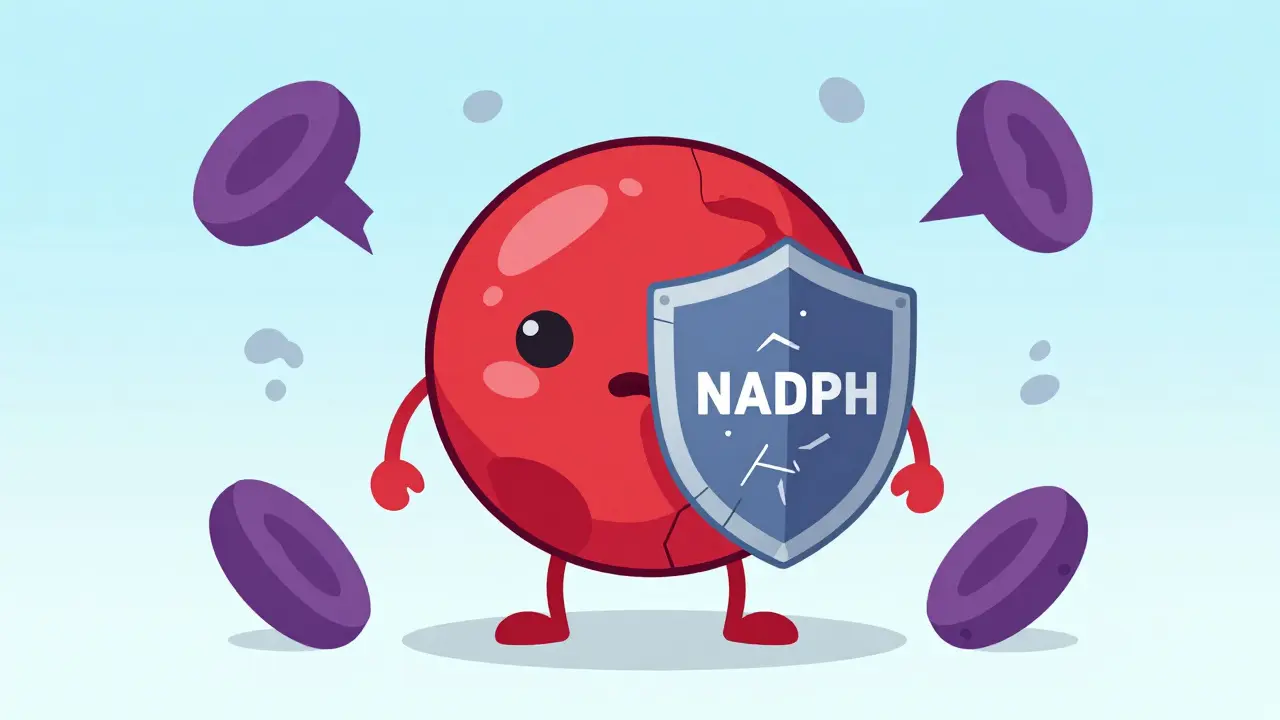
To understand the danger, we first need to look at what’s happening inside your blood. Your red blood cells rely on an enzyme called Glucose-6-Phosphate Dehydrogenase (G6PD) to produce NADPH. Think of NADPH as a shield generator. It keeps a molecule called glutathione in its "reduced" form, which acts as an antioxidant buffer against oxidative stress.
If you have G6PD deficiency, your body doesn’t make enough of this enzyme. When you are exposed to certain triggers-specifically strong oxidizing agents-the shield fails. Without protection, oxidative stress damages the red blood cell membranes, causing them to burst. This process is called hemolysis. In severe cases, hemoglobin levels can drop by more than half within just seven days of exposure to a trigger, leading to acute anemia, jaundice, dark urine, and potentially organ failure.
The condition is most common in regions where malaria has historically been endemic, such as sub-Saharan Africa, the Mediterranean, and Southeast Asia. Interestingly, having one copy of the G6PD variant may offer some protection against severe malaria, which explains why the gene persists so widely in human populations. However, this evolutionary trade-off comes with the modern cost of increased sensitivity to certain drugs and foods.
The High-Risk Medication List: What to Avoid
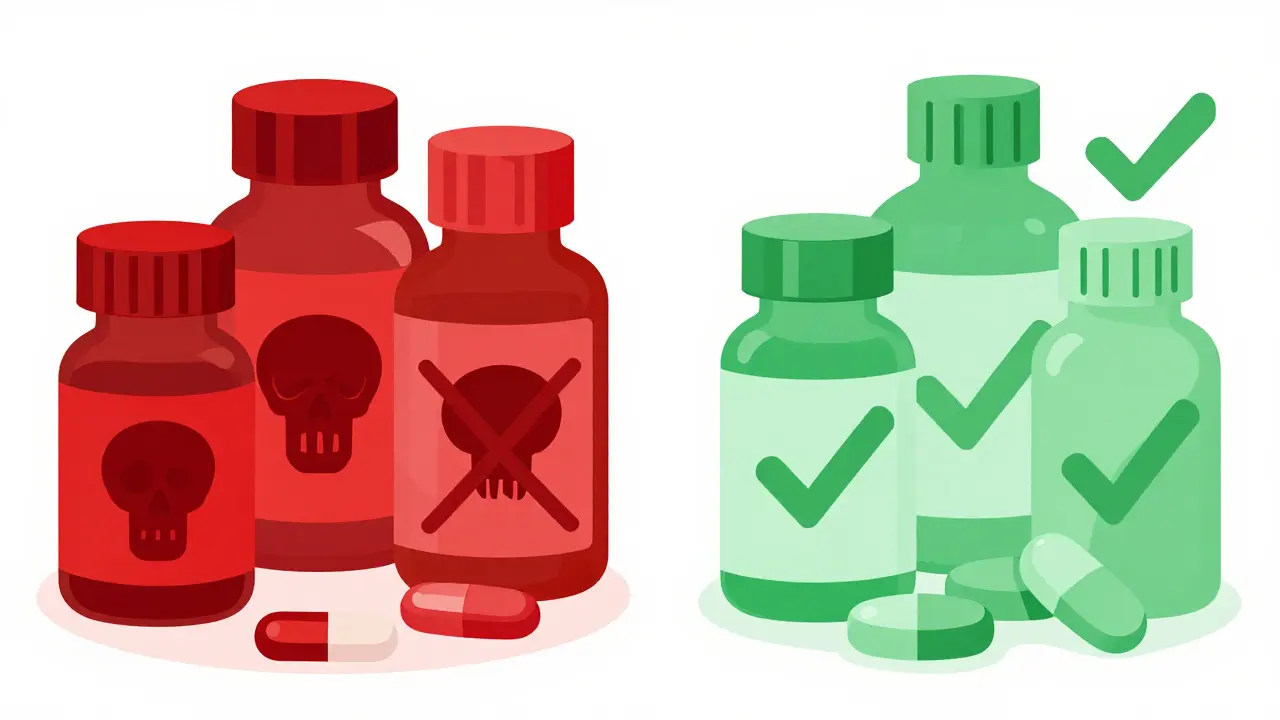
Not all medications are created equal when it comes to G6PD deficiency. Some are completely safe, while others carry a near-100% risk of triggering hemolysis. The World Health Organization identifies dozens of high-risk substances, but a few stand out as particularly dangerous.
| Medication | Risk Level | Common Use | Safety Note |
|---|---|---|---|
| Rasburicase | Critical | Treatment for tumor lysis syndrome in cancer patients | Absolute contraindication. Causes hemolysis in nearly 100% of deficient patients. |
| Methylene Blue | Critical | Treatment for methemoglobinemia; used in diagnostic procedures | Severe hemolysis risk. Often used in emergency settings without prior screening. |
| Primaquine | High | Malaria treatment and prophylaxis | Induces hemolysis in Class I and II variants. Requires mandatory testing before use. |
| Dapsone | High | Treatment for leprosy, Pneumocystis pneumonia, dermatitis herpetiformis | Hemolysis risk increases significantly at doses above 50mg daily. |
| Sulfa Drugs | Moderate to High | Various infections (e.g., sulfamethoxazole) | Variable risk depending on specific drug and dose. Caution advised. |
It is crucial to note that risk varies by G6PD variant. For example, the Mediterranean variant (common in Southern Europe) tends to be more sensitive to oxidative stressors than the African A- variant. However, because distinguishing between variants requires complex genetic testing, the safest approach for anyone with diagnosed G6PD deficiency is to assume all listed high-risk drugs are off-limits unless a specialist explicitly clears them.
Safe Alternatives: Managing Malaria and Other Conditions
Avoiding dangerous drugs doesn’t mean you’re left without options. Modern medicine offers several effective alternatives for common conditions that previously posed significant risks to G6PD-deficient individuals.
For malaria prevention and treatment, Chloroquine remains a safe option for all G6PD classes. Additionally, Artemisinin-based combination therapies (ACTs) are considered safe and are now the global standard for treating uncomplicated malaria. For travelers concerned about malaria relapse, Tafenoquine was recently approved but carries a strict requirement: mandatory G6PD testing before prescription. Another excellent alternative for travel is Atovaquone-proguanil (Malarone), which studies show avoids hemolysis in 95% of deficient users.
In cancer care, if rasburicase is contraindicated, doctors often turn to Allopurinol or febuxostat to manage uric acid levels during chemotherapy. These do not carry the same oxidative risk profile.
The Critical Role of Testing and Diagnosis
You cannot prevent what you do not know. Yet, many healthcare providers remain unaware of G6PD restrictions. A 2022 survey found that 42% of G6PD-deficient patients reported their doctors were unaware of required medication limits. This gap in knowledge is dangerous.
Testing is straightforward but timing matters. Quantitative spectrophotometric assays measure enzyme activity directly. The clinical cutoff for deficiency is typically below 10% of normal activity. However, there is a major pitfall: after a hemolytic episode, older red blood cells (which have low G6PD) are destroyed, leaving behind younger reticulocytes that have higher enzyme activity. This can create a "false normal" result. To get an accurate diagnosis, testing should be done at least three months after any recent hemolytic event.
New point-of-care tests, such as the STANDARD G6PD Test System approved by the FDA in early 2024, provide results in under eight minutes with over 99% accuracy. These rapid tests are game-changers for emergency settings where immediate decisions about drug administration are necessary.
Who Is at Risk? Beyond the Male Population
There is a widespread misconception that only men are affected by G6PD deficiency. Because the gene is located on the X chromosome, males (who have one X chromosome) are indeed more severely affected if they inherit the variant. Females (with two X chromosomes) can be carriers, and due to a process called X-chromosome inactivation (or lyonization), some females express varying levels of the enzyme.
Research published in Lancet Haematology shows that approximately 15% of G6PD-deficient females experience symptomatic hemolysis. This means women should not dismiss their status as merely "carrier." If you are female and have been tested positive for the G6PD variant, you must follow the same medication precautions as males.

Practical Steps for Prevention and Advocacy
Preventing hemolysis comes down to awareness and communication. Here is how you can take control:
- Carry Medical Identification: Wear a medical alert bracelet or necklace that clearly states "G6PD Deficiency - Avoid Oxidative Drugs." This ensures paramedics and ER staff know your status immediately.
- Inform Every Provider: Before any new prescription, surgery, or dental procedure, explicitly state your condition. Do not assume they will check your records. Ask, "Is this medication safe for someone with G6PD deficiency?"
- Beware of Non-Medical Triggers: While medications are the primary concern, other oxidative stressors include fava beans (favism), naphthalene (found in mothballs), and certain dyes like methylene blue in tattoos or diagnostic imaging.
- Know the Symptoms: Early signs of hemolysis include fatigue, pale skin, yellowing of eyes/skin (jaundice), and dark brown or tea-colored urine. If these occur after starting a new medication, seek emergency care immediately.
- Advocate for Screening: If you live in a region with high prevalence, advocate for universal newborn screening. Countries like Saudi Arabia have seen a 78% reduction in hemolytic crisis admissions since implementing universal screening programs.
Emerging Treatments and Future Outlook
The landscape for G6PD management is improving. Researchers are exploring enzyme replacement therapy using recombinant human G6PD, with Phase I trials expected to begin soon. Additionally, studies suggest that antioxidants like N-acetylcysteine (NAC) may offer protective benefits by boosting glutathione levels independently of the G6PD pathway, potentially reducing hemolysis severity even if a trigger is accidentally administered.
While a cure remains distant, current evidence suggests that with proper screening, education, and adherence to safe medication protocols, G6PD deficiency should no longer cause preventable mortality in well-resourced healthcare systems by 2035. The key lies in closing the knowledge gap between patients and providers today.
Can G6PD deficiency be cured?
Currently, there is no permanent cure for G6PD deficiency. Management focuses entirely on prevention by avoiding known oxidative triggers, including specific medications, foods like fava beans, and chemicals like naphthalene. Research into enzyme replacement therapy and gene editing is ongoing but not yet available for clinical use.
Are all antibiotics unsafe for G6PD deficiency?
No, most common antibiotics are safe. Penicillins, cephalosporins, macrolides (like azithromycin), and tetracyclines are generally considered safe. The primary antibiotic risks come from sulfa drugs (sulfonamides) and nitrofurantoin. Always confirm with your doctor, but you do not need to avoid all antibiotics.
Why did my G6PD test come back normal after a hemolytic episode?
This is a common diagnostic trap. During hemolysis, the oldest red blood cells (which have the lowest G6PD enzyme levels) are destroyed first. The remaining younger cells (reticulocytes) have higher enzyme activity, which can temporarily mask the deficiency. You should wait at least three months after the episode to retest for an accurate result.
Do women with G6PD deficiency need to worry about medication safety?
Yes. Although women have two X chromosomes, a process called X-inactivation means some women express significantly reduced G6PD activity. Approximately 15% of female carriers experience symptomatic hemolysis. Women who test positive for the variant should follow the same medication restrictions as men.
What should I do if I accidentally take a prohibited medication?
Stop taking the medication immediately and contact your healthcare provider or go to the nearest emergency room. Monitor for symptoms of hemolysis, such as dark urine, extreme fatigue, shortness of breath, or jaundice. Early intervention with supportive care, including hydration and possibly blood transfusions, can prevent serious complications.
Is primaquine ever safe for G6PD-deficient patients?
Primaquine is generally contraindicated for patients with severe G6PD deficiency (Class I and II). In some cases, patients with mild deficiency (Class III) may tolerate very low, carefully monitored doses under strict specialist supervision, but this is rare and risky. Safer alternatives like tafenoquine (with testing) or artemisinin-based therapies are preferred.
How does G6PD deficiency differ from sickle cell anemia?
Sickle cell anemia is a chronic structural problem with hemoglobin that causes constant symptoms and requires long-term disease-modifying therapy. G6PD deficiency is primarily an episodic condition triggered by external oxidative stressors. Between crises, most G6PD-deficient individuals live normal lives without chronic symptoms, unlike those with sickle cell disease.