
Food Labels and Allergies: Hidden Allergens and Safety
 May, 12 2026
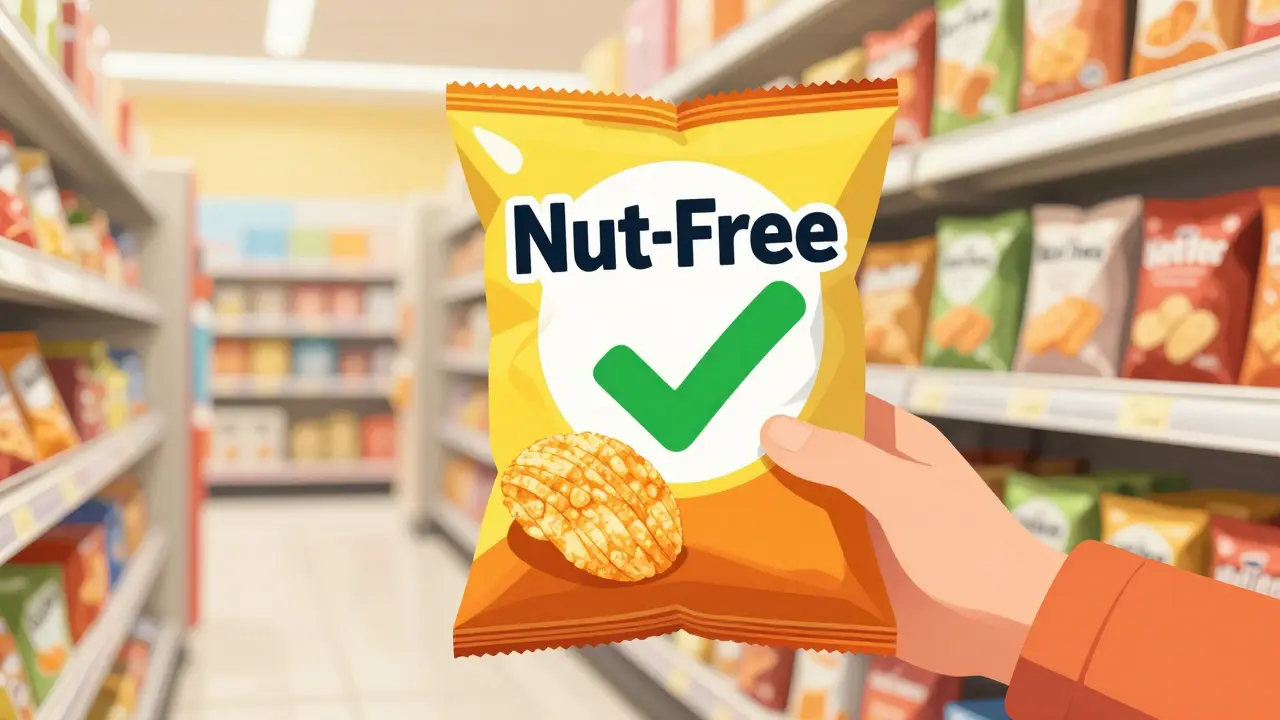
Imagine reaching for a bag of chips that looks safe. The front says "Nut-Free." You feel relieved. But on the back, in tiny print, it whispers, "Made in a facility that also processes peanuts." Your heart skips a beat. This is the daily reality for millions of people with food allergies. For them, reading a label isn't just about nutrition; it’s a matter of life and death.
The landscape of food safety regulations is shifting rapidly. In early 2025, the U.S. Food and Drug Administration (FDA) released its fifth edition of guidance on food allergen labeling. This update brings crucial clarity to hidden allergens, specifically addressing how manufacturers must list milk, eggs, fish, and shellfish. If you manage an allergy disorder, these changes could mean the difference between a safe snack and an emergency room visit.
What Changed in the 2025 FDA Guidance?
The core goal of this updated guidance is to reduce consumer confusion. Previously, labels were often vague. Now, specificity is king. The FDA wants to ensure that if you are allergic to cow's milk but can tolerate goat's milk, you know exactly what you are buying. This level of detail was largely missing before.
Here is what you need to know about the major shifts:
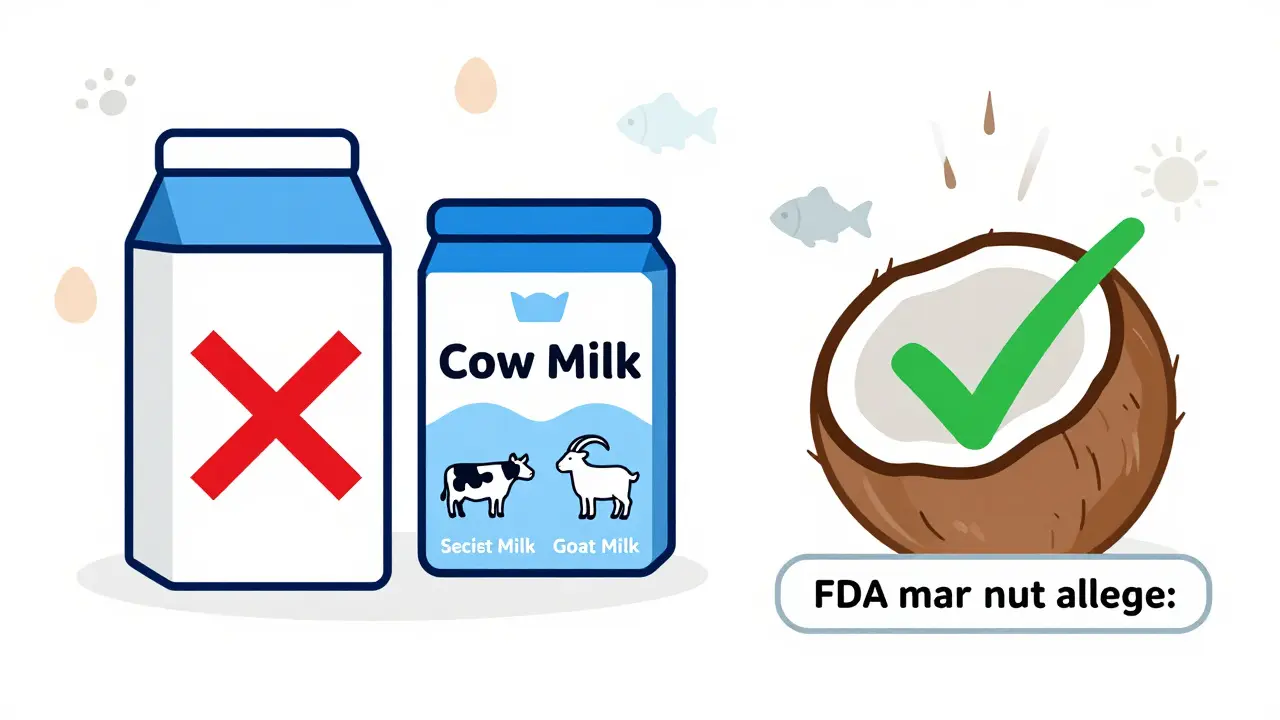
- Milk Specificity: Manufacturers can no longer just say "milk." They must specify the animal source. So, you will see "goat milk" or "cow milk" clearly listed. This helps those with specific animal sensitivities avoid unnecessary restrictions.
- Egg Sources: Similar to milk, egg labels must now state the bird source, such as "duck egg" or "chicken egg." This is vital for people who react to one type but not another.
- Fish Classification: Fish must be identified by species category. This includes bony fish (like trout), cartilaginous fish (like shark), and even jawless fish (like lamprey eels). Vague terms like "white fish" are out.
- Coconut Removal: A huge win for many: coconut has been removed from the list of major tree nut allergens. Most people with tree nut allergies can safely eat coconut, and this change reflects that scientific reality.
- Shellfish Narrowing: The term "shellfish" on labels now refers strictly to crustacean shellfish (crab, lobster, shrimp). Mollusks like oysters, mussels, and clams are excluded from this mandatory major allergen declaration.
These changes apply to all FDA-regulated products, including packaged foods, infant formula, and dietary supplements. However, keep in mind that meat, poultry, and catfish fall under the USDA, which has its own separate rules.
The Danger of "Hidden" Allergens and Cross-Contact
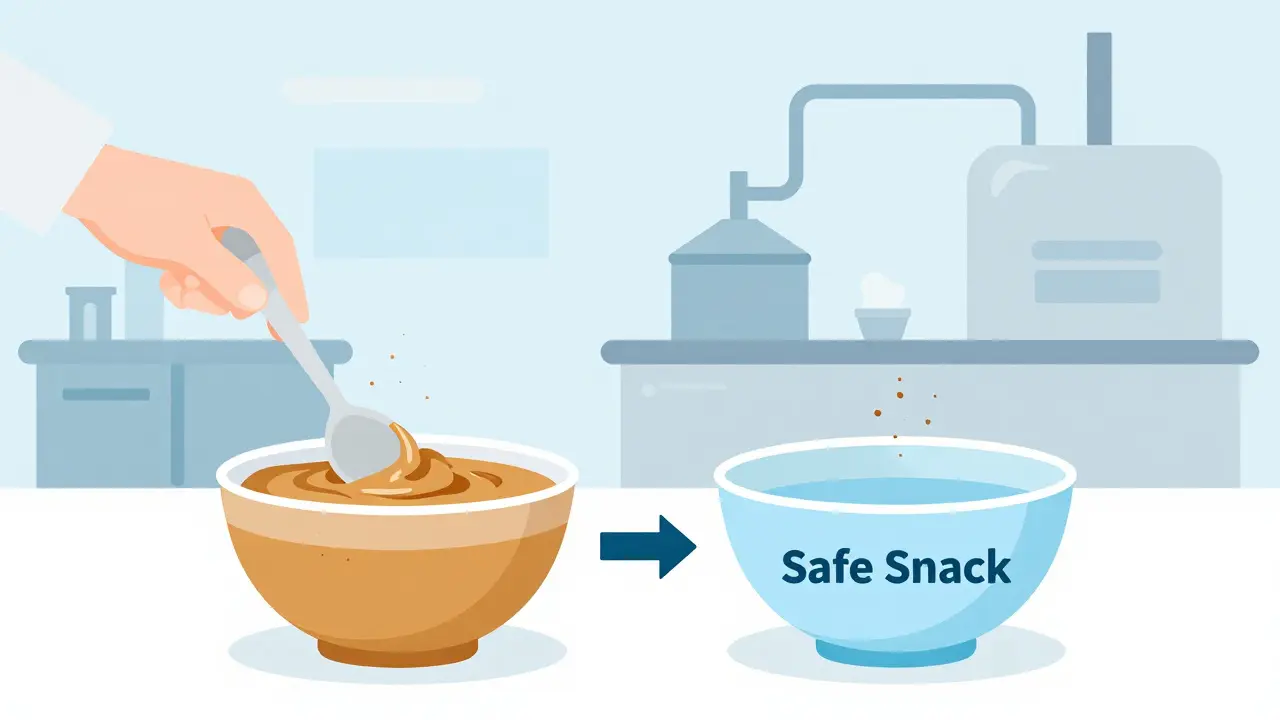
Even with better labels, cross-contact remains a significant threat. Cross-contact happens when an allergen accidentally gets into a food that shouldn’t contain it. Think of it like sharing a spoon between two bowls-one with peanut butter, one without. That tiny bit of transfer can trigger a reaction.
The new guidance clarifies how companies talk about this risk. You’ve probably seen phrases like "May contain nuts" or "Processed on shared equipment." These are called voluntary precautionary allergen labeling (PAL) statements. The FDA emphasizes that these statements must be truthful. A company cannot just guess; they need evidence that cross-contact is possible.
Crucially, the new rules ban contradictory claims. A product cannot say "Milk-Free" on the front and "May Contain Milk" on the back. This was a major source of confusion. If a brand claims a product is free from an allergen, it must genuinely be free from it, including unintended residues. This forces manufacturers to improve their production hygiene and segregation practices.
Understanding the Nine Major Allergens
To navigate labels effectively, you need to know the big nine. These are the substances that cause the majority of severe reactions in the United States. Under the FASTER Act (passed in 2021), sesame joined this elite-and dangerous-club. Here is a quick breakdown of what to look for:
| Allergen Group | Common Names & Derivatives | New Labeling Requirement |
|---|---|---|
| Milk | Cheese, yogurt, casein, whey | Must specify animal source (e.g., Cow Milk) |
| Eggs | Albumin, globulin, lysozyme | Must specify bird source (e.g., Chicken Egg) |
| Fish | Trout, salmon, tuna, caviar | Must specify species category (Bony, Cartilaginous) |
| Crustacean Shellfish | Shrimp, crab, lobster, crayfish | Explicitly labeled as Crustacean Shellfish |
| Tree Nuts | Almonds, walnuts, cashews, pecans | Coconut is NO LONGER included here |
| Peanuts | Arachis oil, peanut flour | Standard major allergen declaration |
| Soybeans | Lecithin, soy protein isolate | Standard major allergen declaration |
| Wheat | Bread, pasta, barley, rye (often grouped) | Standard major allergen declaration |
| Sesame | Tahini, hummus, garnishes | Added via FASTER Act in 2021 |
Note the shift with shellfish. If you are allergic to mollusks (clams, mussels), you are no longer protected by the major allergen warning system for those specific items. You must read the ingredient list carefully, as mollusks are not required to be bolded or highlighted in the "Contains" statement like shrimp is.
Why Coconut Was Removed from Tree Nuts
This change might seem small, but it impacts quality of life for many. Botanically, coconut is a drupe, not a true nut. More importantly, clinical data shows that less than 1% of people with tree nut allergies also react to coconut. By removing it from the mandatory major allergen list, the FDA acknowledges this low risk.
However, caution is still advised. If you have a known sensitivity to coconut, you should still check labels. It won’t appear in the bold "Contains" section anymore, but it will still be listed in the ingredients if present. For the vast majority of tree-nut-allergic individuals, this means they can finally enjoy coconut water, flakes, and oil without panic.
Navigating the "Free-From" Claims
Marketing plays a big role in food choices. Terms like "Gluten-Free," "Dairy-Free," or "Nut-Free" are powerful. But under the new guidance, these claims carry more weight. If a manufacturer uses a "free-from" claim, they cannot simultaneously use a voluntary advisory statement for that same allergen.
For example, a cookie package cannot say "Peanut-Free" on the front and "May Contain Peanuts" on the back. This contradiction scared consumers and undermined trust. Now, if a brand promises "Peanut-Free," they must ensure their manufacturing process prevents cross-contact. This pushes companies to invest in better sanitation and dedicated production lines, ultimately making the supply chain safer for everyone.
Practical Tips for Safer Shopping
Knowledge is your best defense. Here is how to apply these new rules in your next grocery trip:
- Check the "Contains" Statement: Look for the bold text usually found right below the ingredient list. It must list any of the Big Nine present in the product.
- Read the Ingredient List: Allergens can hide in unexpected places. Sesame oil in salad dressing? Fish sauce in Asian snacks? Always scan every word.
- Look for Source Specificity: If you see "Milk," expect to see "Cow Milk" or "Goat Milk" specified now. If you don't see the source, ask the manufacturer or choose a different brand.
- Beware of Mollusks: If you have a shellfish allergy that includes clams or oysters, do not rely on the "Contains Shellfish" warning. Read the full ingredient list for words like "mussel," "scallop," or "oyster.""
- Contact Brands Directly: If a label is unclear, call or email the company. Reputable brands track their allergen controls closely and can give you accurate answers.
The Future of Allergen Labeling
The FDA’s guidance is non-binding, meaning it’s a recommendation rather than a strict law. However, industry compliance is high because companies want to avoid liability and build consumer trust. Analysts predict that by 2027, three-quarters of major U.S. food manufacturers will adopt these standards voluntarily.
There is also talk of expanding the list beyond the Big Nine. The FDA is currently evaluating other common triggers like mustard, celery, and lupin. While these aren’t major allergens yet, they cause serious reactions for some people. Stay tuned for future updates, as the regulatory landscape continues to evolve to protect public health.
Is coconut considered a tree nut allergen anymore?
No. The 2025 FDA guidance removed coconut from the list of major tree nut allergens. Most people with tree nut allergies can safely consume coconut, and it no longer requires the bold "Contains" statement associated with tree nuts. However, it must still be listed in the ingredients if present.
What does "cross-contact" mean on food labels?
Cross-contact occurs when an allergen is accidentally introduced into a food during processing, packaging, or preparation. It is different from being an intentional ingredient. Labels may warn of this with phrases like "May contain" or "Processed in a facility that handles..." The new guidance requires these warnings to be truthful and prohibits contradictory "free-from" claims.
Do I need to worry about mollusk allergies with the new rules?
Yes. The new guidelines narrow the definition of shellfish to only crustaceans (shrimp, crab, lobster). Mollusks like clams, oysters, and mussels are no longer classified as major allergens requiring bold labeling. If you are allergic to mollusks, you must carefully read the entire ingredient list, as they will not be highlighted in the "Contains" statement.
Why must milk and egg labels specify the animal source?
Many people are allergic to cow's milk but can tolerate goat or sheep milk. Similarly, some react to chicken eggs but not duck eggs. Specifying the source helps these individuals make safer choices without avoiding all milks or eggs unnecessarily. This reduces anxiety and expands safe food options.
Are "free-from" claims reliable now?
They are more reliable. The FDA now prohibits using a "free-from" claim (like "Peanut-Free") alongside a voluntary advisory statement (like "May Contain Peanuts") for the same allergen. This means if a product claims to be free of an allergen, the manufacturer must have taken steps to prevent cross-contact, making the claim trustworthy.
Does this guidance apply to meat and poultry?
No. This FDA guidance applies to packaged foods, infant formula, medical foods, and dietary supplements regulated by the FDA. Meat, poultry, catfish, and processed egg products are regulated by the USDA, which has its own separate labeling requirements. Always check both agencies' resources for comprehensive safety.
When did sesame become a major allergen?
Sesame became the ninth major food allergen in January 2023, following the passage of the FASTER Act in 2021. This legislation mandated that sesame be clearly labeled on packaged foods sold in the United States, helping to protect the growing number of Americans with sesame allergies.
Kelsey Thomas
May 12, 2026 AT 23:41Oh my gosh, this is such a relief for the coconut lovers in our family! 🥥✨ I’ve been so stressed about buying snacks because of the tree nut warnings. Knowing that coconut is officially off the list makes grocery trips way less anxiety-inducing. Thanks for sharing this clear breakdown! 💖
Frances Kendall
May 14, 2026 AT 01:13The distinction regarding mollusks is critically important and often overlooked by the general public. Many individuals with shellfish allergies actually tolerate crustaceans or vice versa, but the previous broad categorization forced unnecessary avoidance. By narrowing 'shellfish' to crustaceans only, the FDA is acknowledging biological reality over bureaucratic simplicity. However, consumers must be vigilant. Mollusks like oysters and clams are no longer bolded in the 'Contains' statement. You must read the full ingredient list meticulously. This shift places a higher burden on consumer literacy, which is not ideal, but it is a step toward precision. We must also remember that USDA-regulated meats operate under different guidelines, so do not assume uniformity across all food sectors.
Abhimanyu Pandey
May 15, 2026 AT 13:12It is absolutely absurd;; that they think this will make us safe;; The big pharma and food industry ;; want you confused;; They remove coconut to sell more coconut oil products;; while hiding real allergens in plain sight;; Do you really trust them;;? No one does;; It is a trap;;
Sarah Grenberg
May 16, 2026 AT 11:58This is genuinely excellent news for those of us who have spent years navigating a minefield of vague labeling. The requirement to specify animal sources for milk and eggs is a game-changer. I know people who can handle goat milk but react severely to cow's milk, and previously, they had to guess or avoid all dairy entirely. Now, clarity is mandated. It feels like progress finally caught up with science. Let’s keep pushing for these standards to become binding laws rather than just guidance!
Brian LeClercq
May 18, 2026 AT 09:43Typical regulatory overreach disguised as helpfulness. The government thinks it knows better than market forces how to label food. Banning contradictory claims sounds good on paper but ignores the chaotic reality of shared manufacturing facilities. If a company shares equipment, they cannot guarantee zero cross-contact without shutting down production lines entirely. Forcing them to choose between 'free-from' and 'may contain' creates a false sense of security. Consumers should read labels skeptically regardless of what the FDA says. Trust no one but your own eyes.
Sarah Kwiatkowski
May 19, 2026 AT 16:26I’m so glad someone is highlighting the sesame issue too! Since the FASTER Act passed, I’ve seen sesame pop up everywhere-tahini, garnishes, even some breads. It’s great that it’s now part of the Big Nine. But honestly, the biggest win here is the ban on contradictory claims. Nothing is worse than seeing 'Nut-Free' on the front and then finding 'May Contain Peanuts' in tiny print on the back. That contradiction caused me panic attacks for years. Finally, brands have to commit to their safety claims!
Derick Garcia
May 19, 2026 AT 22:48The philosophical implication of labeling is profound. Language shapes reality. By specifying 'cow milk' versus 'goat milk,' we acknowledge that identity is not monolithic. However, the exclusion of mollusks from major allergen status is a dangerous simplification. To suggest that one need not worry about oysters if allergic to shrimp is to ignore the complex immunological responses of the human body. The state presumes a level of scientific certainty that does not exist. One must remain skeptical of such bureaucratic categorizations.
Chelsea Grdina
May 21, 2026 AT 21:38As someone who lives in Canada, I’m always curious about how US regulations compare to ours, and it’s fascinating to see these shifts happening. 🇨🇦 Here, we’ve had similar discussions about coconut and cross-contact warnings for a while. The part about fish classification is really interesting-specifying bony vs. cartilaginous fish seems super detailed, but I can see why it matters for people with specific sensitivities. It’s nice to see the FDA trying to reduce confusion, though I hope companies actually follow through. Reading labels is still such a chore, but every bit of clarity helps! 🐟🌿
Brian Lee
May 23, 2026 AT 06:20Good info. I didnt know sesame was added recently. Its good they are making labels clearer. I will check my snacks more carefully now. Hope this helps everyone stay safe.
Natali Brown
May 23, 2026 AT 18:25I completely agree with the sentiment here, and I think it’s wonderful that we’re having these conversations openly. It’s so validating to hear that others share the same anxieties about hidden allergens. The new rules about not allowing contradictory 'free-from' claims give me so much hope. It feels like the industry is finally being held accountable for the fear they’ve caused. I’ve been advocating for clearer labels for years, and seeing this kind of structured guidance makes me feel like we’re moving in the right direction. Let’s continue to support each other and share these updates widely! ❤️
David Rangkhal
May 24, 2026 AT 11:14Respectful point about the mollusk changes. In India we deal with many local seafood varieties and labeling is often inconsistent. This specificity helps global understanding. Coconut removal is logical based on botany. Good update 👍
swetha r
May 26, 2026 AT 06:07They say coconut is safe but who controls the labs?? The FDA is funded by big food corporations. They want you to eat their processed junk. Cross-contact is a lie to sell more products. Wake up sheeple.