
FDA Generic Drug Approval Savings: Annual Breakdown and Economic Impact
 Apr, 9 2026
To understand this, we have to look at two different ways of counting the money. The FDA (Food and Drug Administration) tracks the "new money"-the savings generated in the first 12 months after a new generic hits the shelf. On the other hand, the Association for Accessible Medicines (AAM) tracks the "big picture"-the total cumulative savings from all generics currently in use.
The Immediate Hit: Savings from New FDA Approvals
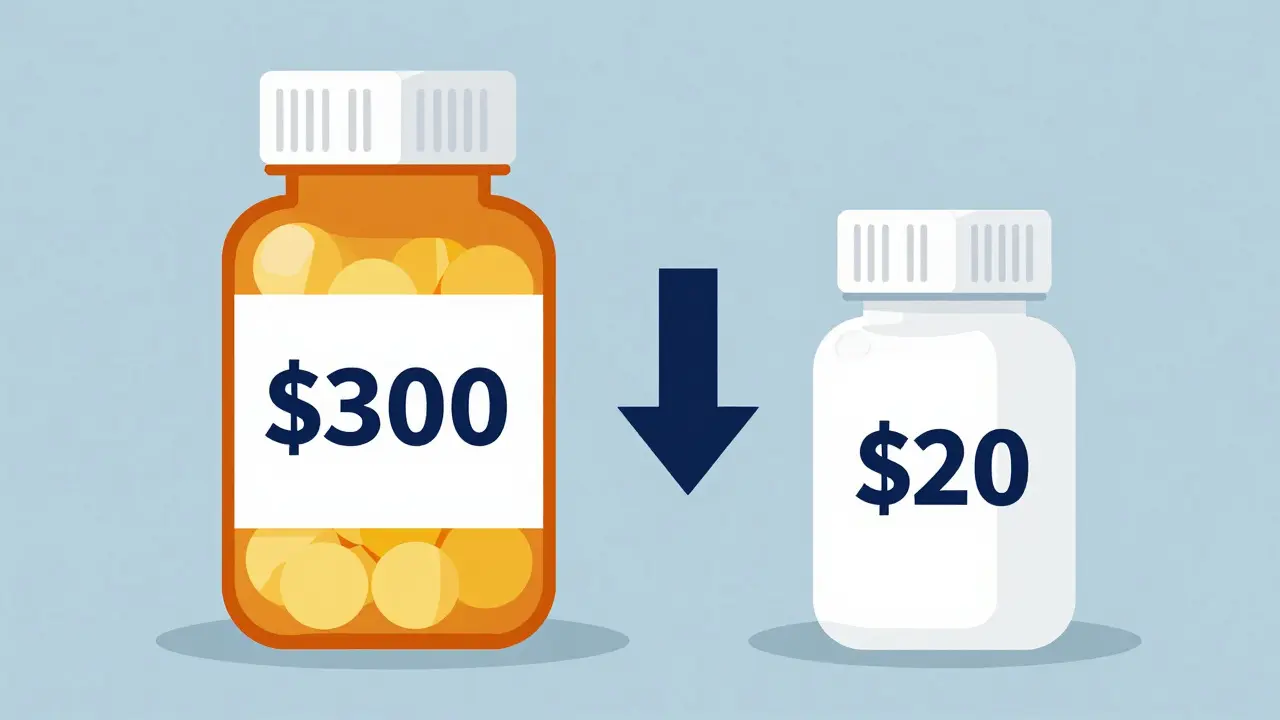
When a new generic enters the market via the Abbreviated New Drug Application (ANDA) pathway, the price of the brand-name drug usually plummets. According to FDA data, prices often drop by more than 70% once a generic is approved. This creates a massive spike in savings, but the amount fluctuates every year based on which "blockbuster" drugs lose their patent protection.For example, look at the "first generic" approvals-these are the very first generic versions of a drug that previously had no competition. The savings in this category are a bit of a rollercoaster:
- 2019: A massive peak, generating $7.10 billion in savings.
- 2020: A sharp dip, dropping to $1.10 billion.
- 2022: A strong recovery, climbing back up to $5.2 billion.
The Big Picture: Total Market-Wide Savings
While the FDA focuses on the "new," the AAM looks at the total volume of generics in the U.S. healthcare system. This number is far larger because it includes every generic drug being used, not just the ones approved in the last year.In 2023, generics and biosimilars (which are essentially generic versions of complex biological drugs) saved the U.S. a staggering $445 billion. To put that in perspective, the cumulative savings from 2014 to 2023 reached $3.1 trillion.
These savings aren't just theoretical numbers on a spreadsheet; they are distributed across different types of payers. In 2023, the breakdown looked like this:
| Payer Group | Total Savings | Note |
|---|---|---|
| Commercial Market | $206 Billion | Approx. 48% of all drug savings |
| Medicare | $137 Billion | Averages $2,672 per beneficiary |
| Medicaid | $102 Billion | Significant state-level impact |
Where the Money Actually Goes: Disease Areas
Not all medical conditions benefit equally from generic entry. The biggest savings happen where the volume of patients is highest and the brand-name costs were previously oppressive. Heart disease is the biggest winner, with generic drugs saving patients $118.1 billion in 2023. Mental health treatments followed with $76.4 billion, and cancer treatments saw $25.5 billion in savings.This geographic distribution is also striking. In larger states like California, the savings are astronomical-Medi-Cal alone reported $23.4 billion in savings. Smaller states like Alaska see a more modest but still vital $354 million. It all comes down to population size and the prevalence of chronic conditions in those areas.
The Catch: Do Patients Always See the Savings?
Here is the part that often frustrates patients: just because the FDA approves a generic and the "market price" drops doesn't mean your pharmacy copay drops instantly. There is a complex middleman involved called the Pharmacy Benefit Manager (PBM).PBMs negotiate rebates and decide which drugs are on the "preferred" list for insurance plans. A 2023 Senate Finance Committee investigation found a worrying trend: only 50-70% of the savings generated by generic entry actually reach the consumer. The rest often gets absorbed by the PBMs or insurance companies in the form of rebates. While pharmacists report that 92% of generic prescriptions are filled for $20 or less, the bridge between market savings and patient pockets is still leaky.
The Future: Biosimilars and Complex Generics
For years, generics were mostly "small molecule" drugs-simple chemical structures that are easy to copy. But the industry is shifting toward biologics. These are massive, complex molecules grown in living cells. They can't be perfectly copied, so we use biosimilars.As of August 2024, the FDA has approved 59 biosimilars. While their current savings are modest compared to the trillions saved by traditional generics, they are the next big frontier. The FDA is currently working on draft guidance to speed up the approval of "complex generics," which are drugs that are harder to manufacture but could unlock another wave of billions in savings.
The projection for the next few years is optimistic. The AAM expects cumulative savings to hit $3.9 trillion by 2028. However, this depends on the FDA's ability to fight "anticompetitive practices"-tactics some brand-name companies use to block generics from entering the market, such as manipulating risk evaluation and mitigation strategies (REMS).
What is the difference between FDA and AAM savings reports?
The FDA reports the immediate savings generated in the first 12 months after a new generic drug is approved. The AAM reports the total annual savings from all generic drugs currently available in the U.S. market, regardless of when they were approved.
Why do generic drug savings fluctuate so much from year to year?
Savings are heavily dependent on "patent cliffs." If several high-revenue blockbuster drugs lose their patent protection in a single year, the savings spike (like in 2019). If only niche drugs are approved, the savings are much lower (like in 2020).
Do all patients get the benefit of generic drug price drops?
Not always. While the overall cost to the healthcare system drops, Pharmacy Benefit Managers (PBMs) and insurance structures can prevent those savings from reaching the patient. Only about 50-70% of savings typically flow through to the consumer.
What is the ANDA pathway?
The Abbreviated New Drug Application (ANDA) is the regulatory pathway established by the Hatch-Waxman Act of 1984. It allows generic manufacturers to gain FDA approval by proving their drug is bioequivalent to the brand-name version without having to repeat all the original clinical trials.
What are biosimilars and how do they differ from generics?
Generics are exact chemical copies of small-molecule drugs. Biosimilars are nearly identical versions of complex biological medicines. Because biologics are made from living organisms, they can't be perfectly copied, so biosimilars are designed to be "highly similar" in effect and safety.