
End-Stage Renal Disease: Dialysis, Transplant, and Quality of Life
 Mar, 3 2026
When your kidneys stop working, your body can’t clean itself. Toxins build up. Fluid piles up. Blood pressure goes haywire. This isn’t just feeling tired - this is end-stage renal disease (ESRD), where your kidneys have lost about 90% of their function. Without treatment, you won’t survive. But treatment isn’t one-size-fits-all. You have choices: dialysis, transplant, or both. And each one changes your life in ways most people never think about.
What Exactly Is End-Stage Renal Disease?
ESRD isn’t a sudden event. It’s the final stage of kidney disease that creeps up over years, often from diabetes or high blood pressure. About 44% of new cases come from uncontrolled diabetes. Another 28% are from long-term high blood pressure. Other causes? Autoimmune diseases like lupus, inherited conditions like polycystic kidney disease, or even long-term drug use. The numbers don’t lie: in the U.S., nearly 800,000 people are living with ESRD. Most of them - 71% - are on dialysis. About 29% have a working transplant. But here’s the truth no one talks about: if you’re waiting for a transplant, your odds aren’t great. Over 90,000 people are on the waiting list. Only 27,000 transplants happen each year. That means you’re likely to wait years. And while you wait, your body is slowly breaking down.
Dialysis: The Lifeline That Takes Your Life
Dialysis isn’t a cure. It’s a mechanical replacement. It filters your blood when your kidneys can’t. There are two main types: hemodialysis and peritoneal dialysis.
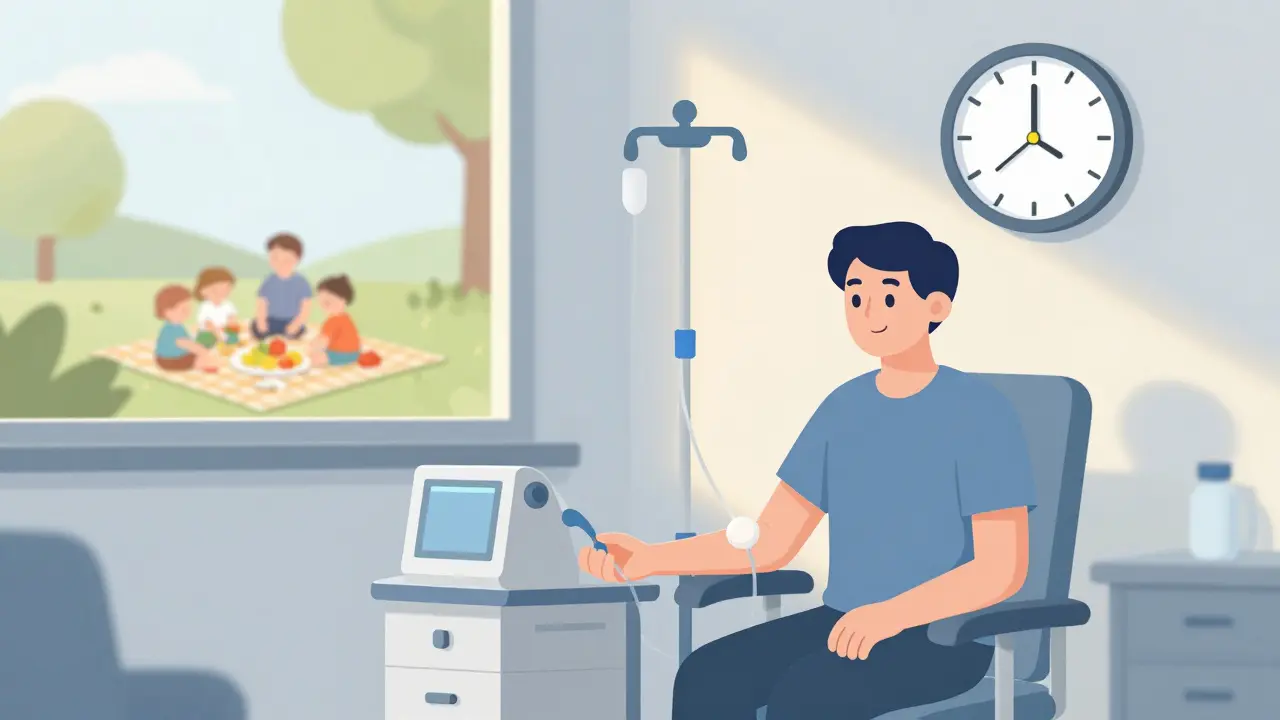
Hemodialysis is the most common. You sit in a clinic three times a week for 3 to 4 hours each time. A machine pulls your blood out, cleans it, and puts it back. It sounds simple, but the toll is real. You need a fistula - a surgically created connection between an artery and vein - usually placed 6 to 12 months before dialysis starts. Why? Because it needs time to mature. If you wait too long, you might end up with a catheter in your neck or chest. That’s a high-risk setup. Infections happen. Blood clots form. And you’re tied to a machine for 12 to 16 hours every week - just for treatment. Add travel time, recovery, and feeling wiped out afterward, and that’s nearly a full workday gone every week.
Peritoneal dialysis happens at home. You fill your belly with fluid through a catheter. The lining of your abdomen acts like a filter. You do this 4 times a day, or overnight with a machine. It’s more flexible. You can travel easier. But it’s not easy. You have to be meticulous. One mistake, and you get peritonitis - a dangerous belly infection. About 14% of new dialysis patients now do home dialysis. That’s up from 8% in 2015. But most still go to clinics. Why? Fear. Lack of training. Or just not being told it’s an option.
The numbers don’t lie: dialysis patients live 5 years on average. Only 35% survive past 5 years. And the cost? Medicare spends $35 billion a year on ESRD care. That’s 7.2% of its entire budget - for just 1% of its patients. That’s not sustainable. And it’s not fair.

Kidney Transplant: The Best Option You’re Not Told About
If dialysis is a lifeline, a kidney transplant is a second chance. It’s not just better - it’s dramatically better. A transplant cuts your risk of death by 68% compared to staying on dialysis. Five-year survival? 83% for transplant recipients. For dialysis patients? 35%. That’s not a slight improvement. That’s a life-or-death gap.
Transplant recipients also live better. They have fewer dietary restrictions. No more strict limits on potassium, phosphorus, or fluids. They sleep better. They work more. They travel. They play with their grandkids. A 2021 study found transplant patients scored 28.7 points higher on a quality-of-life survey than those on hemodialysis. Peritoneal dialysis patients scored in between. But transplant isn’t magic. You take immunosuppressant drugs every single day for the rest of your life. These drugs stop your body from rejecting the new kidney - but they also make you more vulnerable to infections, cancers, and other illnesses. Monthly costs? $1,500 to $2,500. That’s a heavy burden, even with insurance.
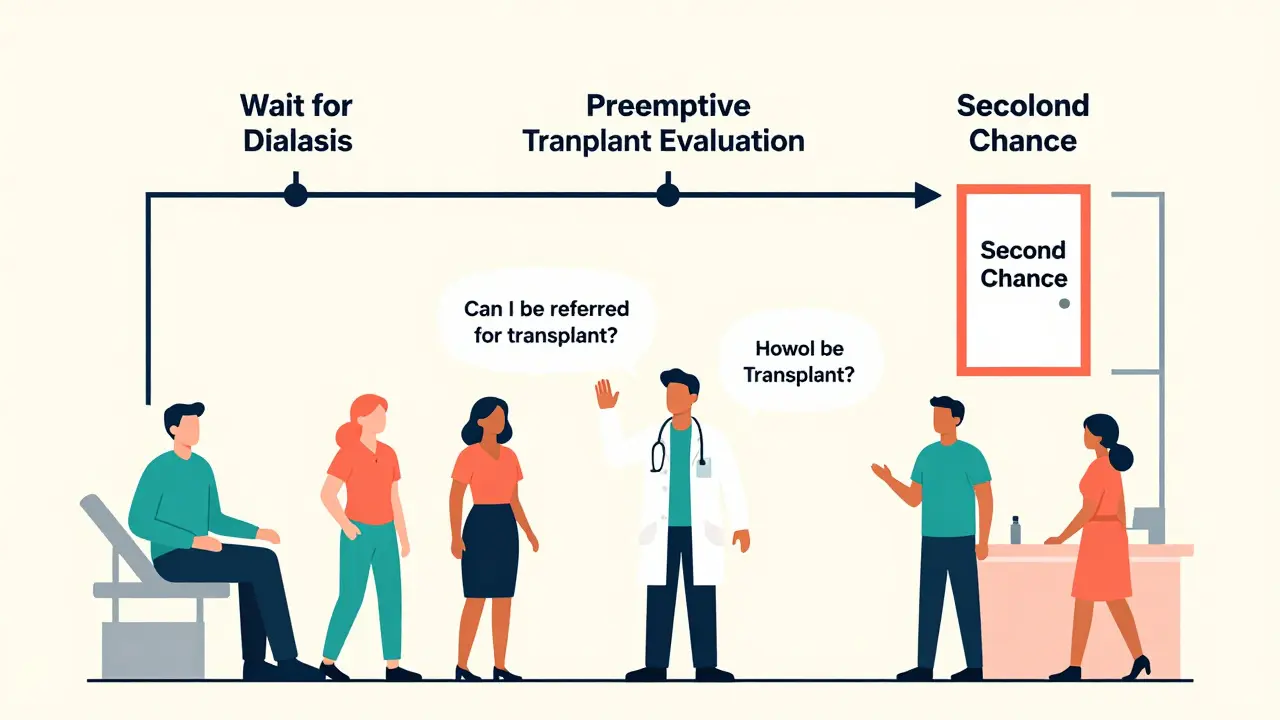
And here’s the hardest truth: not everyone gets the chance. Only 5% of people who start dialysis were ever referred for transplant evaluation before dialysis began. That’s called a preemptive transplant. It’s the gold standard. The best outcomes come from transplants done before you ever touch a dialysis machine. But most doctors wait until you’re sick. Why? Because the system doesn’t reward early action. Medicare doesn’t cover transplant evaluation until you’re already on dialysis. The waiting list grows. And the clock ticks.
Who Gets a Transplant - And Who Doesn’t?
Transplant isn’t for everyone. If you’re over 75 with severe heart disease, active cancer, dementia, or uncontrolled addiction, you won’t qualify. But that’s not the whole story. The real problem is bias.
The RaDIANT Community Study found African American patients were far less likely to be referred for transplant, even when they had the same medical need as white patients. In one group, only 8.5% of Black patients were referred. After education programs for doctors and patients, that jumped to 12%. For white patients, it went from 12.3% to 15%. That’s a 40% increase for Black patients - but still a gap. The system isn’t broken. It’s biased.
Living donor transplants are the best. They last longer. Survival rates are higher. One-year graft survival? 95.5% for living donor kidneys. For deceased donor? 93.7%. Five-year survival? 86% vs. 78.5%. But finding a living donor isn’t easy. It’s a big ask. And many people don’t even know they can be a donor. That’s changing. Living donor transplants rose 18% between 2018 and 2022. More people are stepping up. But we need more.
What You Need to Do - Right Now
If you have advanced kidney disease - say, a GFR below 30 - don’t wait. Ask your doctor: "Can I be referred to a transplant center?" Don’t wait for dialysis. Don’t wait until you’re sick. The clock starts ticking the moment your kidneys fail. Early referral gives you time to get evaluated, find a donor, and possibly get a transplant before dialysis ever starts.
Ask about home dialysis too. If you’re going to be on dialysis, make it your own. Learn about peritoneal dialysis. Talk to nurses. Ask if your clinic supports home hemodialysis. You have more control than you think.
And if you’re healthy enough to be a donor? Consider it. One kidney can save a life. You don’t need to be related. You don’t need to be perfect. You just need to be willing.
The Bottom Line
ESRD isn’t a death sentence. But your treatment choice decides how you live. Dialysis keeps you alive. Transplant lets you live. The data is clear: transplant wins on survival, quality of life, cost, and freedom. But the system doesn’t make it easy. You have to fight for it. You have to ask. You have to push. Because if you wait, you might not get the chance.
There’s no magic pill. No easy fix. But there is hope - if you know where to look.
Can you live a normal life after a kidney transplant?
Yes - but "normal" changes. Most transplant recipients return to work, travel, exercise, and enjoy meals without strict kidney diets. You’ll need to take immunosuppressant drugs daily for life, avoid infections, and get regular blood tests. Hospital visits drop by 50% compared to dialysis. Many report better sleep, more energy, and fewer restrictions. But you can’t stop monitoring your health. A transplant isn’t a cure - it’s a long-term commitment.
How long do kidney transplants last?
Living donor kidneys last longer. On average, they work for 15 to 20 years. Deceased donor kidneys last 10 to 15 years. The 5-year graft survival rate is 86% for living donor transplants and 78.5% for deceased donor transplants. That means most people don’t need a second transplant. But some do. Rejection, infections, or side effects from medications can lead to graft failure. If that happens, you can go back to dialysis and re-list for another transplant.
Why are so few people referred for transplant before dialysis?
The system is built around dialysis. Medicare only starts covering transplant evaluation after you’ve been on dialysis for 3 months. Doctors often wait until you’re clearly sick. Many don’t know the guidelines recommend referral at a GFR below 30. There’s also a fear of "giving false hope" - but delaying evaluation means losing time. Preemptive transplants have the best outcomes. The system needs to change - and patients need to ask.
Is home dialysis better than clinic dialysis?
For many, yes. Home dialysis - whether peritoneal or hemodialysis - gives you control over your schedule. You can do it while sleeping, at work, or while traveling. You avoid the clinic’s rigid hours and reduce infection risk. Studies show home dialysis patients have better survival rates and higher quality of life scores than those on in-center hemodialysis. But it requires training, space, and support. Not everyone can do it. But if you’re told you can’t, ask why. You might be surprised.
What are the biggest barriers to getting a kidney transplant?
The biggest barriers are time, access, and bias. The waitlist is over 90,000 people. Only 27,000 transplants happen each year. You might wait 4 years or more. Racial disparities persist - Black and Hispanic patients are less likely to be referred. Financial stress, lack of insurance, transportation, and distrust in the medical system also play a role. Many don’t know they can be evaluated even without a donor. You don’t need a donor to start the process. You just need to ask.
Levi Viloria
March 3, 2026 AT 16:22Most people don’t realize how much dialysis eats into your life. I’ve seen friends go from working full-time to barely leaving the house. It’s not just the time-it’s the fatigue, the nausea, the constant fear of something going wrong with the access. And transplant? It’s not a magic bullet, but it’s the closest thing we have to reclaiming your life.
Dean Jones
March 4, 2026 AT 20:47The systemic failure here isn’t just medical-it’s economic and bureaucratic. Medicare won’t cover transplant evaluation until you’ve been on dialysis for three months? That’s not a policy, that’s a death sentence for people who can’t afford to wait. The fact that preemptive transplants have 68% lower mortality rates and we still delay them speaks to a system that prioritizes cost over care. We’re not treating kidney failure. We’re managing a slow-motion crisis.
And don’t get me started on the racial disparities. The RaDIANT study didn’t just show bias-it exposed how institutional inertia normalizes inequity. Black patients aren’t being overlooked because they’re less qualified. They’re being overlooked because the system wasn’t designed to see them as candidates. Training programs helped, but only slightly. Real change requires dismantling the referral gatekeepers, not just adding workshops.
Home dialysis is underutilized because clinics don’t profit from it. It’s cheaper, safer, and better for patients. But hospitals make money off in-center hemodialysis. That’s why it’s still the default. Profit drives practice, not outcomes. And patients? They’re told they’re lucky to be alive. But they’re not living-they’re surviving.
We need policy changes that incentivize early referral. We need insurance reform that covers transplant evaluation at GFR 30, not 15. We need public campaigns that normalize living donation. And we need to stop calling this a medical issue. It’s a moral one.
Shivam Pawa
March 6, 2026 AT 13:34From India, I’ve seen how transplant access is a luxury. Even if you’re eligible, the wait is years. And the cost of immunosuppressants? Unaffordable for most. We need global solutions-not just American-centric ones. Dialysis machines are expensive, but transplant infrastructure is even scarcer outside the West. The system isn’t broken-it’s segregated by geography.
Donna Zurick
March 7, 2026 AT 11:37If you’re reading this and you’re healthy-consider being a donor. One kidney. One conversation. One life changed forever. It’s not as scary as people think. I know someone who donated to a stranger. Said it was the best thing they ever did. You don’t have to be a hero. Just be willing.
Tobias Mösl
March 7, 2026 AT 21:12This whole system is a scam. Dialysis is a $35 billion/year industry. Transplant? It’s a one-time cost. Who benefits? Hospitals. Pharma. Insurance companies. They want you on dialysis forever because you’re a recurring revenue stream. They don’t want you transplanted because you stop spending money on them. The ‘medical community’ isn’t helping you-they’re profiting from your suffering. Wake up.
And don’t let them fool you with ‘quality of life’ stats. They don’t care how you feel. They care about your insurance code. You’re not a patient. You’re a line item.
tatiana verdesoto
March 9, 2026 AT 08:48I work in nephrology. I’ve seen people go from bedridden to running marathons after transplant. I’ve also seen people die waiting because they were told ‘it’s too risky’ or ‘you’re not a good candidate.’ The truth? Too many doctors are scared to refer. Too many patients are scared to ask. This isn’t about medicine. It’s about courage. Ask. Push. Demand. You deserve more than a machine.
Ethan Zeeb
March 9, 2026 AT 17:38Home dialysis is viable for maybe 10% of patients. The rest need structure, supervision, and trained staff. You can’t just tell someone with diabetes, neuropathy, and poor vision to perform sterile exchanges at 3 a.m. That’s not empowerment-that’s negligence. The system isn’t perfect, but it’s designed for safety. Not everyone can be a self-managing patient. And pretending they can is dangerous.
Lebogang kekana
March 10, 2026 AT 04:36I’m from South Africa. We have one public transplant center for 60 million people. Private hospitals charge $100k. That’s not healthcare. That’s a lottery. People die waiting because they can’t afford to be seen. This isn’t just an American problem-it’s a global one. The rich get organs. The poor get dialysis. And we call it progress?
Jessica Chaloux
March 11, 2026 AT 17:22I lost my brother to this. He was on dialysis for 4 years. He was 32. They told him he wasn’t a transplant candidate because of his weight. He lost 80 pounds. They still said no. He died waiting. Now I cry every time I see a kidney ad. I wish I’d known sooner. You have to fight. Fight harder than they think you can.
Mariah Carle
March 12, 2026 AT 21:39Is it possible that kidneys are just… mirrors? That when we refuse to donate, we’re refusing to see ourselves in others? That the real disease isn’t renal failure-it’s the disease of disconnection? We’re all just temporary vessels. Maybe the only way to transcend mortality is to give a part of yourself away. Just a thought.
Callum Duffy
March 14, 2026 AT 13:55While the data is compelling, I remain cautious about overstating transplant superiority. The long-term immunosuppression burden is non-trivial. Infections, malignancies, metabolic complications-these are not minor trade-offs. A patient’s individual context-age, comorbidities, psychosocial support-must be weighed. Transplant is not universally preferable. It is contextually optimal.
John Cyrus
March 15, 2026 AT 10:02People need to stop whining and take responsibility. If you’re diabetic and don’t control your sugar, you get what you deserve. If you’re obese and don’t lose weight, don’t cry when they say no transplant. Stop blaming the system. Start fixing yourself. I’ve seen too many people waste years on dialysis because they refused to change. The system isn’t the problem. You are.
Helen Brown
March 16, 2026 AT 21:23Did you know the government is secretly using dialysis machines to track people’s movements? They’re collecting data to build a national health surveillance system. Transplant waiting lists? They’re not about organs-they’re about controlling who gets access to medical tech. The CDC and NIH are in on it. Ask your doctor. They won’t tell you the truth.
Raman Kapri
March 18, 2026 AT 01:56Transplant survival rates are inflated. They exclude patients who die within 30 days post-op. They count graft survival as kidney function, not patient survival. And living donor transplants? Many donors develop hypertension or proteinuria later. The narrative is sanitized. The truth is messier. We need transparency-not optimism.