
Codeine and CYP2D6 Ultrarapid Metabolizers: Why Standard Doses Can Be Deadly
 Aug, 1 2026
Codeine Risk & Prevalence Estimator
Select a group to see your risk profile.
Select your population group above to estimate the likelihood of being an ultrarapid metabolizer and view safety recommendations.
Imagine taking a standard dose of codeine for a toothache or post-surgery pain, only to find yourself struggling to breathe. For most people, this scenario is science fiction. But for a specific group of individuals known as CYP2D6 ultrarapid metabolizers, it is a very real, life-threatening possibility. The danger lies not in the pill itself, but in how your unique genetics process it.
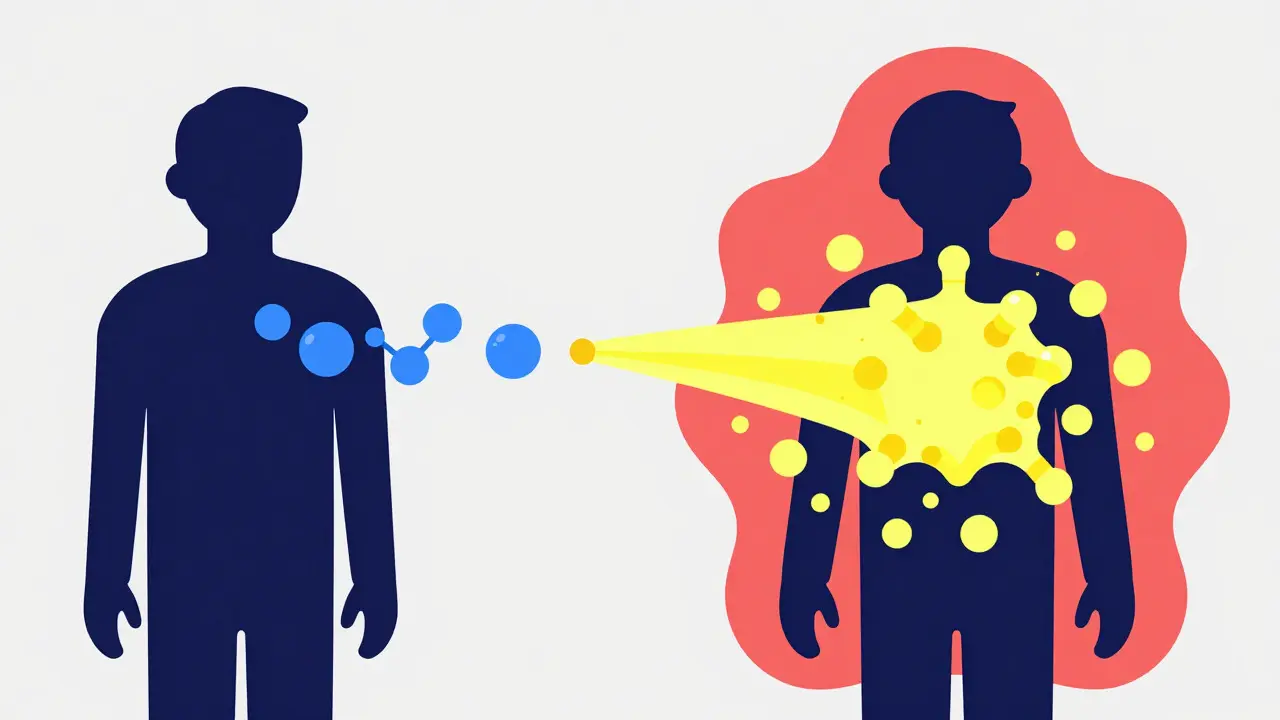
Codeine is what doctors call a prodrug. It is inactive on its own. Your body must convert it into morphine using an enzyme called CYP2D6 before you feel any pain relief. In ultrarapid metabolizers (UMs), this conversion happens up to four times faster than normal. This means that even a single recommended dose can flood your system with toxic levels of morphine, leading to respiratory depression, coma, or death.
How Genetics Dictate Drug Safety
The CYP2D6 enzyme is responsible for metabolizing approximately 25% of all clinically used drugs, including many antidepressants and opioids. However, the gene that creates this enzyme is highly variable across the human population. Some people have genes that produce little to no enzyme (poor metabolizers), while others have extra copies of the gene (ultrarapid metabolizers).
If you are an ultrarapid metabolizer, you likely possess multiple functional copies of the CYP2D6 gene, such as the *1/*1xN or *2/*2xN genotypes. These genetic variants act like turbochargers for the enzyme. When you take codeine, your liver doesn't just slowly release morphine; it dumps it into your bloodstream almost immediately. Clinical studies show that UMs convert codeine to morphine at rates 3.5 to 4.5 times higher than "normal" metabolizers.
This biological reality was highlighted by the U.S. Food and Drug Administration (FDA) in 2013. After reviewing 64 case reports of serious adverse events-including 24 deaths-the FDA issued a strict drug safety communication. Of those deaths, 21 occurred in children under 12. The data made one thing clear: standard dosing charts do not account for genetic outliers, and for UMs, "standard" is dangerous.
Recognizing the Signs of Morphine Toxicity
Because codeine converts so rapidly in these patients, symptoms of overdose can appear quickly, often within hours of ingestion. You might mistake early signs for a strong reaction to the medication rather than toxicity. Here is what to watch for:
- Extreme sleepiness (somnolence): Feeling unable to stay awake, even when stimulated.
- Difficulty breathing: Shallow breaths or pauses in breathing (respiratory depression).
- Nausea and vomiting: Persistent upset stomach that doesn't resolve with anti-nausea meds.
- Pinpoint pupils: Constricted eyes that don't react normally to light.
- Cold, clammy skin: A sign of circulatory shock.
In the FDA’s review of fatal cases, blood tests revealed that 13 out of 15 patients had morphine levels far above the therapeutic range. This confirms that the toxicity wasn't due to accidental overdose from taking too many pills, but rather the body's own efficient machinery turning a mild painkiller into a potent narcotic.
Who Is at Risk? Ethnicity and Prevalence
Your risk of being an ultrarapid metabolizer depends heavily on your ancestry. The CYP2D6 gene variants are not distributed evenly across the globe. Understanding this distribution helps explain why certain populations face higher risks:
| Population Group | Estimated Prevalence of UMs |
|---|---|
| North Africans & Ethiopians | Up to 29% |
| Europeans | 3% - 7% |
| Australians | Approximately 3% |
| East Asians | 1% - 2% |
For example, if you have North African heritage, there is nearly a 1 in 3 chance you are an ultrarapid metabolizer. In contrast, someone of East Asian descent has a much lower probability. This ethnic variation is critical for clinicians prescribing codeine without prior genetic testing. It also explains why global regulatory agencies, including the European Medicines Agency (EMA) and New Zealand’s Medsafe, have tightened restrictions on codeine use, particularly in children.

The Regulatory Shift: From Common Painkiller to Restricted Drug
Before 2013, codeine was widely prescribed for minor pain and cough suppression. Today, its status has changed dramatically. The FDA mandated a boxed warning-the strongest type of warning-for all codeine-containing products. The label explicitly states that respiratory depression and death have occurred in children who were CYP2D6 ultrarapid metabolizers.
The impact was immediate. Between 2012 and 2015, pediatric codeine prescriptions in the United States dropped by 50%. The American Academy of Pediatrics now strongly advises against using codeine for post-tonsillectomy pain, a common procedure where several tragic deaths occurred among UMs. The Clinical Pharmacogenetics Implementation Consortium (CPIC) updated their guidelines in 2020 to be even clearer: if a patient has a CYP2D6 activity score greater than 2.25, codeine should not be used at all.
Safer Alternatives to Codeine
If you suspect you might be an ultrarapid metabolizer, or if you have a family history of unusual reactions to opioids, talk to your doctor about alternatives. The goal is to choose medications that do not rely on the CYP2D6 enzyme for activation.
Here are safer options often recommended by CPIC and other health bodies:
- Morphine: Since it is already active, it does not need conversion. Dosage can be controlled precisely.
- Hydromorphone: Another potent opioid that bypasses the CYP2D6 pathway.
- Fentanyl: Used for severe pain, it is metabolized differently and offers predictable effects.
- Non-opioid analgesics: Ibuprofen, acetaminophen, or NSAIDs for mild to moderate pain.
Note that some alternatives like hydrocodone and oxycodone still undergo partial metabolism via CYP2D6. While they are generally considered safer than codeine for UMs, they may still pose a slight risk compared to non-CYP2D6 dependent drugs. Always discuss your full medical history with your prescriber.

Should You Get Genetic Testing?
Pharmacogenetic testing for CYP2D6 is becoming more accessible. These tests analyze your DNA to determine your metabolizer status. The cost typically ranges from $200 to $500, though insurance coverage varies. Many academic medical centers in the U.S. are beginning to implement pre-emptive testing, meaning your results are stored in your electronic health record for future reference.
While waiting for results can take 3 to 14 days with traditional lab testing, new point-of-care technologies are being developed. The NIH recently funded research to create rapid genotyping tools that could provide results in under two hours. Until then, if you are prescribed codeine, ask your doctor: "Is this safe given my potential genetic profile?" If you experience extreme drowsiness or breathing issues after taking codeine, seek medical attention immediately and inform your provider about the reaction.
Conclusion: Personalized Medicine Saves Lives
The story of codeine and CYP2D6 ultrarapid metabolizers is a powerful example of why one-size-fits-all medicine is failing us. By understanding our genetic makeup, we can avoid preventable tragedies. Whether you are a patient advocating for safer prescriptions or a clinician refining your practice, recognizing the link between genetics and drug metabolism is essential. As Dr. Mary Relling of St. Jude Children's Research Hospital noted, codeine may soon become a "drug of historical interest" as personalized medicine takes center stage. Stay informed, test if necessary, and never hesitate to question a prescription that feels wrong.
What is a CYP2D6 ultrarapid metabolizer?
A CYP2D6 ultrarapid metabolizer is a person whose genetic makeup causes them to break down certain drugs, like codeine, much faster than average. This is usually due to having extra copies of the CYP2D6 gene, which leads to higher levels of active metabolites in the blood.
Can codeine kill an ultrarapid metabolizer?
Yes. Because ultrarapid metabolizers convert codeine to morphine so quickly, even a standard dose can lead to toxic morphine levels. This can cause severe respiratory depression, coma, and death, as documented in numerous case reports reviewed by the FDA.
Which ethnic groups are most likely to be ultrarapid metabolizers?
People of North African and Ethiopian descent have the highest prevalence, with up to 29% being ultrarapid metabolizers. Europeans and Australians have a prevalence of around 3-7%, while East Asians have the lowest rate at 1-2%.
What are safer alternatives to codeine for pain relief?
Safer alternatives include non-opioid pain relievers like ibuprofen or acetaminophen. For stronger pain, opioids that do not rely on CYP2D6 for activation, such as morphine, hydromorphone, or fentanyl, are recommended by clinical guidelines.
How can I find out if I am an ultrarapid metabolizer?
You can request a pharmacogenetic test for CYP2D6 from your healthcare provider. These tests analyze your DNA to determine your metabolizer status. Results typically take 3-14 days, but rapid testing options are being developed.
Why did the FDA restrict codeine use in children?
The FDA restricted codeine in children after reviewing cases where children who were ultrarapid metabolizers died from respiratory depression after receiving standard doses. Most of these deaths occurred following tonsillectomies or adenoidectomies.
Does tramadol have the same risk as codeine?
Yes. Like codeine, tramadol is a prodrug that requires CYP2D6 to convert into its active form. The CPIC guidelines recommend avoiding both codeine and tramadol in ultrarapid metabolizers to prevent severe toxicity.