
Black Box Warnings: What You Need to Know About the FDA’s Strongest Drug Safety Alerts
 Dec, 1 2025
Black Box Warning Knowledge Check
How well do you understand FDA black box warnings?
These are the strongest safety alerts the FDA issues. Take this quiz to learn about what they mean for your medications.
1. What is a black box warning?
2. True or false: Black box warnings mean you should never take the medication?
3. Which of these is a common reason for a black box warning?
Results
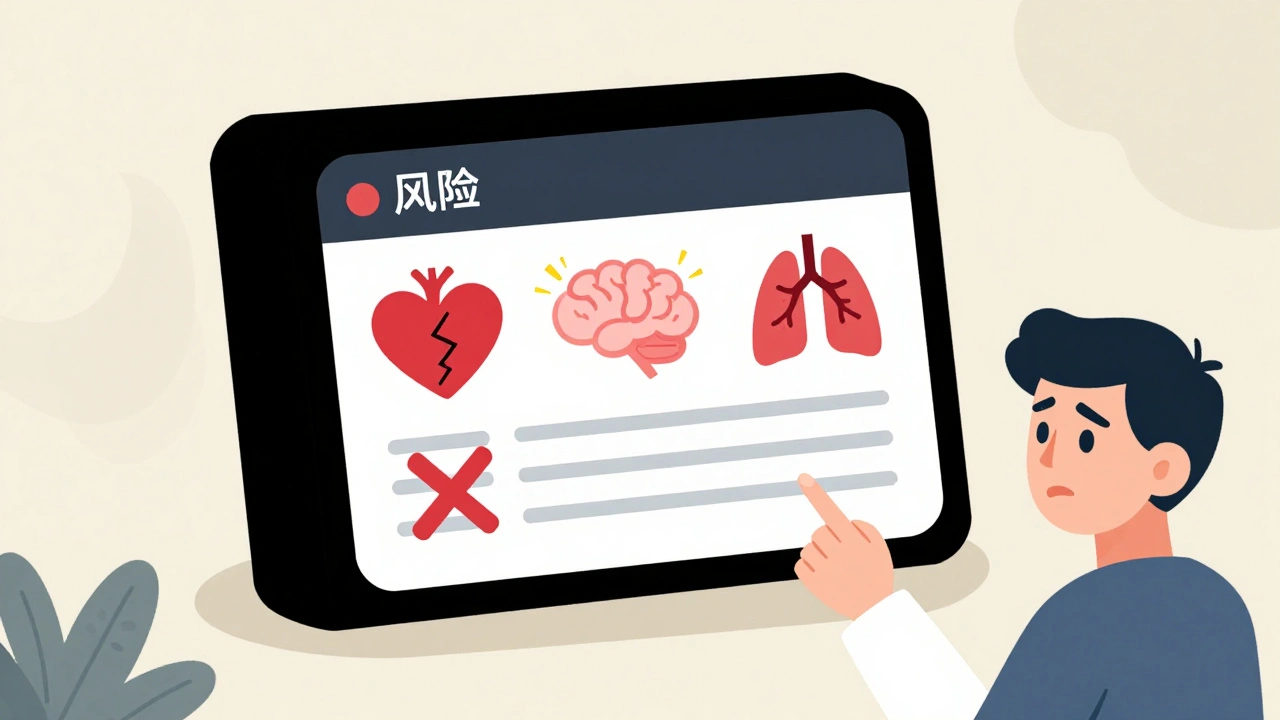
When you pick up a prescription, you might not notice the small black rectangle on the drug’s label. But that box? It’s the FDA’s loudest alarm bell. A black box warning is the strongest safety alert the U.S. Food and Drug Administration can issue. It doesn’t mean the drug is unsafe for everyone - but it does mean that for some people, the risks are serious enough to be life-threatening.
What Exactly Is a Black Box Warning?
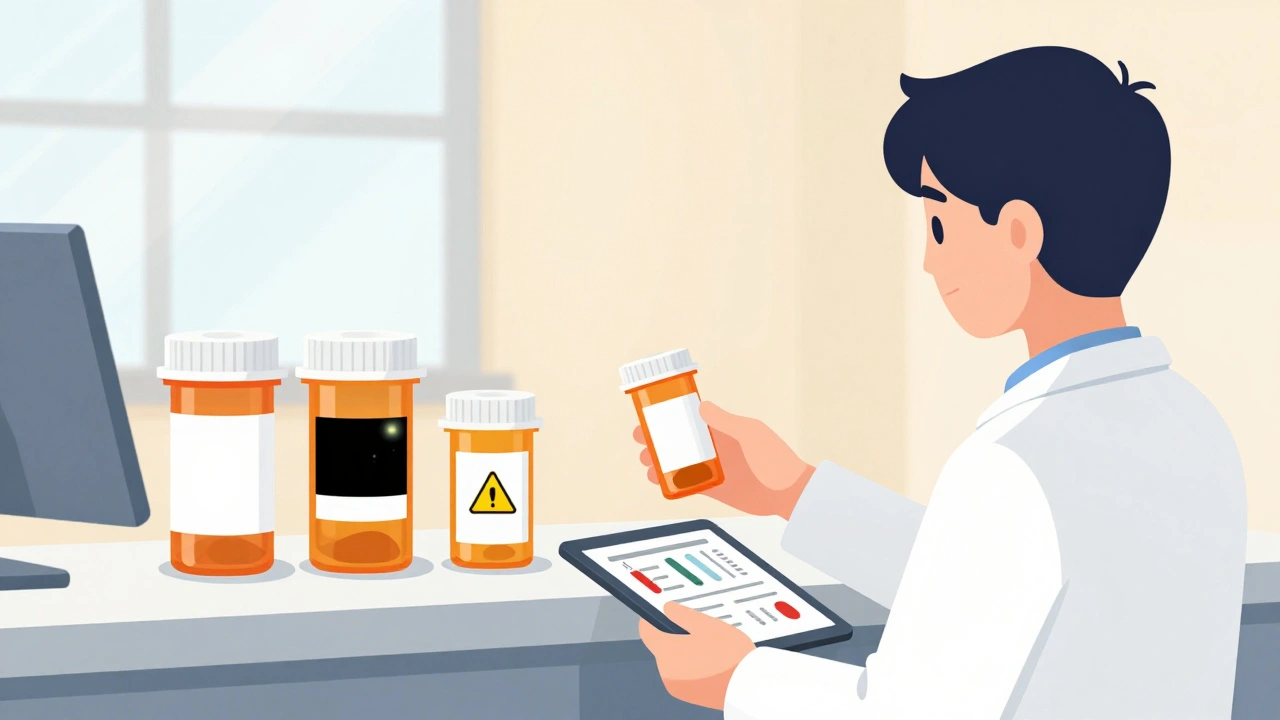
A black box warning is a bold, black-bordered box placed right at the start of a drug’s official prescribing information. It’s not buried in fine print. It’s front and center. The FDA requires this format to make sure doctors and patients can’t miss it. These warnings appear on prescription drugs only - not over-the-counter meds or supplements.
The warning isn’t vague. It names the specific danger. For example, some antidepressants carry a black box warning for increased risk of suicidal thoughts in young adults. Certain diabetes drugs warn of heart failure. Opioids carry warnings about addiction and respiratory depression. The FDA only puts these warnings on drugs when data shows a clear, serious risk - one that could lead to death or permanent injury.
As of 2022, more than 400 prescription medications in the U.S. carried a black box warning. That’s not a small number. And it’s growing. Most of these warnings are added after a drug is already on the market, based on real-world use. That’s because some dangers only show up when thousands or millions of people take the drug over time.
How Does the FDA Decide to Add a Black Box Warning?
The FDA doesn’t rush these decisions. It takes years of data. First, drugs go through clinical trials - usually three phases - before approval. But trials involve a few thousand people at most. Real life? Millions. That’s where post-market surveillance kicks in.
The FDA tracks side effects through the FDA Adverse Event Reporting System (FAERS). Doctors, patients, and drug companies all report problems. When enough reports point to the same serious issue - like liver failure, heart attacks, or severe infections - the FDA investigates. If the evidence is strong enough, they require the manufacturer to add a black box warning.
There are three main reasons the FDA issues these warnings:
- The risk is so serious it might outweigh the benefits for some patients
- The harm can be reduced with careful use - like regular blood tests or avoiding other drugs
- Only certain people should take the drug - like those with specific health conditions or genetic traits
For example, the diabetes drug rosiglitazone got a black box warning in 2007 after studies linked it to heart attacks. Sales dropped by 70% in the next few years. But another similar drug, pioglitazone, got a similar warning later - and its use didn’t drop as much. Why? Because the media coverage around rosiglitazone was intense. The warning alone doesn’t always change behavior. Awareness matters.
What Does a Black Box Warning Actually Say?
It’s not just a scare tactic. The text inside the box is precise. It tells you exactly what the danger is, who’s at risk, and what to do about it.
Here’s what you might see:
- Contraindications: “Do not use in patients with severe heart failure.”
- Monitoring requirements: “Check liver function every 2 months during the first year.”
- Population restrictions: “Not recommended for patients under 18 due to increased risk of suicidal behavior.”
- Drug interactions: “Avoid use with alcohol or other CNS depressants.”
These aren’t suggestions. They’re medical instructions. Ignoring them can be dangerous.
Some drugs have multiple black box warnings. For instance, the antipsychotic clozapine warns of agranulocytosis (a dangerous drop in white blood cells), seizures, and myocarditis. Patients on clozapine must get weekly blood tests - no exceptions.
Are Drugs With Black Box Warnings Always Dangerous?
No. And that’s the biggest misunderstanding.
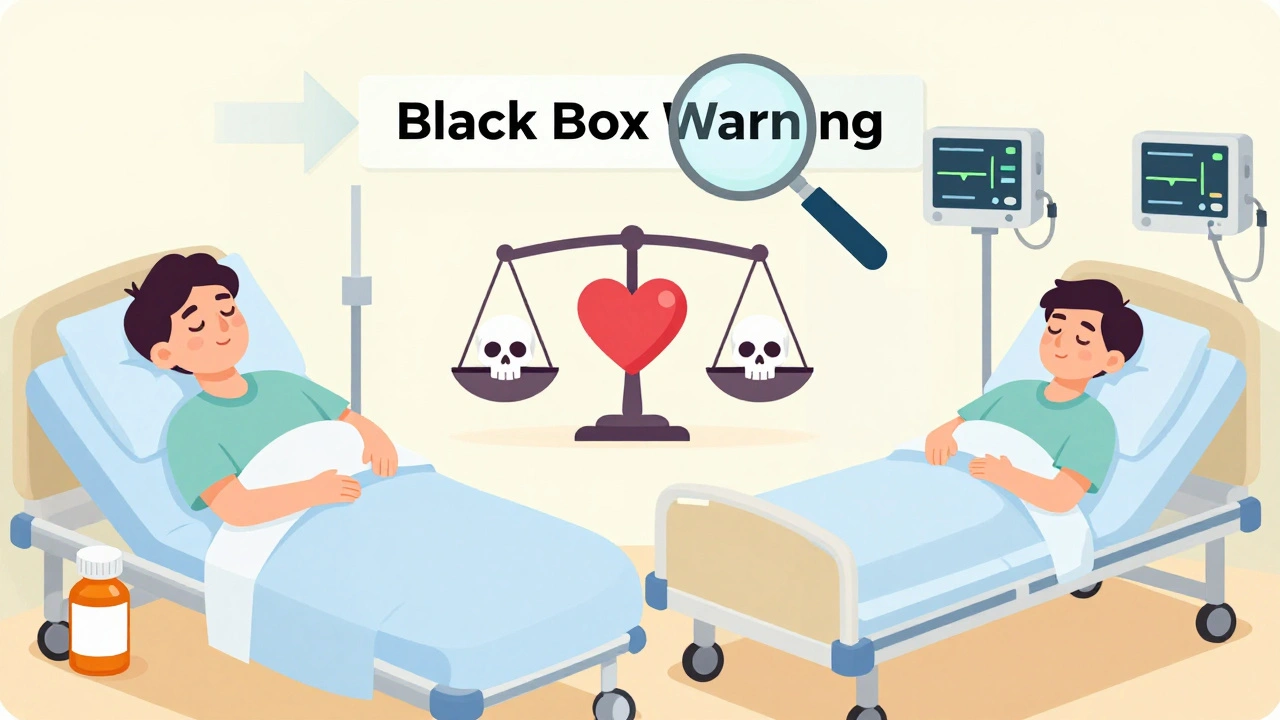
A black box warning doesn’t mean “never take this.” It means “take this with extreme caution - and only if the benefits outweigh the risks.”
Take methotrexate, used for rheumatoid arthritis and some cancers. It carries a black box warning for severe liver damage, lung problems, and bone marrow suppression. But for many patients, it’s the only drug that works. Without it, they’d face chronic pain or worse.
Same with fluoxetine (Prozac). It has a black box warning for increased suicide risk in young people under 25. But for many teens and young adults with severe depression, the benefit - avoiding suicide - far outweighs the risk.
As pharmacists and doctors say: “The warning isn’t a stop sign. It’s a caution sign.”
What Should You Do If Your Drug Has a Black Box Warning?
If you’re prescribed a drug with a black box warning, don’t panic. But do ask questions.
Here’s what to talk about with your doctor:
- What’s the specific risk? Is it common or rare?
- Am I in a high-risk group? (Age, other conditions, genetics)
- Are there tests I need? (Blood work, EKGs, liver scans)
- What signs should I watch for? (When to call the doctor immediately)
- Are there safer alternatives? What are the trade-offs?
Don’t rely on the internet alone. The FDA’s website has public safety communications, but your doctor knows your history. They can weigh your personal risk.
Also, report any side effects. Use the FDA’s MedWatch program. Whether you’re a patient or a provider, reporting helps the FDA spot new dangers faster.
How Effective Are These Warnings?
Not always. Studies show mixed results.
After the rosiglitazone warning, prescriptions dropped sharply - but not because patients understood the risk. It was because media coverage scared doctors into avoiding the drug entirely. For other drugs, like certain antidepressants, warnings had little effect on prescribing patterns.
Why? Because doctors are busy. Patients don’t always read labels. And sometimes, there’s no better alternative.
Experts like the American Academy of Family Physicians recommend using the STEPS approach when evaluating drugs with black box warnings:
- Safety
- Tolerability
- Effectiveness
- Price
- Simplicity
It’s not just about the warning. It’s about whether the drug actually helps - and whether the risks can be managed.
What’s Next for Black Box Warnings?
The FDA is working to make these warnings clearer. Right now, many warnings use vague terms like “may cause” or “risk of.” Experts want more precise language: “1 in 100 patients develop this side effect” instead of “rare risk.”
There’s also talk about better patient education - plain-language summaries, visual aids, and digital alerts when prescriptions are filled. The goal? To make sure the warning doesn’t just sit on a page - it changes behavior.
For now, the black box remains the most powerful tool the FDA has to flag life-threatening risks. It’s not perfect. But when used right - with honest conversations between doctors and patients - it saves lives.
Bottom Line
Black box warnings are serious. But they’re not scary for the sake of scaring. They’re there because someone, somewhere, died or was seriously hurt - and the FDA is trying to stop it from happening again.
If you’re on a drug with one, don’t stop taking it without talking to your doctor. But don’t ignore it either. Ask questions. Know the signs. Report side effects. And remember: the warning isn’t a verdict. It’s a conversation starter.
Do black box warnings mean I can’t take the medication?
No. A black box warning doesn’t mean the drug is banned or unsafe for everyone. It means the risks are serious and must be carefully weighed against the benefits. Many people take these medications safely with proper monitoring and guidance from their doctor.
How do I know if my prescription has a black box warning?
The warning appears in the official prescribing information, which your pharmacist or doctor can provide. It’s also listed in the FDA’s drug database and on reputable sites like DailyMed. Always ask your pharmacist to review the label with you when you pick up a new prescription.
Can a drug get a black box warning after it’s already been on the market?
Yes. In fact, most black box warnings are added after a drug is approved and used by thousands or millions of people. The FDA monitors safety through the FAERS system, and if new, serious risks appear, they can require the manufacturer to update the label - including adding a black box warning.
Are black box warnings only for prescription drugs?
Yes. Black box warnings apply only to prescription medications approved by the FDA. Over-the-counter drugs, supplements, and vitamins do not carry black box warnings, though they may have other safety labels.
What should I do if I experience a side effect from a drug with a black box warning?
Contact your doctor immediately. If the reaction is severe or life-threatening, go to the emergency room. Then, report the side effect to the FDA through MedWatch - either online or by phone. Your report helps the FDA track patterns and improve drug safety for everyone.
ATUL BHARDWAJ
December 3, 2025 AT 13:13Black box warnings are not scary. They are just facts. In India, we see drugs with similar risks but no warnings. People still take them. Because they have no choice. Medicine is not a luxury. It is survival.
Steve World Shopping
December 3, 2025 AT 15:02Let’s be real-the FDA’s black box warnings are just regulatory theater. Pharma companies bake in risk mitigation protocols pre-launch. The real issue? Lack of pharmacovigilance infrastructure in LMICs. We’re treating symptoms, not systems.
Rebecca M.
December 4, 2025 AT 20:42Oh wow, so now I’m supposed to trust a drug that has a warning bigger than my ex’s apology? 🙄
dave nevogt
December 5, 2025 AT 19:20It’s interesting how we treat these warnings like moral failings rather than data points. The black box isn’t a condemnation-it’s a mirror. It reflects the gap between controlled trials and the messy reality of human biology. We want drugs to be perfect. But medicine isn’t math. It’s negotiation. And sometimes, the only way to save a life is to walk right into the fire with your eyes open.
Arun kumar
December 7, 2025 AT 14:20bro i just found out my zoloft has a black box and now i dont know if i should keep taking it or not. like… its not like i have a choice. my brain is a mess without it. but also… what if?
Joel Deang
December 7, 2025 AT 20:34my pharmacist just handed me my script and said ‘this one’s got the black box’ and i was like… 😳 so i looked it up. turns out i’m in the ‘high risk’ group. but my doc says the benefits outweigh it. so i’m gonna keep going. 🤞
Roger Leiton
December 8, 2025 AT 15:51❤️ this is the kind of post that actually helps. i had no idea black box warnings were added after market release. that’s wild. and the STEPS thing? genius. bookmarking this for my next appt.
Laura Baur
December 8, 2025 AT 18:15Let’s be brutally honest: the FDA’s black box warnings are a failure of corporate accountability disguised as patient protection. The system doesn’t prevent harm-it just shifts liability. And while we’re busy reading boxes, the same pharmaceutical executives who pushed these drugs through clinical trials are collecting bonuses. The warning doesn’t fix the greed. It just makes you feel like you’re being warned. Meanwhile, the real problem-the profit-driven approval pipeline-remains untouched.
Jack Dao
December 9, 2025 AT 22:51People who take black box drugs are just gambling with their lives. If you’re dumb enough to use something with that kind of warning, don’t come crying when your liver gives out. You were warned. And yet-you still chose it. That’s not risk. That’s stupidity.
Lynn Steiner
December 11, 2025 AT 02:36I’m so tired of this ‘it’s not a stop sign, it’s a caution sign’ nonsense. If it’s life-threatening, why isn’t it banned? Why are we still letting people die so the drug companies can make billions? I’m not ‘scared’-I’m furious.
Paul Keller
December 13, 2025 AT 00:46I’ve been a pharmacist for 22 years. I’ve seen patients walk out of the pharmacy with a black box drug, read the warning, and cry. Not because they’re scared-but because they finally understand how much they’re risking just to feel normal. That’s not a failure of medicine. That’s the quiet heroism of being human. Don’t dismiss the warning. Honor it. And then, with your doctor, decide if the cost is worth the peace.
Shannara Jenkins
December 14, 2025 AT 03:18Just wanted to say-this was so clear and helpful. I’ve been on a black box drug for 3 years and never knew what to ask my doctor. Now I have a list. Thank you for writing this. 💛
Zed theMartian
December 14, 2025 AT 23:09Oh wow, so the FDA finally noticed that drugs can kill people? Groundbreaking. I’m sure the pharmaceutical lobby didn’t have anything to do with the 7-year delay on that warning. Meanwhile, my cousin died from the exact side effect they now warn about. But hey-at least we have a box now. 🎉
Ella van Rij
December 15, 2025 AT 16:57soo… the black box warning is like… the FDA’s version of a ‘proceed at your own risk’ sign? lol. i mean… if i had a dollar for every time someone said ‘it’s just a warning’ before they got hospitalized…