
Antihistamines and Dementia Risk: Are Your Allergy Pills Affecting Your Brain?
 Apr, 4 2026
Antihistamine Safety Checker
Select the medication you are currently using to check its cognitive safety profile based on the Anticholinergic Cognitive Burden (ACB) scale.
Analysis Result
Please select a medication from the list to see its impact on brain health.
The Acetylcholine Connection: Why It Matters
To understand the risk, we first have to look at how our brains communicate. Your brain relies on a neurotransmitter called acetylcholine, which is essentially the fuel for learning, memory, and focus. Now, enter anticholinergic drugs. As the name suggests, these medications "anti" (block) the action of acetylcholine. When you block these signals, you aren't just stopping a sneeze; you're potentially slowing down the brain's ability to process information. A 2015 report from Harvard Medical School highlighted that this blockade is the primary reason why some medications are linked to cognitive decline. If the brain is constantly deprived of this essential neurotransmitter, especially in an aging mind already prone to shrinkage, the path to dementia becomes shorter and steeper.First-Generation vs. Second-Generation: Know the Difference
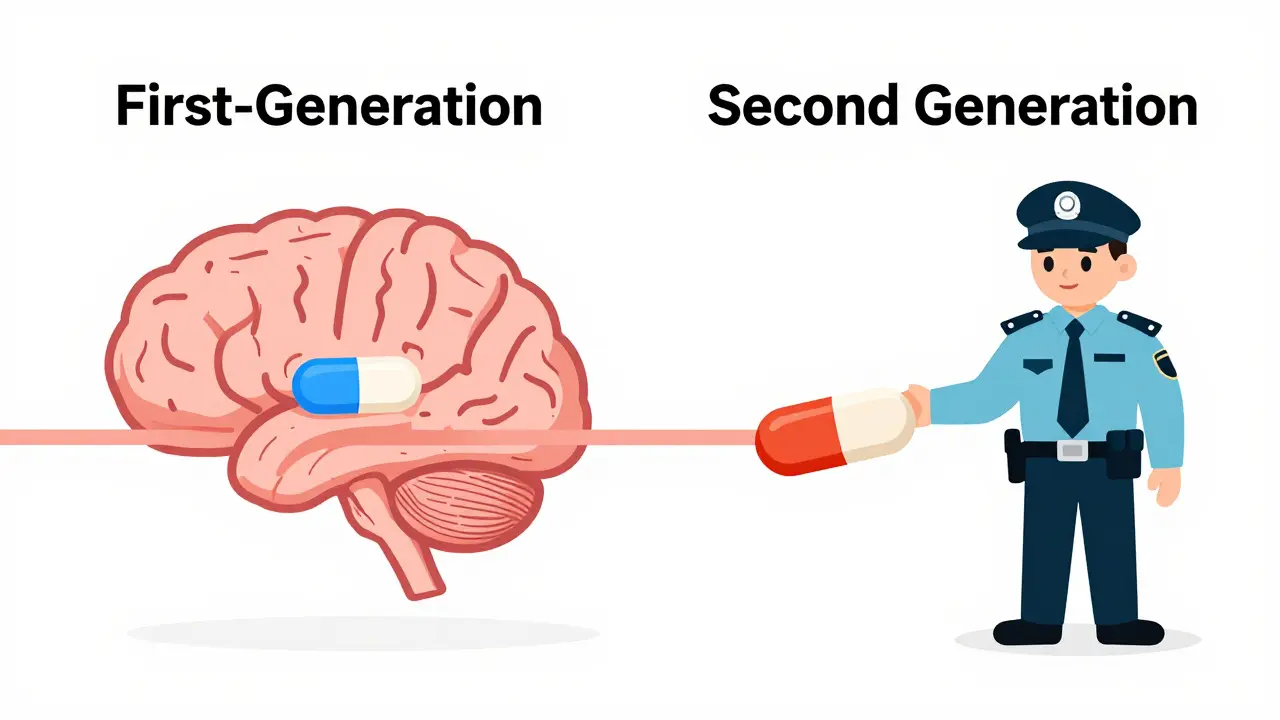
Not all antihistamines are created equal. The medical world splits them into two main groups, and the difference is massive when it comes to your brain health. First-generation antihistamines, like diphenhydramine (found in Benadryl) and doxylamine, are "brain-crossers." They easily slip through the blood-brain barrier and bind to muscarinic receptors in your central nervous system. This is why they make you incredibly sleepy-a side effect many people actually seek out for insomnia. However, this same ability to enter the brain is what triggers the anticholinergic burden. On the flip side, second-generation antihistamines, such as loratadine (Claritin) or cetirizine (Zyrtec), are designed to stay out of the brain. They use a biological "bouncer" called P-glycoprotein to keep the medication in the rest of the body. Because they don't penetrate the brain effectively, their anticholinergic activity is estimated to be 100 to 1,000 times weaker than the older versions. In short: one clears your nose without touching your memories; the other does both.| Feature | First-Generation (e.g., Diphenhydramine) | Second-Generation (e.g., Loratadine) |
|---|---|---|
| Blood-Brain Barrier Penetration | High | Low/Minimal |
| Sedation Level | Strong | Mild to None |
| Anticholinergic Burden | High (ACB Score 3) | None (ACB Score 0) |
| Dementia Risk Association | Higher Concern | Negligible |
What Does the Science Actually Say?
If you look at the data, the picture is a bit complicated. On one hand, the Beers Criteria-the gold standard for medication safety in older adults-explicitly tells doctors to avoid first-generation antihistamines in people over 65. They categorize these drugs as "Avoid" based on strong evidence of risk. However, some large-scale studies show a more nuanced reality. A 2019 study in JAMA Internal Medicine found that while drugs for overactive bladders and certain antidepressants significantly spiked dementia risk, antihistamines didn't show the same dramatic leap in risk on their own. This suggests that antihistamines might be less dangerous than some bladder meds, but that doesn't mean they are "safe." There's also a theory called "confounding by indication." This means it might not be the pill causing the dementia, but the underlying condition. For example, someone with early-stage Alzheimer's might struggle to sleep and therefore take more Benadryl. In this case, the sleep trouble is a symptom of the dementia, not a result of the pill. A 2023 analysis of UK Biobank data suggested that when you control for sleep disorders, the direct link between these pills and dementia weakens.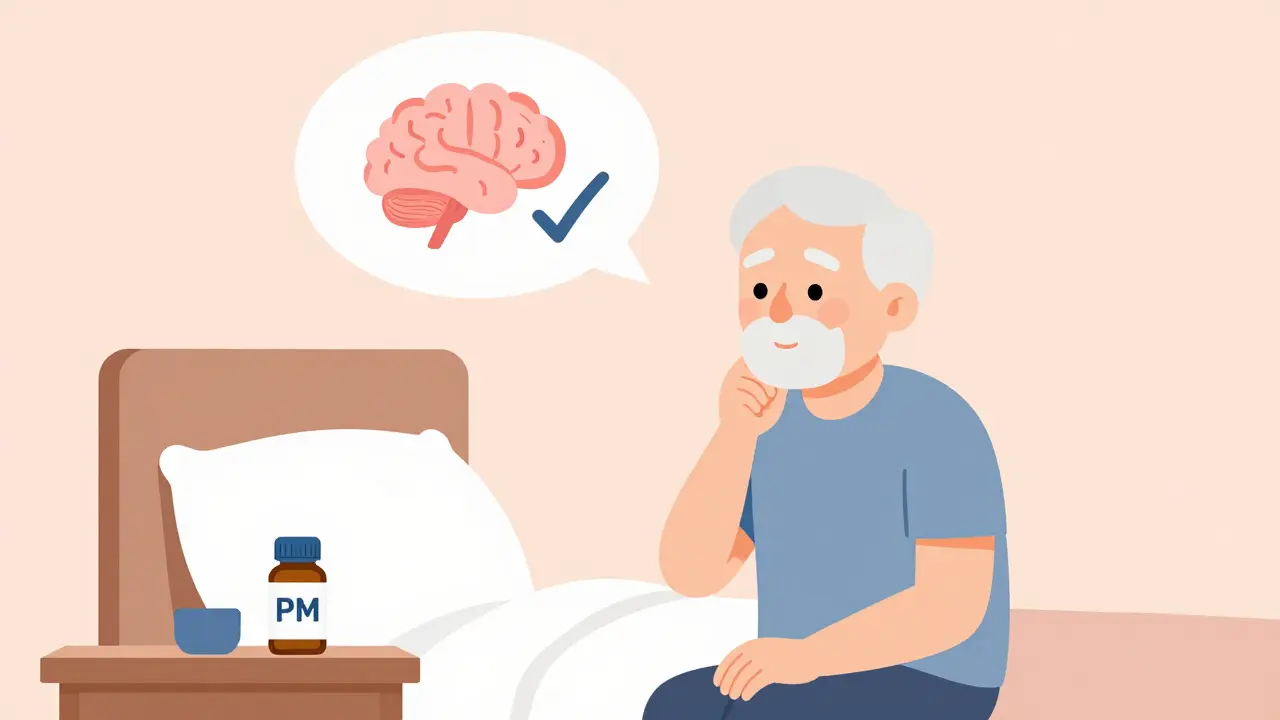
The Hidden Danger: The "Sleep Aid" Trap
Here is where it gets scary for the average person: the pharmacy aisle. Many people don't realize that their favorite "PM" sleep aid is actually just a first-generation antihistamine. A survey by the National Council on Aging found that nearly 42% of adults over 65 regularly use these OTC options for sleep, and a staggering 78% of them had no idea they were taking an anticholinergic drug. When someone takes diphenhydramine every single night for a decade, they are creating a constant chemical blockade in their brain. Even if the risk for one single dose is low, the cumulative effect is what worries experts. Dr. Malaz Boustani has cautioned that modest exposure can compound over time, especially in people who already have other health issues or are taking multiple medications.Safer Alternatives for Sleep and Allergies
If you or a loved one are relying on "PM" pills or old-school allergy meds, there are much better ways to get relief without risking your cognitive future.- Switch to G2s: If you have allergies, move to fexofenadine, cetirizine, or loratadine. These don't cross the blood-brain barrier and have an Anticholinergic Cognitive Burden (ACB) score of 0.
- Try CBT-I: For chronic insomnia, Cognitive Behavioral Therapy for Insomnia (CBT-I) is widely considered the most effective long-term solution. It has a 70-80% efficacy rate in older adults and treats the cause of sleep loss rather than just sedating the brain.
- Low-Dose Doxepin: For those who absolutely need a prescription sleep aid, low-dose doxepin (Silenor) is often preferred because it has significantly lower anticholinergic activity than diphenhydramine.
- Medication Reviews: Set a calendar alert for every six months to review all medications with a doctor. Ask specifically: "Is this drug an anticholinergic, and is there a safer alternative?"
Can taking Benadryl occasionally cause dementia?
An occasional dose for an allergic reaction is unlikely to cause permanent brain damage. The primary concern is chronic, long-term use-such as taking it every night as a sleep aid for years-which leads to a sustained blockade of acetylcholine in the brain.
Are Claritin and Zyrtec safe for the elderly?
Yes, generally. These are second-generation antihistamines that do not easily cross the blood-brain barrier. Because they have minimal to no anticholinergic effects, they are not associated with the same dementia risks as first-generation drugs.
What is the "Anticholinergic Burden"?
Anticholinergic burden refers to the cumulative effect of taking one or more drugs that block acetylcholine. The Anticholinergic Cognitive Burden (ACB) Scale helps doctors measure this; a higher score indicates a greater risk of cognitive impairment and confusion.
Why are these drugs still sold over-the-counter?
Regulatory agencies like the FDA have been slower to update OTC labels compared to prescription drugs. While the European Medicines Agency has required updated leaflets mentioning cognitive effects, many US products still only list "drowsiness" as a side effect.
What should I do if I've used first-generation antihistamines for years?
Don't panic, but do make a change. Schedule an appointment with your primary care physician or a geriatrician to discuss a tapering-off plan and explore non-pharmacological sleep aids like CBT-I or improved sleep hygiene.
Mark Zhang
April 5, 2026 AT 04:48It's really eye-opening to see how the generation of the drug makes such a difference. Many of us just grab whatever is on sale without thinking about the long-term impact. Switching to a second-gen option seems like a small change that could have a massive payoff for our health as we age. Just take it one step at a time and chat with your doc!
Rob Newton
April 5, 2026 AT 10:59Classic fear-mongering. Correlation isn't causation.
simran kaur
April 6, 2026 AT 20:36Oh, please. As if the FDA actually cares about our cognitive health. It's blatantly obvious that these 'first-generation' drugs are kept on the shelves because they keep the population sedated and compliant. Why would the pharmaceutical giants want us to be fully alert and questioning the system? This is just the tip of the iceberg. If you actually look into the lobbyists funding these regulatory bodies, you'll see that the 'Beers Criteria' is just a convenient way to shift blame onto doctors while the corporations keep raking in billions from the mindless masses who buy 'PM' aids. It's all a game of control, and most people are too blind to see that the medicine cabinet is basically a tool for societal suppression. I've read journals that are far more comprehensive than this surface-level summary, and they all point to a systemic erasure of natural cognitive function in favor of chemical dependency. Truly pathetic that people still trust these mainstream narratives without a shred of skepticism.
Rachelle Z
April 7, 2026 AT 14:09Wow... so basically we're just paying to lose our memories!!! 😱 What a great deal!!! 🙄💖
The Charlotte Moms Blog
April 7, 2026 AT 22:20The data here is absolutely abysmal... typical for a general overview... the lack of specific p-values in the mentioned studies makes the entire argument practically useless... completely amateurish...!!!
Hope Azzaratta-Rubyhawk
April 8, 2026 AT 01:40We must be absolutely relentless in demanding better labeling for these products! It is an utter disgrace that the US lags behind Europe in this regard! We have the power to change this if we simply stop buying the dangerous brands and force the companies to innovate! Stay positive, stay informed, and fight for your brain health with everything you've got!
Sakshi Mahant
April 8, 2026 AT 17:44I think it's important to remember that different cultures approach sleep and health differently. In India, many of us lean toward Ayurveda for sleep issues rather than relying solely on these synthetic pills. It's a gentler way to balance the mind and body without these harsh chemical side effects. It might be worth exploring holistic paths alongside the medical advice provided here.
HARSH GUSANI
April 8, 2026 AT 21:45Why everyone trust West medicine so much? 🤣 My country has better ways to fix sleep and it is free! These pills are just a way to make you poor and sick! 🇮🇳💪